Drought, Superbugs, and Why Your Roof Matters Now
A new study links drought to rising antibiotic resistance — another reason climate-driven water stress matters. Here's the homeowner-friendly playbook for cutting emissions with solar and battery storage in 2026.
A new study in Nature Communications has uncovered a surprising connection between climate change and one of public health's most stubborn challenges: antibiotic resistance. Researchers found that prolonged drought conditions — driven in large part by a warming planet — appear to accelerate the spread of resistant bacteria, adding a new dimension to the case for clean energy at home.1
For homeowners, this story isn't just another headline about climate risk. It's a reminder that the choices we make about how we power our houses ripple outward, touching everything from grid reliability and energy bills to public health and water security. The good news? Solar and battery storage have never been more accessible — and EnergyScout's free tools make it simple to see what's possible at your address.
What the New Drought + Antibiotic Resistance Research Found
The research team analyzed soil microbiomes across drought-stressed regions and discovered that water scarcity changes the bacterial communities living in soil. Under drought conditions, certain microbes that carry antibiotic resistance genes thrive, and those genes can spread more easily between species. As droughts intensify with climate change, the researchers warn, this hidden mechanism could quietly amplify resistance worldwide.1
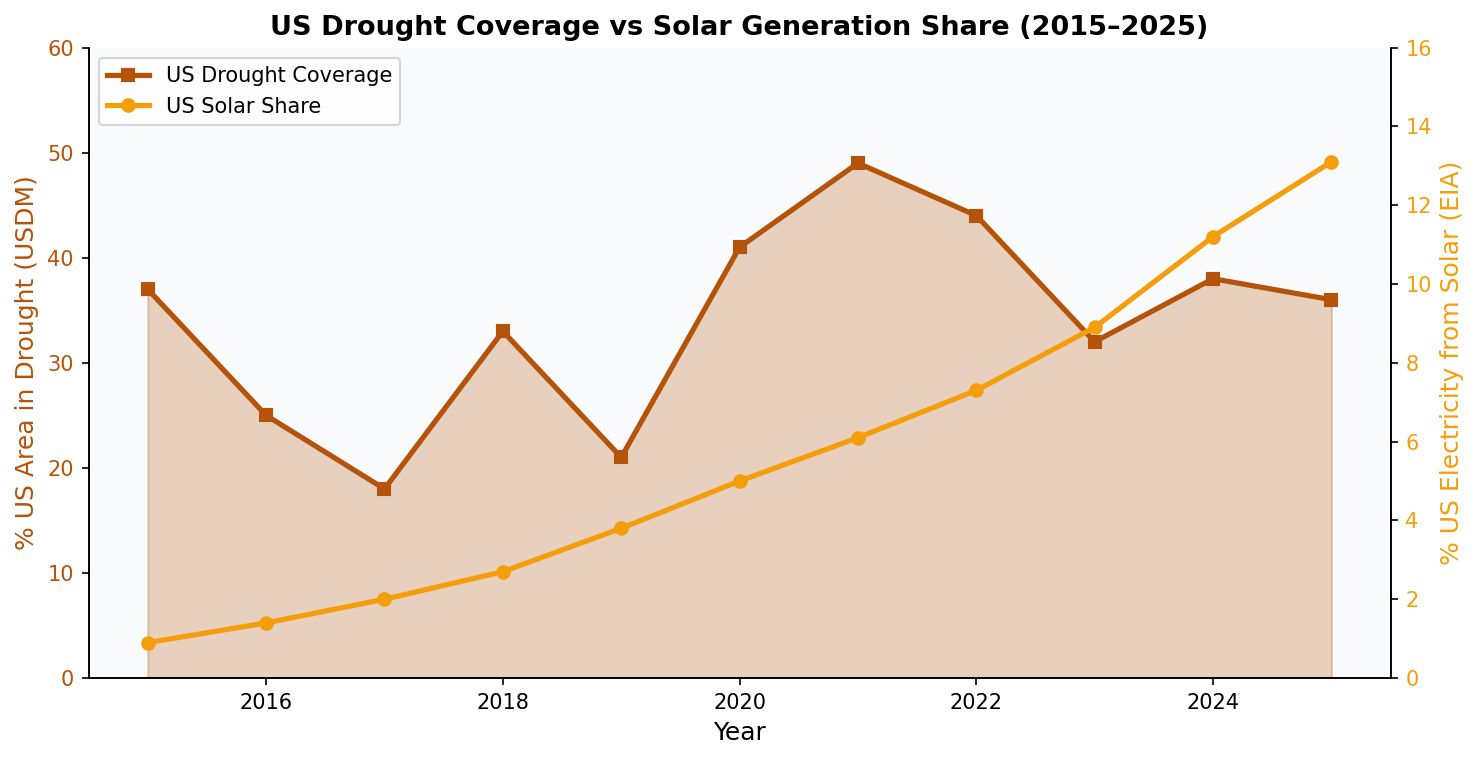
Antibiotic resistance is already considered one of the top global health threats by the World Health Organization. Add accelerating droughts — the U.S. Drought Monitor consistently shows large swaths of the West and Southwest in moderate to extreme drought — and the link between climate and human health becomes harder to ignore.2
Why This Matters for Your Home
You can't single-handedly stop antibiotic-resistant superbugs. But you can reduce the fossil fuel emissions driving the climate trends that worsen drought. According to the U.S. Energy Information Administration (EIA), residential electricity accounts for roughly 21% of total U.S. electricity sales, and the average American home still pulls about 60% of its power from fossil-fueled sources.3 Switching your roof to solar — and storing what you produce in a battery — directly displaces some of those emissions.
The Climate-Health-Energy Loop
Climate scientists at NOAA and the IPCC have repeatedly linked rising global temperatures to deeper, longer droughts in many parts of the world.4 Those droughts in turn:
- Reduce hydroelectric output, increasing reliance on natural gas peaker plants
- Strain agriculture, encouraging heavier antibiotic use in livestock
- Shift soil microbiomes in ways researchers are only now beginning to understand
- Stress the electric grid during heat waves, raising blackout risk
Each link in that chain points back to one common factor: how we generate electricity. The Solar Energy Industries Association (SEIA) reports that the U.S. now has more than 230 GW of installed solar capacity — enough to power roughly 40 million homes — and rooftop solar is the fastest-growing segment.5
Solar + Storage: A Personal Climate Action That Pays You Back
Going solar used to feel like a luxury upgrade. Today, with battery prices down more than 80% since 2010 according to Lawrence Berkeley National Lab, a paired solar-and-storage system is increasingly the smart financial play — particularly in drought-prone Western states with high electricity rates and growing wildfire-related blackout risk.6
A few of the homeowner-level benefits:
- Lower bills: EnergySage's most recent marketplace data shows the average solar shopper saves $1,500+ per year on electricity.7
- Backup power: A battery keeps your fridge, lights, and Wi-Fi running through outages without burning gasoline in a generator.
- Water savings: Solar PV requires almost no water to operate, while thermoelectric power plants consume billions of gallons every day, per the U.S. Department of Energy.8
- Emissions cut: NREL estimates a typical residential solar system avoids 3–4 tons of CO₂ per year.9
What About Incentives in 2026?
Here's the part most blogs are still getting wrong. The federal 30% Investment Tax Credit (ITC) for purchased residential solar systems expired at the end of 2025. As of 2026, only leases and Power Purchase Agreements (PPAs) — where a third party owns the system on your roof — can still benefit from the federal credit, which is then passed through to the homeowner as lower lease payments.
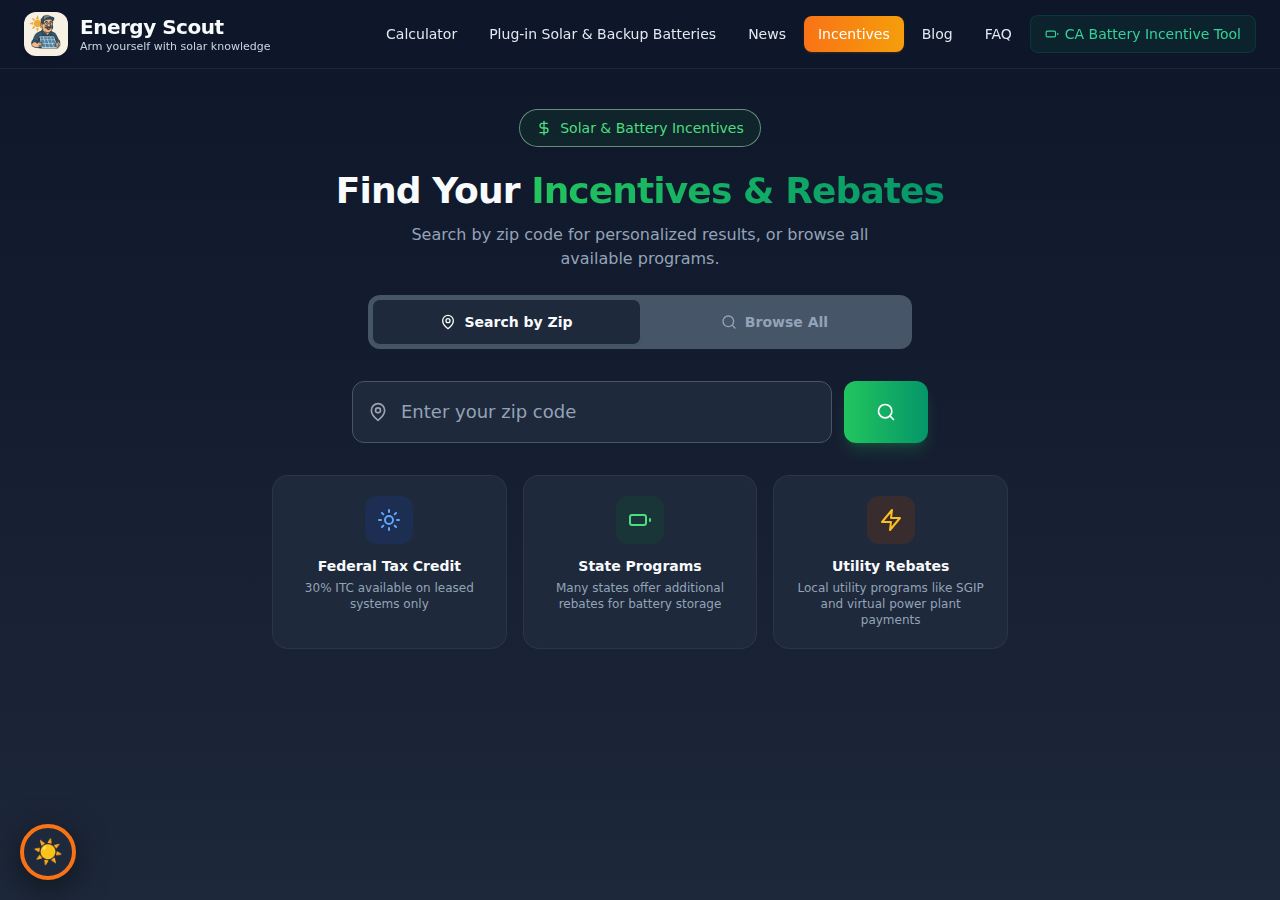
The good news: state and utility incentives remain robust in much of the country. California's SGIP battery rebate, New York's NY-Sun program, Massachusetts SMART, and dozens of utility-level rebates can stack into thousands of dollars of savings. EnergyScout's incentives search tool lets you check what's available at your ZIP code in under a minute.
How to Find Your Local Incentives
Use the EnergyScout Solar & Battery Incentives Search. Enter your ZIP code and you'll see federal (lease/PPA), state, and utility incentives layered together, plus links to apply.
Choosing the Right Installer
Even the best incentives won't help if you pick the wrong contractor. The California Public Utilities Commission (CPUC) and consumer advocates have flagged installer quality and high-pressure sales as the top sources of solar buyer complaints.10
EnergyScout's providers directory aggregates verified local installers, pulls in real reviews, and lets you compare quotes side-by-side. We never charge homeowners — installers pay to be listed only if they meet quality and licensing thresholds.
Smart Questions to Ask a Solar Installer
- Are you NABCEP certified, and how long have you operated in my state?
- What is your production guarantee, and how is shortfall compensated?
- Will I own the system, or is this a lease/PPA — and what happens if I sell my home?
- Which inverter and battery brands do you install, and what are their warranties?
- Can you show me three references within 10 miles installed in the past 18 months?
Three Steps to Take This Month
Climate news can feel paralyzing. Local action — at the level of your own roof — is the antidote. Here's a simple sequence:
- Run a free assessment. EnergyScout's assessment tool uses NREL's PVWatts model and your address to estimate annual production, savings, and payback in under two minutes.
- Stack your incentives. Check the incentives finder for state and utility programs available in your ZIP code.
- Compare 2–3 verified installers. Use the providers directory to request quotes from vetted local pros — never from a high-pressure call center.
The Bigger Picture
The drought-and-antibiotic-resistance story is unsettling, but it's also clarifying. The same fossil-fuel emissions that warm the climate, deepen droughts, and reshape soil microbiomes are the ones a clean home energy system helps reduce. You don't need to wait for policy. You don't need to be a climate expert. You just need a roof — and 90 seconds with the right tool.
Visit energyscout.org to start your free solar assessment today, find your local incentives, and connect with trusted installers in your community. Small choices, multiplied across millions of households, are how the climate-and-health story changes for the better.
Sources
- CleanTechnica, "Drought Could Be Making Antibiotic Resistance Worse, Scientists Say," April 2026.
- U.S. Drought Monitor, National Drought Mitigation Center, 2026.
- U.S. Energy Information Administration (EIA), Annual Energy Outlook 2025.
- IPCC Sixth Assessment Report, Working Group I, Chapter 11.
- Solar Energy Industries Association (SEIA), U.S. Solar Market Insight 2025.
- Lawrence Berkeley National Laboratory, Tracking the Sun & Storage 2025.
- EnergySage, Solar Marketplace Report H2 2025.
- U.S. Department of Energy, Water-Energy Nexus report.
- National Renewable Energy Laboratory (NREL), Residential PV Carbon Offset Estimates.
- California Public Utilities Commission (CPUC), Consumer Protection in Solar Marketing, 2024.
More Articles
Do Solar Panels Work During a Power Outage?
Most homeowners assume solar panels keep the lights on when the grid goes down. The actual answer surprises people — and the fix is simpler than you think.
Read article Battery StorageChile Hit 75% Solar in March. Here's What U.S. Homeowners Should Take From It
Chile's grid produced 29% of its electricity from solar in March, with peaks at 75%. The bottleneck wasn't generation — it was storage and transmission. Here's the homeowner takeaway.
Read article