3,000 EV Fast Chargers Added in Q1: Why Home Solar Wins
A new Paren report shows the US added ~3,300 fast EV charging ports in Q1 2026. But for homeowners, the real savings story is still in the driveway
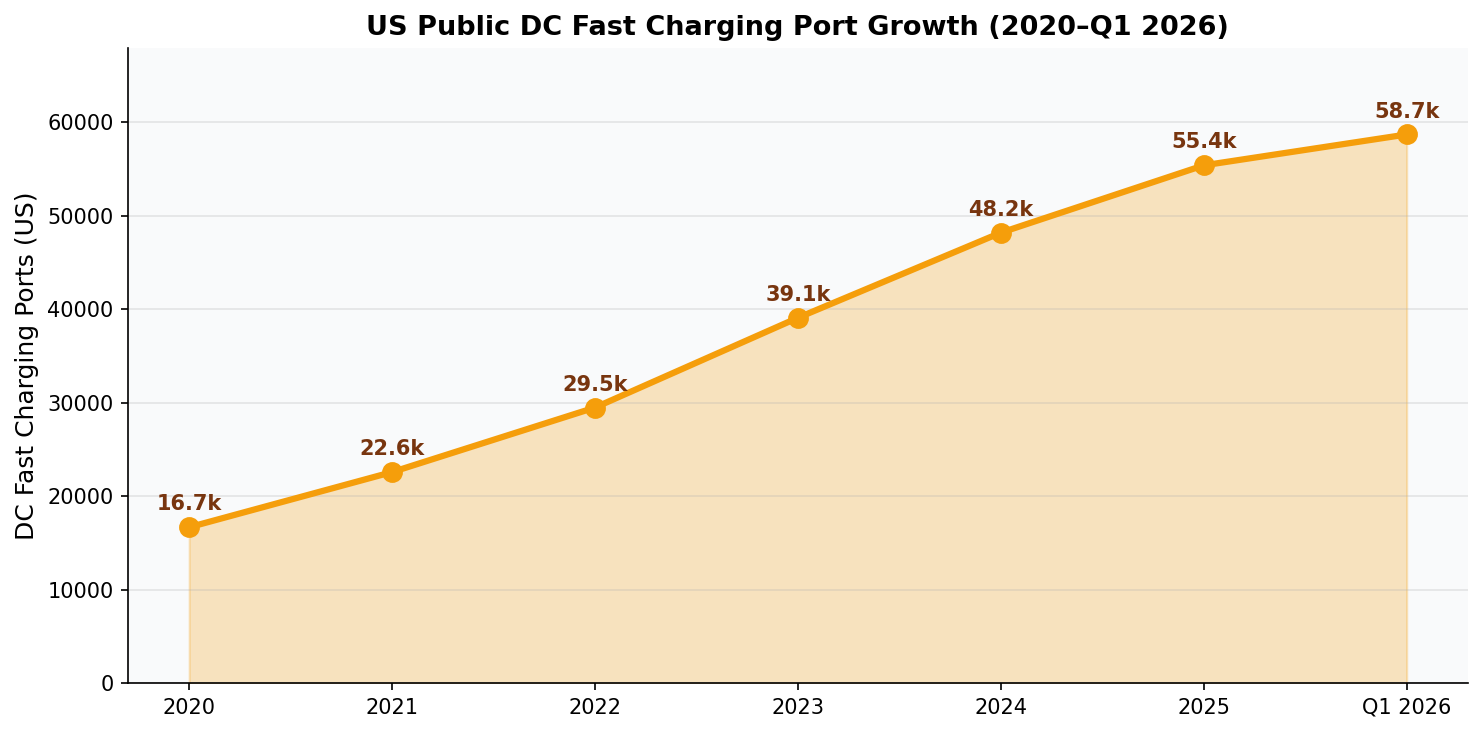
The US just passed another milestone in the electric vehicle transition. According to a new Q1 2026 report from EV analytics firm Paren, roughly 3,300 new DC fast-charging ports were deployed across the country in the first three months of the year, keeping pace with 2025's record-setting deployment rate (CleanTechnica, 2026). Network utilization held steady at about 15.6%, suggesting infrastructure is scaling in line with vehicle adoption rather than getting overbuilt.
That's great news for road-trippers and fleet operators. But if you own (or are thinking about buying) an EV, the most important charger in your life isn't on a highway corridor — it's the Level 2 plug in your garage. And the cheapest, cleanest electricity to pour into that plug comes from your own roof.
The Q1 2026 Fast Charging Numbers in Context
Paren's data shows the US now has well over 55,000 public fast-charging ports, with Tesla's Supercharger network, Electrify America, EVgo, and a growing roster of utility-backed networks leading the buildout. The Department of Energy's Alternative Fuels Data Center confirms the pace — fast-charging port count has more than doubled since 2022 (DOE AFDC, 2026).
Three takeaways from the Q1 report matter for homeowners:
- Utilization is healthy but not saturated. A ~15.6% utilization rate means most ports sit idle most of the time. Stations are being built ahead of demand — good for drivers, tough for charging-network economics.
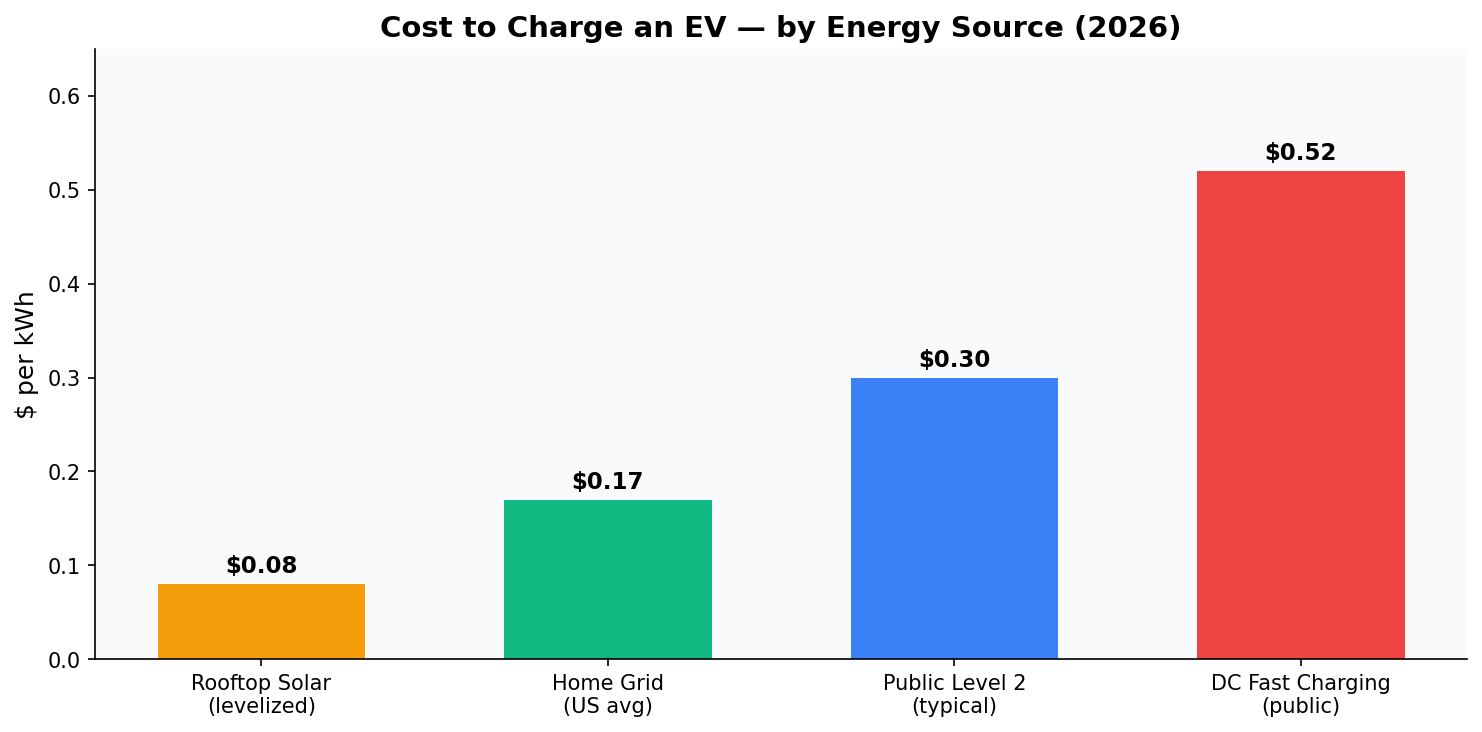
- Pricing pressure is rising. As networks fight to recover capital costs, public fast-charging prices have climbed. EnergySage's 2025 EV charging cost analysis pegs average DC fast-charging at $0.43–$0.60 per kWh, roughly 3–4x the cost of home charging in most states (EnergySage, 2025).
- Grid demand is climbing. The EIA projects EV charging will add roughly 80 TWh of annual electricity demand in the US by 2030 — nearly 2% of total generation (EIA AEO 2025).
Why Home Charging Still Wins — Especially on Solar
Roughly 80% of all EV charging in the US already happens at home, according to the National Renewable Energy Laboratory (NREL, 2023). That share is likely to grow as more single-family homeowners install Level 2 chargers. The math is simple:
- Average US residential electricity rate: ~$0.17/kWh (EIA, 2025)
- Average public DC fast-charging rate: $0.43–$0.60/kWh
- Levelized cost of rooftop solar in most states: $0.06–$0.10/kWh over a 25-year system life (NREL, 2024)
In other words, a homeowner who charges an EV on rooftop solar pays roughly one-fifth to one-tenth of what a public fast-charger customer pays per mile. For a household driving 12,000 miles a year in an efficient EV (about 3,600 kWh), that's a difference of $1,200–$1,800 per year — every year, for the life of the car.
Add a Battery and the Calculus Gets Even Better
Here's where 2026 gets interesting. As more utilities roll out time-of-use (TOU) rates — California's IOUs have already made TOU the default, and utilities in Arizona, Massachusetts, and New York are following (CPUC, 2025) — the evening hours when most EV owners want to charge are often the most expensive hours on the grid.
A home battery solves this. Charge the battery with cheap solar during the day, then use that stored energy to top off your EV overnight. You bypass peak pricing entirely, and you get a backup power system as a bonus. Lawrence Berkeley National Laboratory's latest "Tracking the Sun" report shows battery attachment rates on new residential solar installations have climbed past 25% nationally, and over 60% in California — driven largely by TOU rates and resilience concerns (LBNL, 2024).
The 2026 Incentive Landscape
One important clarification for 2026: the federal 30% Residential Clean Energy Credit (ITC) for purchased solar systems has expired. Homeowners who buy a system outright in 2026 and beyond no longer receive the federal tax credit. However:
- Third-party-owned systems (leases and PPAs) still qualify for the commercial version of the ITC, which installers typically pass through as a lower monthly payment.
- State and utility incentives are still robust in many regions — including SGIP battery rebates in California, NY-Sun in New York, Mass Save in Massachusetts, and Illinois Shines.
- Net metering, net billing, and battery export credits vary dramatically by state and utility and often matter more than upfront incentives.
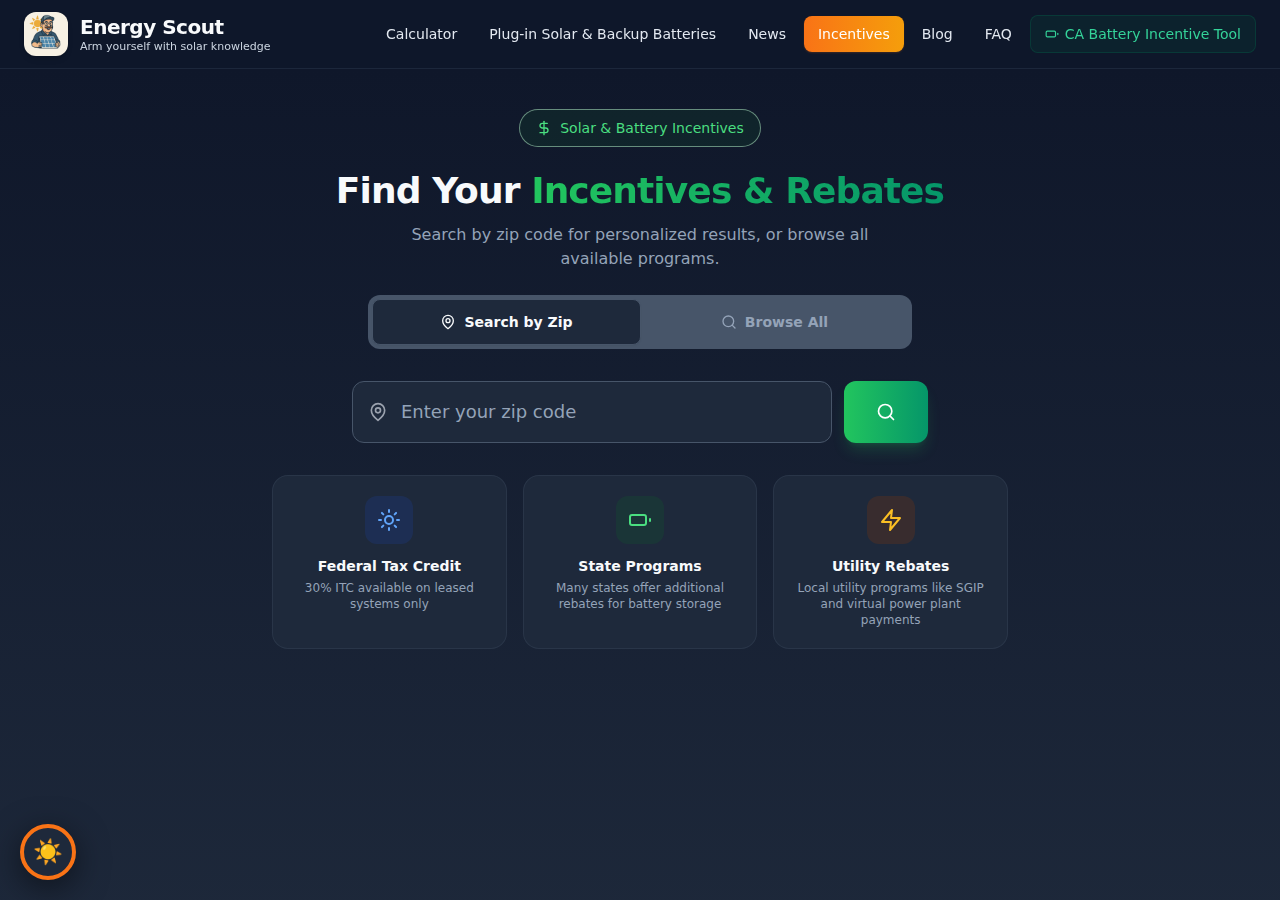
This is why a zip-code-level incentive search matters so much in 2026. Two homes 50 miles apart can have wildly different economics.
What This Means for EV Owners (and Future EV Owners)
If you drive an EV today — or plan to within the next two years — here's how to think about the Q1 2026 charging news:
1. Don't rely on public fast charging for daily driving.
Fast chargers are great for road trips and emergencies. They're a terrible way to fuel a commute. Home Level 2 charging is 3–10x cheaper per mile.
2. If you own your home, run the solar numbers.
Even without the federal tax credit, solar pencils out in most of the country thanks to falling hardware costs, state incentives, and the widening gap between utility rates and rooftop solar's levelized cost. The Solar Energy Industries Association's 2025 market report shows residential solar installed costs dropped another 4% year-over-year (SEIA, 2025).
3. Size the system for your EV, not just your house.
A typical EV adds 3,000–4,500 kWh of annual electricity demand — roughly 30–50% on top of a normal household's usage. Most solar installers still size systems based on historical utility bills, which means you could end up undersized if you're getting an EV next year. Tell your installer.
4. Consider a battery, especially if you're on TOU rates.
Batteries are still the most expensive component of a solar-plus-storage system, but the SGIP-style incentives in many states knock the cost down substantially, and the combination of bill savings + resilience + EV charging optimization is increasingly compelling.
How EnergyScout Helps You Run the Numbers
EnergyScout is a free, independent tool that uses NREL's PVWatts model plus local utility rate data to give you a realistic savings estimate — without handing your contact info to a dozen salespeople. You can:
- Get a personalized solar savings estimate based on your roof, zip code, and utility
- Search current solar + battery incentives by zip code
- Compare vetted local installers in your area

The Bottom Line
Three thousand new fast chargers in a single quarter is a real achievement — the US is building the spine of a national EV network faster than almost any other country. But the quieter story is that most of the winning is still happening at home. The combination of an EV, a rooftop solar system sized for your driving, and a battery to time-shift cheap solar into peak evening hours is the cheapest, cleanest, most resilient way to drive.
If you've been waiting for the "right" moment to look at solar, 2026 is a different market than 2024 was. The federal tax credit for purchased systems is gone, but hardware prices are lower, state incentives are still strong in many regions, and the case for pairing solar with an EV is stronger than ever.
Ready to see what solar could do for your home and your EV? Start with a free, no-sales-call assessment at energyscout.org/assessment.
More Articles
Do Solar Panels Work During a Power Outage?
Most homeowners assume solar panels keep the lights on when the grid goes down. The actual answer surprises people — and the fix is simpler than you think.
Read article Battery StorageChile Hit 75% Solar in March. Here's What U.S. Homeowners Should Take From It
Chile's grid produced 29% of its electricity from solar in March, with peaks at 75%. The bottleneck wasn't generation — it was storage and transmission. Here's the homeowner takeaway.
Read article