Battery-First Ferries Show Why Home Storage Is the Future
Ferries are quietly becoming battery-first systems, slashing fuel costs and emissions. The same economics now drive home solar + storage decisions.
When CleanTechnica reported on April 24, 2026 that big ferries are becoming battery-first systems, it confirmed a trend energy planners have been watching for years: large, mission-critical fleets are switching their default power source from diesel to lithium-ion batteries, with combustion engines reduced to backup duty. Ferries are public infrastructure that happen to float — marine buses, freight bridges, medical access routes, school links, and island lifelines. When fleet operators choose batteries first, it is a statement about reliability, total cost of ownership, and grid economics that homeowners should pay attention to.
The same forces driving harbormasters to electrify are reshaping residential energy too. If a 2,000-passenger vessel can rely on a battery for its primary trip, your home can certainly run on one through a blackout. This article unpacks the news, the underlying numbers, and how to apply the lesson on your own roof using EnergyScout's free tools.
Why ferry operators went battery-first
Ferry routes are predictable. A vessel may make the same 30-minute crossing 20 times a day, dock at a known terminal, and plug in for a measured charge window. That predictability lets engineers right-size a battery to the route, lowering capital costs and avoiding the oversizing that plagues over-the-road trucks. The U.S. Department of Energy notes that marine vessels with fixed routes are among the easiest heavy-duty assets to electrify because energy demand is bounded and charging infrastructure is centralized [DOE Vehicle Technologies Office, 2024].
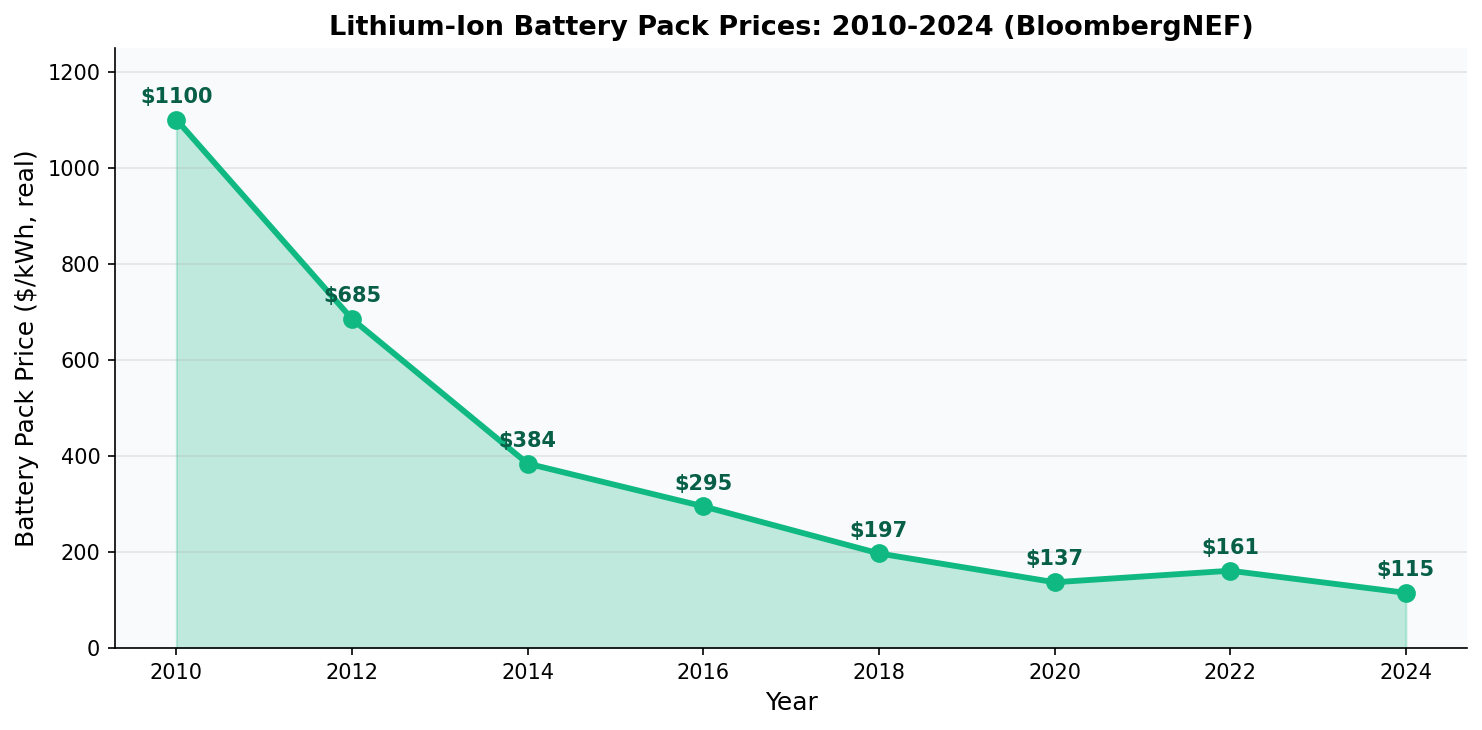
The economics are now decisively in batteries' favor. Lithium-ion battery pack prices fell to roughly $115/kWh in 2024 according to BloombergNEF, an 89% drop from 2010. Electricity, even at industrial rates, almost always beats marine diesel on a cost-per-mile basis once efficiency advantages are included — an electric drivetrain converts 85–90% of stored energy into propulsion versus 35–45% for diesel. The Lawrence Berkeley National Laboratory's 2024 storage report observes that the same $/kWh declines that made grid storage explode are propagating into every transport mode with a predictable duty cycle [LBNL, 2024].
What this has to do with your house
Homes are also predictable energy systems. The average U.S. household uses about 10,500 kWh per year — roughly 29 kWh per day — according to the U.S. Energy Information Administration [EIA, 2024]. Daily peaks are stable: a morning ramp, a midday lull, and an evening surge. That regularity is exactly why a properly sized solar-plus-storage system can carry most of a home's load year-round in sunny climates and a meaningful share even in less sunny ones.
The ferry industry's shift validates a residential idea that has been gathering steam since California's NEM 3.0 took effect in 2023: pair solar with a battery, store cheap midday energy, and discharge during expensive evening hours or grid outages. SEIA reports that more than 30% of new U.S. residential solar installations in 2024 included a battery, up from under 10% in 2020 [SEIA/Wood Mackenzie U.S. Solar Market Insight, 2024]. EnergySage's 2024 Marketplace Report shows the median quoted home battery price was $1,339/kWh installed before incentives, with system-level returns improving sharply when storage offsets time-of-use peak rates [EnergySage, 2024].
The 2026 incentive landscape: what changed and what didn't
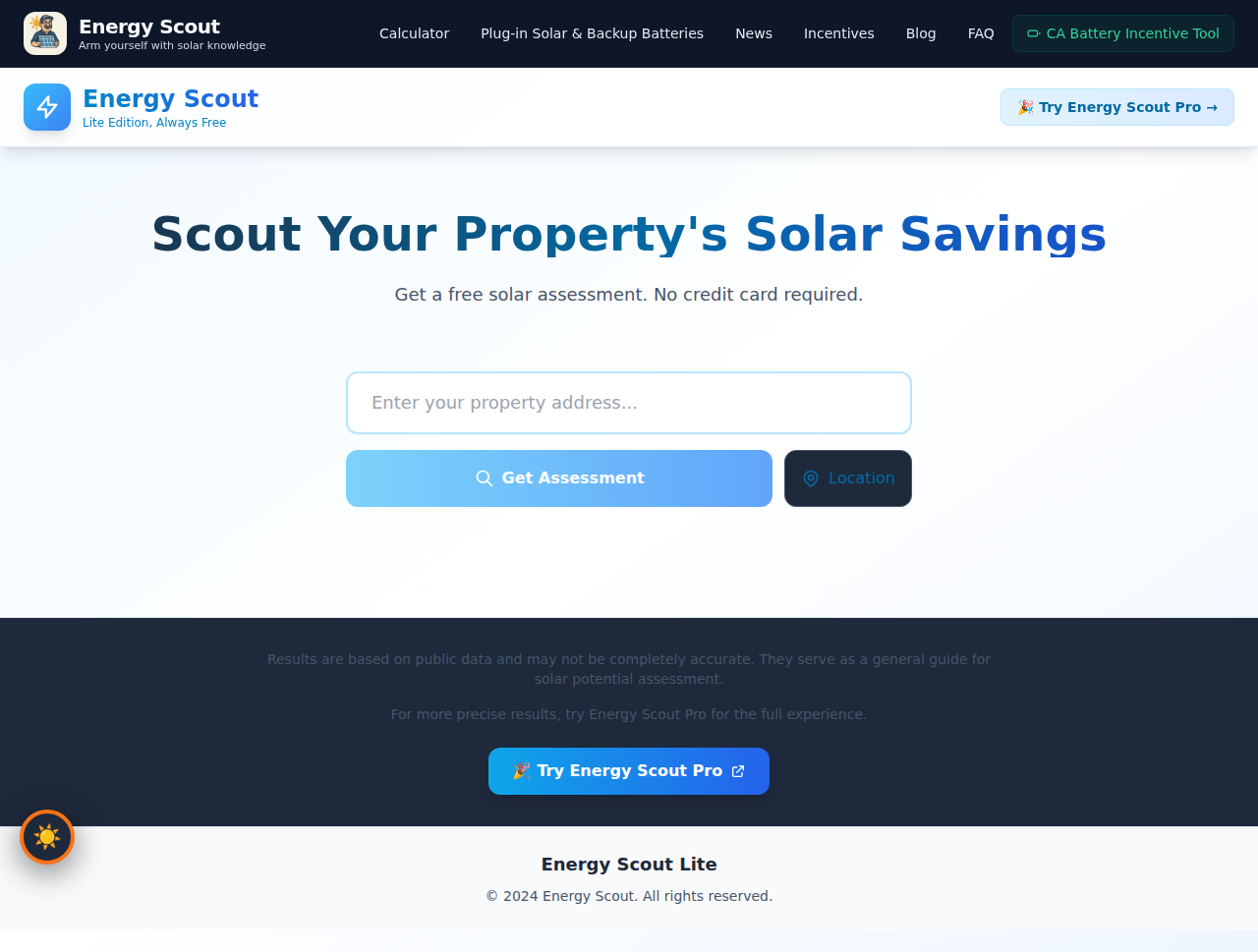
Here is the part many homeowners get wrong in 2026. The federal 30% Residential Clean Energy Credit (Section 25D), often called the ITC, expired for purchased systems at the end of 2025. Homeowners who buy a solar or storage system outright in 2026 cannot claim the 30% federal credit on their personal taxes. However, the commercial credit (Section 48) that supports third-party-owned systems — leases and Power Purchase Agreements (PPAs) — is still active under the rules in effect for new installations placed in service in 2026, allowing developers to pass savings to homeowners through lower monthly payments.
This shift makes lease and PPA quotes more competitive than they have been in years for households that cannot use a tax credit anyway. Meanwhile, state-level programs have stepped up. California's Self-Generation Incentive Program (SGIP) continues to reward batteries that improve grid resilience, and CPUC data shows over $1 billion in SGIP funds dispatched to residential storage projects since the program's expansion [CPUC SGIP Public Reports]. New York's NY-Sun, Massachusetts SMART, Maryland's Energy Storage Tax Credit, and dozens of utility rebate programs remain active.
Sizing your system the way ferry engineers size theirs
Naval architects do not simply slap the biggest battery they can afford onto a ferry. They map the route, calculate energy per leg, add a safety factor, and choose a pack that fits the duty cycle. Homeowners should think the same way:
Step 1: Know your daily load
Pull 12 months of utility bills. The kWh column shows the energy your house actually consumes. NREL's PVWatts Calculator can then estimate how much solar production a roof will yield in your zip code [NREL PVWatts, 2024]. The aim is to design a system that meets the bulk of annual demand while leaving the grid as a backstop — or, if you add a battery, leaving lithium as a backstop.
Step 2: Decide what the battery is for
Batteries solve three different problems and the right size depends on the goal:
- Time-of-use arbitrage: 5–10 kWh of usable storage is often enough to shift evening peak consumption.
- Whole-home backup: 15–30 kWh is typical, paired with a critical-loads panel.
- Off-grid or near off-grid: 30+ kWh and an oversized PV array.
Step 3: Get multiple quotes
EnergySage data shows quote-to-quote price variance of 20–30% for nearly identical systems. Comparison shopping is where most homeowner savings actually live.

Resilience: the underappreciated dividend
Ferry operators talk a lot about availability — the percentage of scheduled trips that actually run. A modern hybrid-electric ferry can hold availability above 99% because the battery is the prime mover and combustion is the redundancy. Homes need the same framing. The U.S. average of grid outages climbed to 5.5 hours per customer in 2022, the highest on record according to EIA, driven largely by extreme weather [EIA, 2023]. A solar + battery setup turns those outages from emergencies into non-events.
If you live in a region prone to wildfire-driven Public Safety Power Shutoffs, hurricane outages, or winter ice storms, a battery is no longer a luxury upgrade — it is the same kind of operational insurance that ferry operators are buying.
The bottom line
Battery-first ferries did not happen because operators love new technology. They happened because the math finally tipped: lithium got cheap enough, drivetrains got efficient enough, and fossil fuel volatility got expensive enough. The same math applies to your home. Even without the federal 30% ITC for purchased systems in 2026, a well-designed solar + storage installation — especially via a lease or PPA that still captures the commercial credit, or in states with strong rebate programs — remains one of the highest-return upgrades a homeowner can make.
You do not need to design the system yourself. EnergyScout's free tools mirror the same engineering process the ferry world uses: assess the load, map the incentives, and shortlist trusted local providers.
Next step
Run a free, no-obligation analysis of your roof and zip code at energyscout.org/assessment, check available state and utility rebates at energyscout.org/solar-battery-incentives-zipcode-search, and connect with vetted installers at energyscout.org/providers. The ferry industry has already done the homework. Your roof is next.
More Articles
Do Solar Panels Work During a Power Outage?
Most homeowners assume solar panels keep the lights on when the grid goes down. The actual answer surprises people — and the fix is simpler than you think.
Read article Battery StorageChile Hit 75% Solar in March. Here's What U.S. Homeowners Should Take From It
Chile's grid produced 29% of its electricity from solar in March, with peaks at 75%. The bottleneck wasn't generation — it was storage and transmission. Here's the homeowner takeaway.
Read article