California's Community Solar Stumble: What Homeowners Should Do Now
California's community solar program is back in the spotlight after CCSA's West regional director said the CPUC's proposed structure won't deliver real...
California is supposed to be the country's solar leader. It has the most rooftop installations, the most installers, and the most ambitious clean energy targets in the United States. So it's surprising — and frustrating — that the state still can't get community solar right.
That's the takeaway from a recent Renewable Energy World column by James McGarry, the West regional director for the Coalition for Community Solar Access (CCSA). McGarry argues that the California Public Utilities Commission's (CPUC) proposed community solar framework creates so many structural barriers that it will neither produce meaningful customer savings nor enable new projects to be built at scale.
For California renters, condo owners, and homeowners with shaded roofs — the very people community solar is supposed to serve — this is a setback. But it's not the whole story. Rooftop solar paired with battery storage is still a strong option in 2026, and the right tools can help you find out exactly what your home qualifies for.
What is community solar, and why does it matter?
Community solar (sometimes called "shared solar" or a "solar garden") lets multiple households subscribe to a single, larger solar array — usually built on a warehouse roof, parking canopy, or open field within their utility territory. Subscribers receive credits on their electricity bills based on their share of the array's output, without installing any panels of their own.
According to the U.S. Department of Energy's National Community Solar Partnership, the model is designed for the roughly 50% of U.S. households that can't host on-site solar — including renters, multi-family residents, and homeowners with poor roof orientation or heavy shading. The DOE has set a national target of 20 GW of community solar serving 5 million households by 2025.
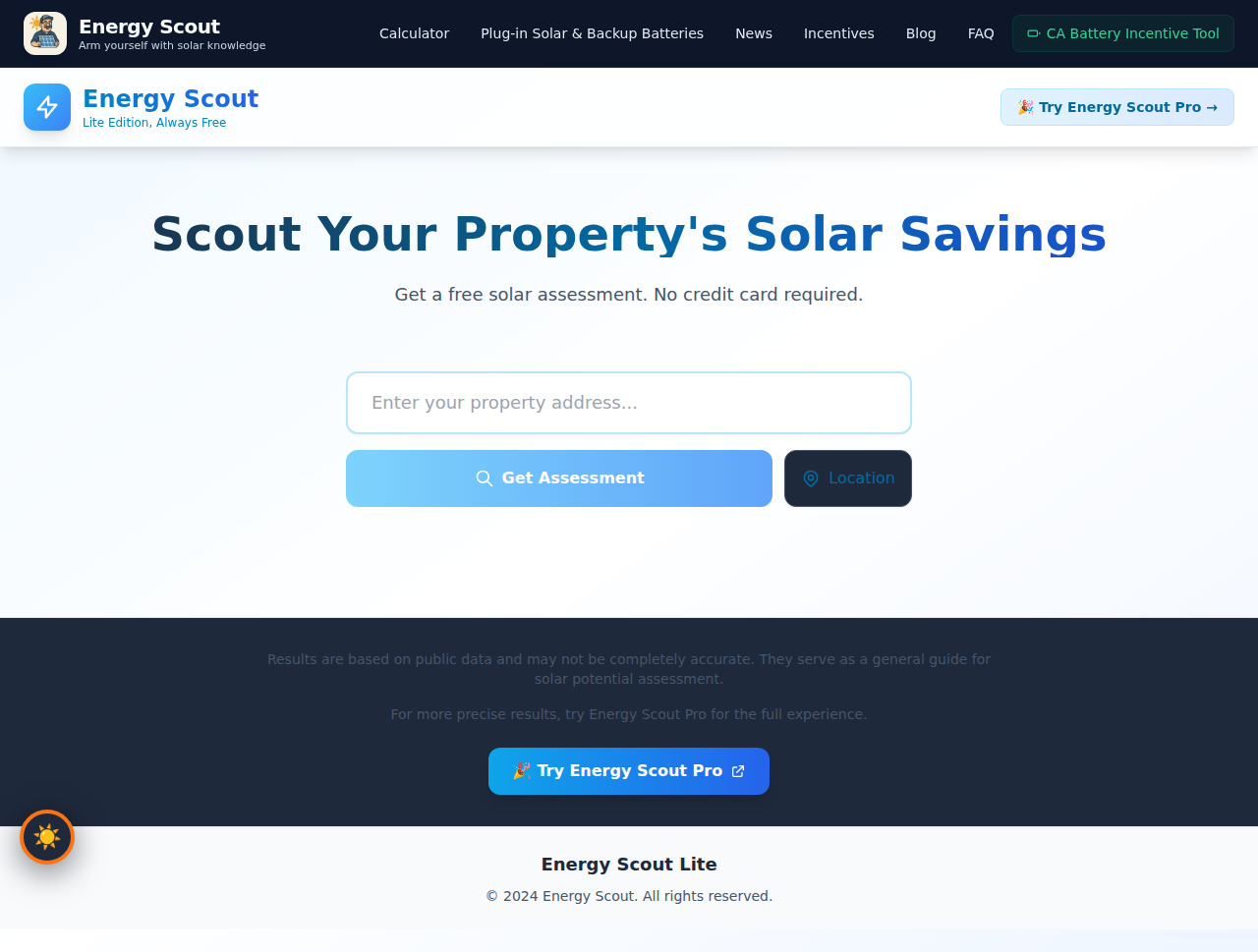
As of 2024, the National Renewable Energy Laboratory (NREL) tracked just over 7.8 GW of installed community solar capacity nationwide — a strong gain, but still well short of the federal goal. The leaders are New York, Massachusetts, Minnesota, and Illinois, which have streamlined billing, defined subscriber compensation clearly, and protected low-income participants.
California, despite its scale, has struggled to design a workable program for over a decade.
Why CPUC's latest proposal isn't working
McGarry's piece, published April 23, 2026, lays out the specific issues with the CPUC's current Community Renewable Energy Program (CREP) proposal. The two most damaging design choices, according to CCSA:
- Compensation that doesn't pencil out. The proposed bill credit value is too low for developers to finance projects, and too low for subscribers to see meaningful monthly savings. Without a competitive credit, third-party developers won't build, and households won't sign up.
- Layered administrative complexity. The plan stacks multiple program rules, anti-cost-shift mechanisms, and subscriber-management burdens on top of one another. The result, McGarry argues, is a program that looks reasonable on paper but is unworkable in practice.
The CPUC has been working on community solar reform under AB 2316 (2022), which directed the commission to design a program that delivers ratepayer benefits and serves disadvantaged communities. Two years later, the agency is still iterating, and stakeholders across the spectrum — from CCSA to consumer advocates — say the latest draft falls short.
The bigger context: NEM 3.0 and California's rooftop slowdown
Community solar isn't the only California program facing headwinds. The CPUC's Net Energy Metering 3.0 (now called the Net Billing Tariff, or NBT), which took effect in April 2023, slashed the export compensation rate for new rooftop solar customers by roughly 75% compared to NEM 2.0.
The result, according to the Lawrence Berkeley National Lab "Tracking the Sun" dataset and California Solar & Storage Association reporting, was a sharp drop in residential solar permits across the state in 2023–2024. Installers laid off staff. Some smaller firms closed. The takeaway: California's regulators have made it harder, not easier, for everyday households to participate in the energy transition.
That's the policy backdrop. But here's the practical reality for a homeowner today:
Solar + storage still pencils out — if you size it right
NEM 3.0 reduced the value of exporting daytime solar to the grid, but it dramatically increased the value of storing that solar in a home battery and using it during evening peak hours. According to EnergySage's 2024 Marketplace Report, the share of California residential solar quotes that include battery storage jumped from under 20% before NEM 3.0 to over 90% after.
Properly designed solar + storage systems in California are still showing payback periods in the 7–10 year range, with 25-year net savings often above $40,000 for homes with high TOU rates from PG&E, SCE, or SDG&E. The catch: system design matters more than ever. An undersized battery or oversized array can wreck the economics.
That's why running the numbers for your specific home is the single most important step. Use the EnergyScout free assessment tool to model your roof, your utility, and your usage in a few minutes — no sales call required.
What about federal incentives in 2026?
This is where many homeowners are getting confused, so let's be clear: the federal 30% Investment Tax Credit (ITC) for purchased residential solar systems expired at the end of 2025. Homeowners who buy a system outright in 2026 no longer claim the 30% credit on their federal return.
However, third-party-owned systems — solar leases and Power Purchase Agreements (PPAs) — still qualify for the commercial ITC under Section 48E, and reputable installers are passing those savings through to homeowners as lower lease payments or PPA rates. The Solar Energy Industries Association (SEIA) covers the policy details in its ITC resource hub.
State and local incentives haven't gone anywhere. California still offers:
- SGIP (Self-Generation Incentive Program) battery rebates, with enhanced amounts for low-income and high-fire-risk households
- DAC-SASH for qualifying low-income homeowners in disadvantaged communities
- Property tax exclusion for solar additions
- Various utility-specific rebates and TOU rate plans
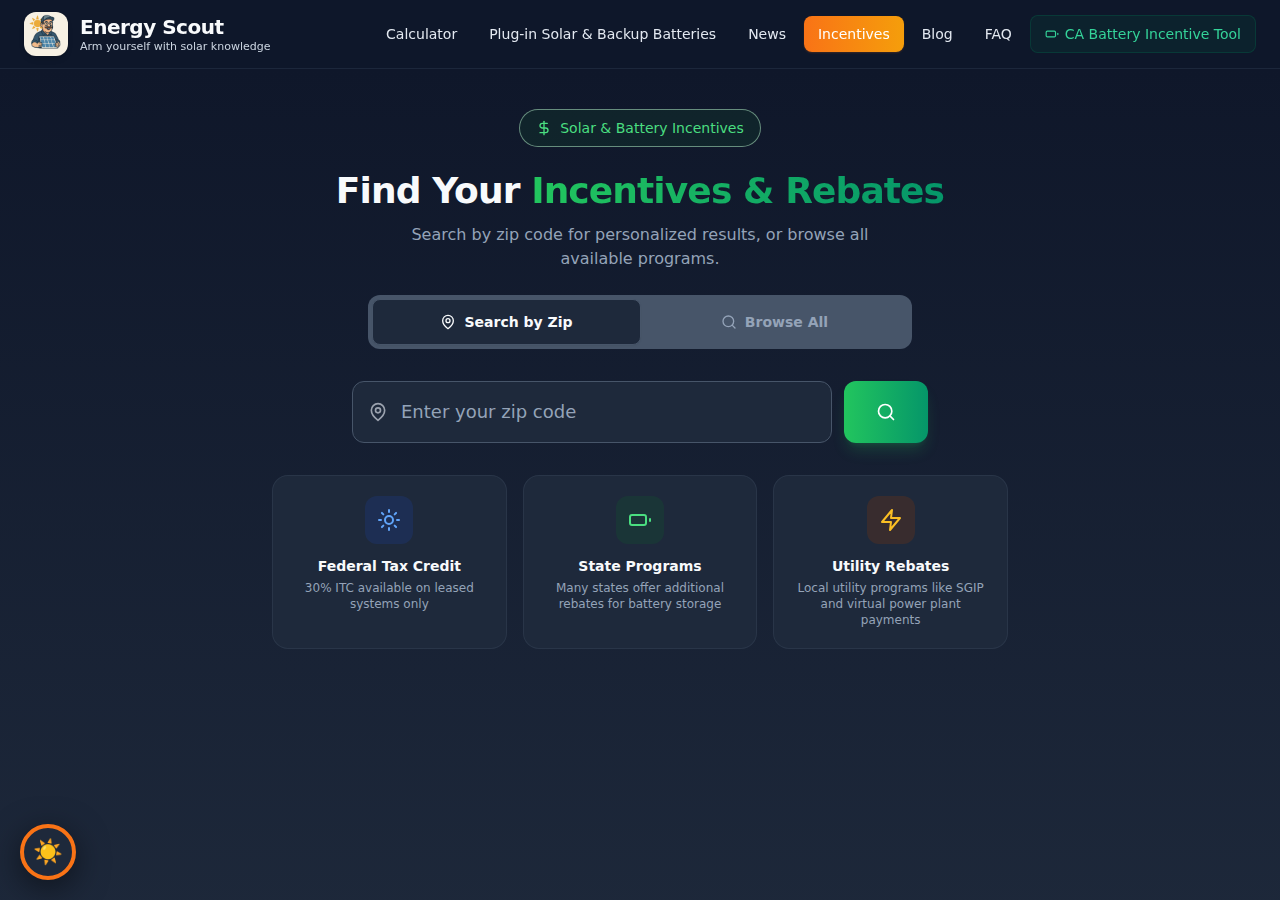
To see exactly which incentives apply at your address, run your ZIP code through the EnergyScout incentives finder.
If you're a renter or can't host rooftop solar
If California's community solar program doesn't materialize the way CCSA hopes, what are your options today?
- Talk to your landlord. Some landlords will install solar if you propose a fair rent adjustment that splits the savings. EnergyScout's assessment tool can give you a credible estimate to bring to the conversation.
- Look into existing CCAs. California's Community Choice Aggregators — like MCE, Peninsula Clean Energy, and Clean Power Alliance — already source large shares of renewable energy and offer 100% renewable opt-in tiers. According to CalCCA, more than 14 million Californians are now served by a CCA.
- Watch the program proceedings. The CPUC's Rulemaking R.22-05-022 will eventually produce a community solar program. Stakeholder comments are still shaping the final design. Public engagement has historically improved outcomes.
Choose installers carefully
California's installer market has consolidated significantly in 2023–2025. Some large national firms have exited the residential market entirely; others have changed ownership. Before signing any contract — purchase, lease, or PPA — verify:
- State CSLB license (C-46 Solar or C-10 Electrical) is active
- Workmanship warranty is at least 10 years and backed by an in-business company
- Equipment warranties (panels and inverters) are 25 years
- References from installs at least 2–3 years old
EnergyScout's verified installer directory shows licensed local installers in your area, with the ability to request multiple competitive quotes in one place.
The bottom line
California's community solar saga is genuinely disappointing. A program that should serve millions of renters and shaded-roof households continues to limp along while better-designed states pull ahead. McGarry and CCSA are right to keep the pressure on — the CPUC has the tools to fix this, and the political will exists to push them.
But waiting for the perfect policy isn't your only option. If you own your home and have a usable roof, a properly sized solar + battery system in 2026 still delivers strong long-term savings — especially under California's punishing TOU rates. And if you don't own your roof, CCAs, landlord conversations, and future community solar are all paths worth pursuing.
The best first step is knowing your numbers. Get a free, no-pressure assessment of your home's solar and storage potential at energyscout.org and turn policy uncertainty into a clear plan.
More Articles
Do Solar Panels Work During a Power Outage?
Most homeowners assume solar panels keep the lights on when the grid goes down. The actual answer surprises people — and the fix is simpler than you think.
Read article Battery StorageChile Hit 75% Solar in March. Here's What U.S. Homeowners Should Take From It
Chile's grid produced 29% of its electricity from solar in March, with peaks at 75%. The bottleneck wasn't generation — it was storage and transmission. Here's the homeowner takeaway.
Read article