Cool Roofs Meet Solar: A Hot New Way to Slash Energy Bills
A new rooftop demo in New Jersey is proving that reflective roof coatings can cool buildings, protect roofs, and slash energy bills.
What do a Texas data center, a New Jersey warehouse, and an Arizona police academy have in common? They all have roofs — and according to a fresh report from CleanTechnica, they're now testing the same simple, low-cost technology to fight rising temperatures and shrinking energy budgets: reflective cool roof coatings.
In what's being called the first major rooftop demonstration of its kind, a startup, a group of investors, and university researchers have teamed up to coat a New Jersey warehouse roof with a high-reflectivity material designed to bounce sunlight back into the sky. The goal? Lower indoor temperatures, longer roof life, and meaningful cuts to cooling bills — all without rewiring a single circuit.
For homeowners, the news is bigger than it sounds. When you pair a cool roof with rooftop solar and battery storage, the savings don't just add up — they multiply.
Why a Roof Coating Matters in 2026
The U.S. Department of Energy estimates that cooling accounts for roughly 15% of all residential electricity use, and that figure climbs sharply in hot states like Texas, Arizona, Florida, and California (DOE, 2024). With summer heat waves growing more intense and grid prices climbing, anything that reduces the cooling load is now a financial decision, not just a comfort one.
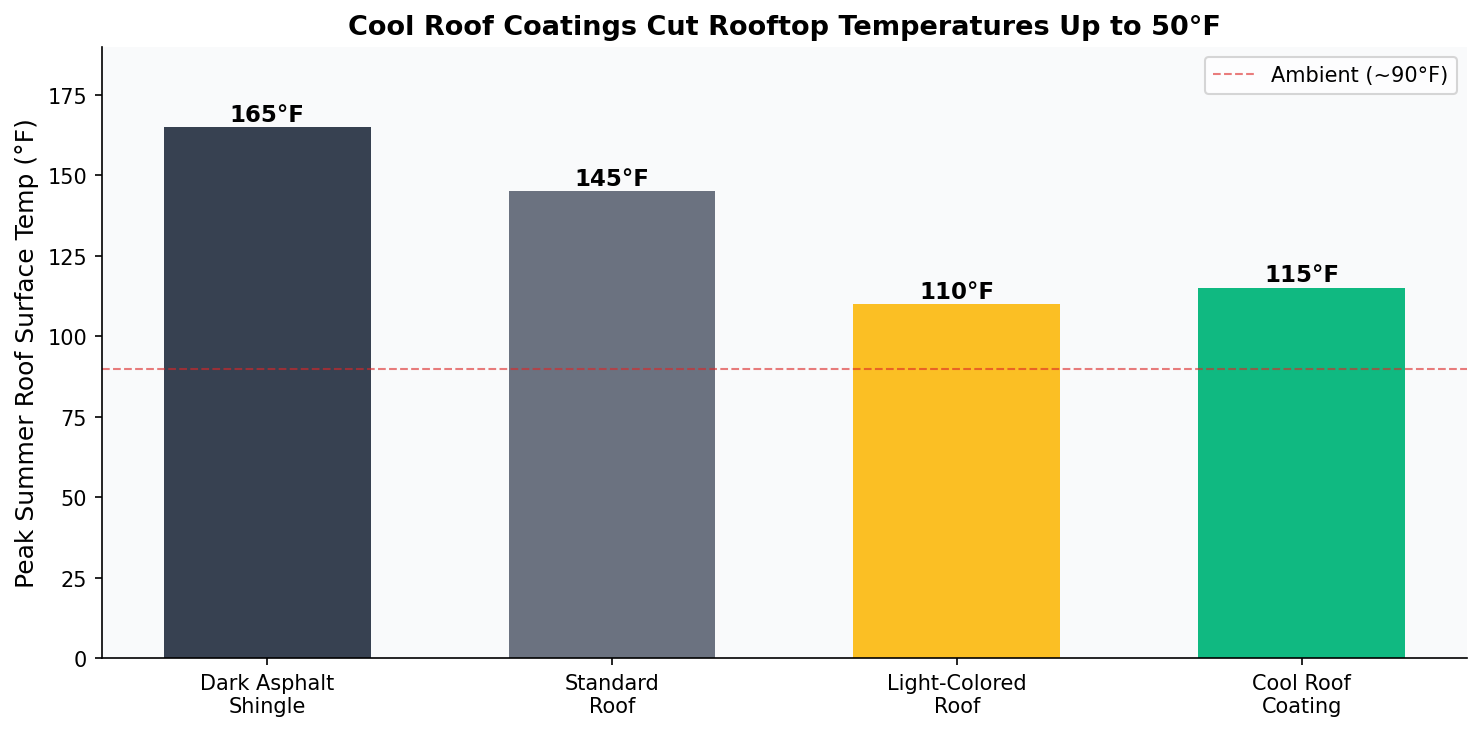
Cool roof coatings work on a beautifully simple principle: dark surfaces absorb heat, light surfaces reflect it. Lawrence Berkeley National Laboratory's Heat Island Group has shown that reflective roofs can lower rooftop surface temperatures by up to 50°F on a sunny day, and reduce a building's cooling energy use by 10–30% depending on climate and insulation (LBNL, 2023).
Even better, cooler roofs last longer. Reduced thermal cycling means fewer cracks, less membrane fatigue, and a longer interval between expensive replacements — a real bonus if you're planning to put solar panels up there for 25+ years.
The New Jersey Demo at a Glance
According to the CleanTechnica coverage of the rooftop pilot, the warehouse demonstration is being monitored by independent researchers who will track:
- Indoor temperature changes across summer months
- HVAC runtime and energy consumption
- Roof membrane temperature reduction
- Total cost savings vs. an uncoated control section
If the early data holds, the same coatings used on Texas data centers and Arizona public buildings could become a standard low-cost upgrade for any residential roof — including yours.
How Cool Roofs and Solar Work Together
Here's where it gets interesting for homeowners. Solar panels actually lose efficiency as they get hotter. The National Renewable Energy Laboratory (NREL) notes that crystalline silicon panels lose roughly 0.3–0.5% of output for every 1°C above 25°C (NREL, 2023). On a 150°F asphalt-shingle roof in July, that's not a rounding error — that's hundreds of kilowatt-hours over a season.
A reflective roof beneath (or beside) your solar array helps in three ways:
- Cooler panel operating temperatures → higher production
- Lower attic and indoor temperatures → less AC demand for the panels to offset
- Longer roof and panel life → better lifetime ROI
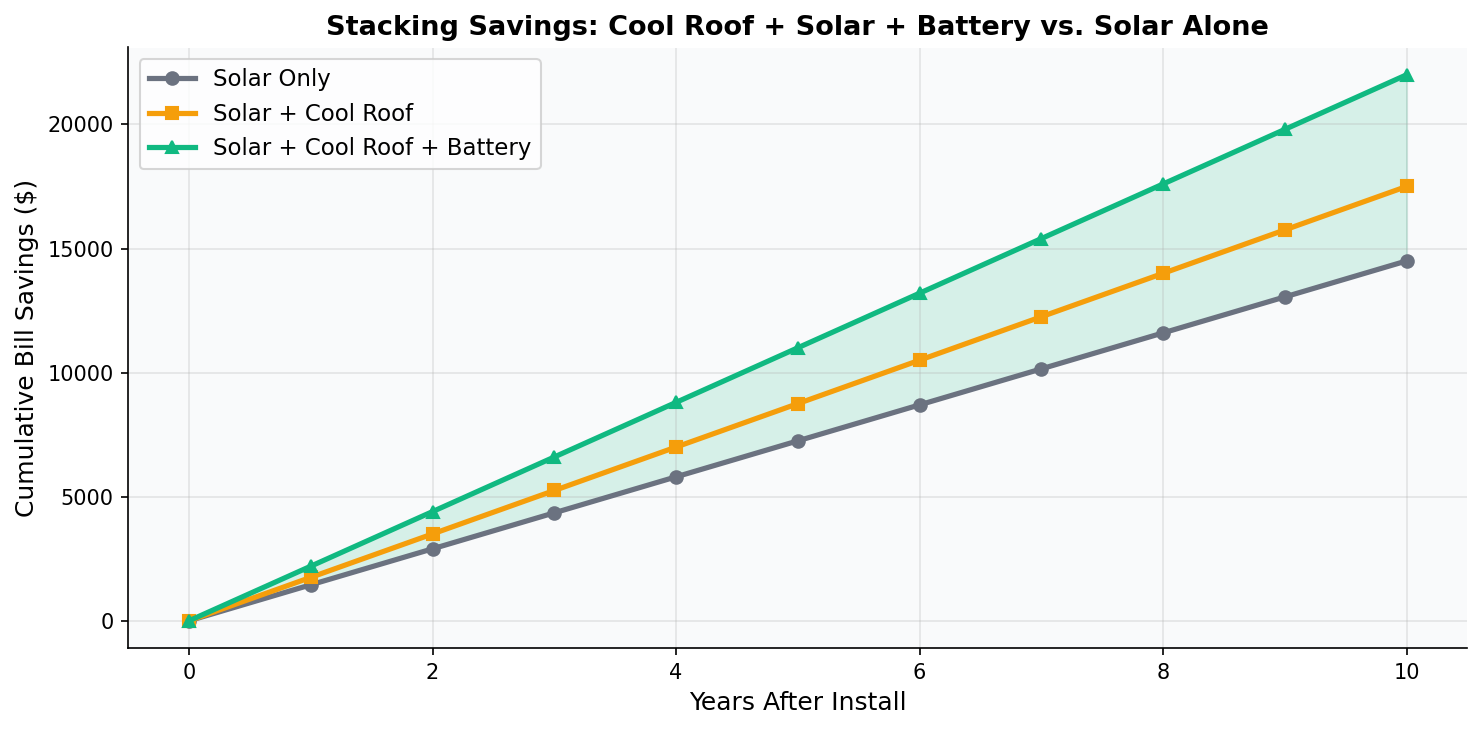
EnergySage's 2024 marketplace report found that homeowners who paired solar with efficiency upgrades like cool roofs and improved insulation saw payback periods shrink by an average of 1.7 years compared to solar-only installs (EnergySage, 2024).

Run the Numbers for Your Home
Before you invest in any roof or solar upgrade, you need a baseline. EnergyScout's free solar assessment tool uses NREL's PVWatts model along with your address, roof orientation, and local utility rates to estimate:
- Annual production from a properly sized system
- Estimated 25-year electricity bill savings
- How much of your roof you'd actually need
- Whether your roof condition supports solar (a key cool-roof connection)
If your assessment flags an aging roof, that's the perfect moment to consider a reflective coating or a cool-roof shingle replacement before the panels go up. Doing the work in the right order can save thousands.
The 2026 Incentive Landscape — What's Still Available
Here's where homeowners need a reality check. The federal 30% Investment Tax Credit (ITC) for purchased residential solar expired at the end of 2025. As of 2026, only third-party-owned systems — solar leases and Power Purchase Agreements (PPAs) — still qualify for the federal credit, which the leasing company captures and (ideally) passes through as a lower monthly rate.
That doesn't mean savings are gone. State and utility incentives have actually grown more important, and many states now offer dedicated cool-roof and energy-efficiency rebates that stack on top of solar incentives:
- California: Title 24 cool-roof requirements plus SGIP battery rebates (CPUC, 2024)
- New York: NY-Sun rebates and Con Edison cool-roof incentives
- Texas: Utility-specific rebates from Austin Energy, CPS Energy, and Oncor
- Florida: Property tax exemption for solar plus utility cool-roof programs
Use EnergyScout's incentive search tool to find every program available at your ZIP code in seconds.

Battery Storage: The Multiplier
Cool roofs reduce demand. Solar generates supply. Batteries decide when to use it. That's the trifecta.
The Solar Energy Industries Association reports that more than 25% of new residential solar installs in 2024 included battery storage, up from just 6% in 2019 (SEIA, 2024). The reason is simple: with utility time-of-use rates and frequent grid outages, storing your midday solar to use during the 4–9 PM peak window often delivers more savings than the panels themselves.
Pair that with a cool roof that's already trimming your evening cooling load, and your battery doesn't have to work as hard to carry you through peak hours. Smaller battery, lower cost, same comfort.
What This Means for Homeowners Right Now
You don't have to wait for a New Jersey warehouse pilot to wrap up to act. The technology behind cool roof coatings is already proven, and the EIA reports that residential electricity prices rose 4.3% in 2024 with continued increases forecast through 2026 (EIA, 2024). Every month of inaction is real money.
Here's a simple 4-step playbook:
- Get a baseline. Run a free EnergyScout assessment to see your home's solar and savings potential.
- Check your incentives. Use the incentive lookup to find every state, utility, and local rebate.
- Plan in the right order. If your roof is older than 15 years, address roofing (cool coating or replacement) before mounting solar.
- Compare installers. Get multiple quotes through EnergyScout's vetted provider network — including those who can bundle roofing, solar, and battery in one project.

The Bottom Line
The story out of New Jersey isn't really about a warehouse. It's about a quiet shift in how we think about buildings — as systems, not just structures. A roof isn't just shelter anymore. It's a thermal barrier, a power plant, and a financial asset all at once.
Cool roofs make solar work harder. Solar makes batteries pay off faster. Batteries make peak-rate hours feel like off-peak. And every layer reduces the bite that summer heat takes out of your wallet.
The federal solar tax credit may have closed for purchased systems in 2026, but the smarter, more integrated approach to home energy has never been more accessible — or more necessary.
Ready to see what your roof can do? Start with a free assessment at energyscout.org and turn that hot rooftop into your home's most productive square footage.
More Articles
Do Solar Panels Work During a Power Outage?
Most homeowners assume solar panels keep the lights on when the grid goes down. The actual answer surprises people — and the fix is simpler than you think.
Read article Battery StorageChile Hit 75% Solar in March. Here's What U.S. Homeowners Should Take From It
Chile's grid produced 29% of its electricity from solar in March, with peaks at 75%. The bottleneck wasn't generation — it was storage and transmission. Here's the homeowner takeaway.
Read article