Data Centers Go Grid-Friendly — What It Means for Homeowners
Researchers are testing a new data center power supply that could ease grid strain. The surprising part?
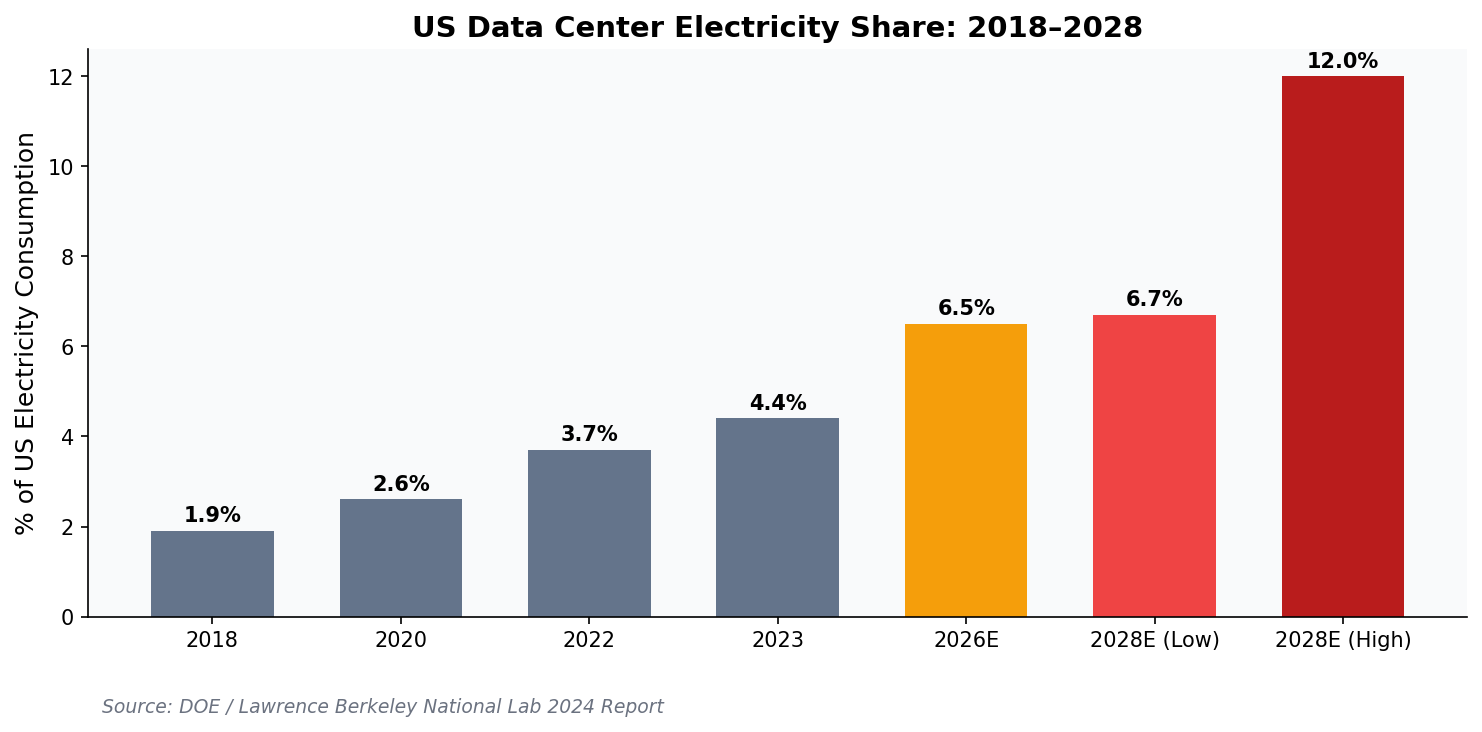
Data centers are the beating heart of the AI economy — and they're getting hungrier by the day. A single hyperscale facility can now pull as much electricity as a small city, and the U.S. Department of Energy projects data center load could reach 6.7% to 12% of total U.S. electricity consumption by 2028, up from about 4.4% in 2023 [DOE/LBNL 2024 Report]. That's rattling grid operators, utilities, and everyday ratepayers who worry their power bills will foot the bill.
This week brought a hopeful twist. Researchers unveiled a first-of-its-kind data center–grid simulator designed to test a new class of power supplies that could let these facilities act less like energy vampires and more like flexible, grid-friendly partners. The implications reach far beyond server farms — they matter for every homeowner considering solar and battery storage.
The Grid Has a Data Center Problem
Traditional data center power supplies are essentially one-way streets. They gulp electricity at a constant, maximum rate regardless of what's happening on the grid. When demand spikes on a hot afternoon and grid operators need every megawatt they can get, a data center can't easily dial back — even for a few minutes — without risking downtime.
That inflexibility is colliding with an already strained grid. According to the North American Electric Reliability Corporation (NERC), more than half of the U.S. now faces elevated risk of electricity shortfalls during extreme weather [NERC 2024 Reliability Assessment]. Utilities are proposing new natural gas plants and delaying coal retirements just to keep up — moves that raise rates and emissions alike.
The Energy Information Administration (EIA) reports that wholesale electricity prices in PJM — the grid covering the data center–dense Mid-Atlantic — jumped more than 800% in the 2025–2026 capacity auction, largely due to data center growth [EIA Electric Power Monthly].
What the New Power Supply Actually Does
The new technology, tested at a dedicated simulator facility, centers on grid-interactive uninterruptible power supplies (UPS). Instead of simply buffering servers against outages, these smart UPS units can:
- Momentarily reduce server power draw during grid stress events
- Discharge their onboard batteries back to the grid as a virtual power plant
- Smooth out frequency deviations in real time
- Coordinate with renewables to soak up surplus midday solar
Lawrence Berkeley National Laboratory research has long argued that this kind of demand flexibility is one of the cheapest tools available to decarbonize the grid — potentially saving U.S. consumers $15 billion annually by 2030 [Lawrence Berkeley Lab, 2023].
Why This Matters for Your Home
Here's the connection most news coverage misses: the same flexibility that makes data centers grid-friendly is available — right now — to homeowners with solar and battery storage. And with utility rates climbing faster than inflation in most states, the case for generating your own power has never been stronger.
The Solar Energy Industries Association (SEIA) reports that residential solar installations surpassed 5 million homes in 2024, and average system costs have fallen more than 60% since 2014 [SEIA Solar Market Insight]. Pair that with a battery, and you become your own mini version of a grid-friendly data center — generating clean power when the sun shines and discharging stored energy when the grid needs help (or when rates spike).
The Economic Case in 2026
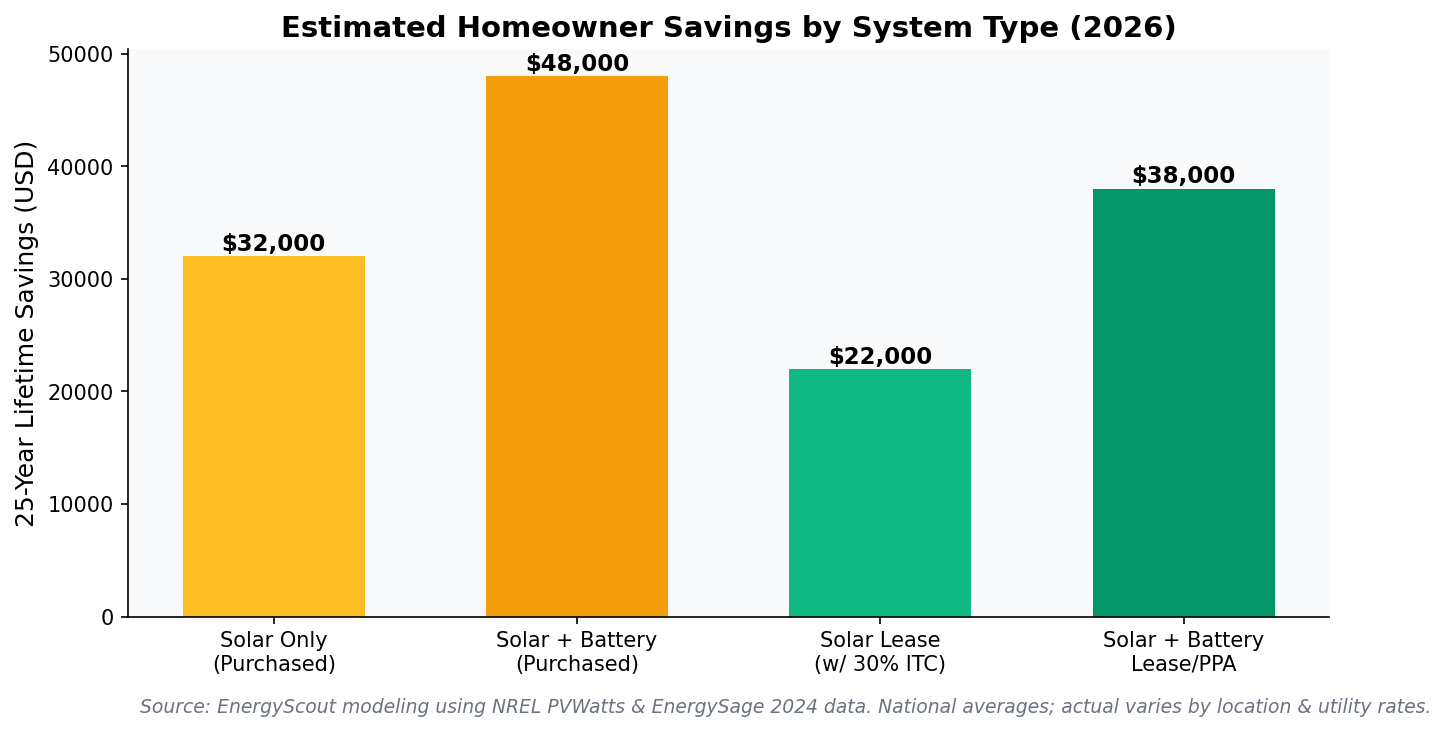
Let's be candid about the policy landscape. The federal 30% Investment Tax Credit for purchased residential solar systems expired in 2026. That changes the math — but it doesn't eliminate it. Here's what still works:
- Solar leases and Power Purchase Agreements (PPAs) still qualify for the 30% ITC, which their providers pass through as lower monthly payments.
- State-level rebates and performance incentives remain strong in California, New York, Massachusetts, Illinois, and many others.
- Net metering and net billing programs continue to credit you for exported solar power in most states.
- Utility demand-response programs now pay battery owners for grid services — echoing exactly what those fancy data center UPS units do.
EnergySage's 2024 Marketplace Report found median residential solar payback periods of 7 to 10 years, even before factoring in rising utility rates [EnergySage 2024].
Battery Storage: The Quiet Revolution
If data centers are getting grid-interactive batteries, so should your house. The California Public Utilities Commission (CPUC) approved the Self-Generation Incentive Program (SGIP) equity budgets through 2025, putting thousands of dollars back in homeowner pockets for battery installs [CPUC SGIP]. Similar programs exist in Massachusetts (SMART), New York (NY-Sun), and Puerto Rico.
Batteries do three things for you that align perfectly with grid-friendly design:
- Backup power during outages — increasingly valuable as extreme weather intensifies
- Bill savings under time-of-use rates, by storing cheap solar and using it during peak-price hours
- Grid service revenue from virtual power plant programs like Tesla's Powerwall VPP, Sunrun's Connected Solutions, and Green Mountain Power's program
The National Renewable Energy Laboratory (NREL) projects that distributed batteries coupled with rooftop solar could offset up to 25% of peak-hour demand in states like Texas and California by 2030 [NREL Storage Futures Study]. That's the homeowner-scale version of the exact same grid-relief story data center researchers are now telling.
How Homeowners Can Act Like Grid-Friendly Power Supplies
Step 1: Understand Your Roof's Potential
Not every home is a great solar candidate — orientation, shading, and roof condition all matter. Our free EnergyScout solar assessment pulls NREL production data for your exact address and gives you a clear picture of expected output and savings in minutes.
Step 2: Stack Every Incentive You Can
Federal, state, local utility, and even city-level incentives can stack together. Because they change constantly, we maintain a live database. Check the solar and battery incentives search by ZIP code to see what's active where you live.
Step 3: Choose a Vetted Installer
Installer quality matters more than hardware brand. A poorly installed top-tier panel produces less than a well-installed mid-tier one. Our providers directory lists installers screened for licensing, reviews, and warranty follow-through.
The Bigger Picture
The story playing out in those data center simulator labs is the same story happening on rooftops across America: electricity is becoming two-way, intelligent, and interactive. The grid of 2030 won't look like the grid of 1990 — it will be distributed, responsive, and increasingly owned by the people it serves.
Utilities and policymakers are finally catching up. The International Energy Agency (IEA) notes that global investment in grid flexibility and distributed energy resources crossed $400 billion in 2024 — more than investment in new fossil generation for the second year running [IEA World Energy Investment 2024].
You don't need a multimillion-dollar simulator to participate. You just need a well-designed solar-plus-battery system, the right incentives, and a trustworthy installer.
Ready to Become Grid-Friendly Yourself?
Data centers are learning that flexibility, storage, and smart controls are the future. Homeowners already have access to all three — often with faster payback and deeper resilience than the big guys. Start with a free, no-obligation assessment today.
Get your free EnergyScout solar + battery assessment →
It takes under two minutes, uses real NREL production data for your address, and connects you with vetted installers in your area. No pressure, no spam — just clarity.
More Articles
Do Solar Panels Work During a Power Outage?
Most homeowners assume solar panels keep the lights on when the grid goes down. The actual answer surprises people — and the fix is simpler than you think.
Read article Battery StorageChile Hit 75% Solar in March. Here's What U.S. Homeowners Should Take From It
Chile's grid produced 29% of its electricity from solar in March, with peaks at 75%. The bottleneck wasn't generation — it was storage and transmission. Here's the homeowner takeaway.
Read article