EU Inverter Crackdown: What It Means for U.S. Homeowners
Europe just moved to restrict funding for solar projects using inverters from high-risk suppliers. Here's what the new rules mean for U.S.
The European Union just moved to restrict public funding for solar projects that rely on inverters from "high-risk" suppliers, signaling a major shift in how governments think about the cybersecurity of the grid. According to PV Magazine, the new guidance phases out certain foreign-made inverters from EU-funded projects, with a transition window for some existing installations tied to the European grid.
For American homeowners, this is more than overseas policy news. It's a glimpse of a trend already reshaping how we choose solar equipment, evaluate installers, and think about long-term grid reliability. Here's what the EU decision means, why inverters matter so much, and how to make smart, secure choices when going solar in the United States today.
Why Inverters Are the "Brain" of Every Solar System
Your solar panels produce direct current (DC), but your home and the grid run on alternating current (AC). The inverter is the device that translates between the two — and does a lot more than that. Modern smart inverters monitor production, regulate voltage, coordinate with battery storage, and communicate with utilities through cloud platforms. The U.S. Department of Energy calls inverters "grid-forming" devices because they increasingly help stabilize the grid itself (DOE, Solar Energy Technologies Office).
That intelligence is the reason regulators are paying attention. Because inverters maintain internet connections for firmware updates and performance telemetry, a compromised inverter fleet could theoretically be used to disrupt large blocks of distributed generation. A 2024 Lawrence Berkeley National Laboratory review flagged this exact concern, noting that the rapid growth of behind-the-meter solar makes inverter cybersecurity "a systemic grid reliability issue, not just a privacy one" (Berkeley Lab, 2024).
What the EU Actually Did — and Why
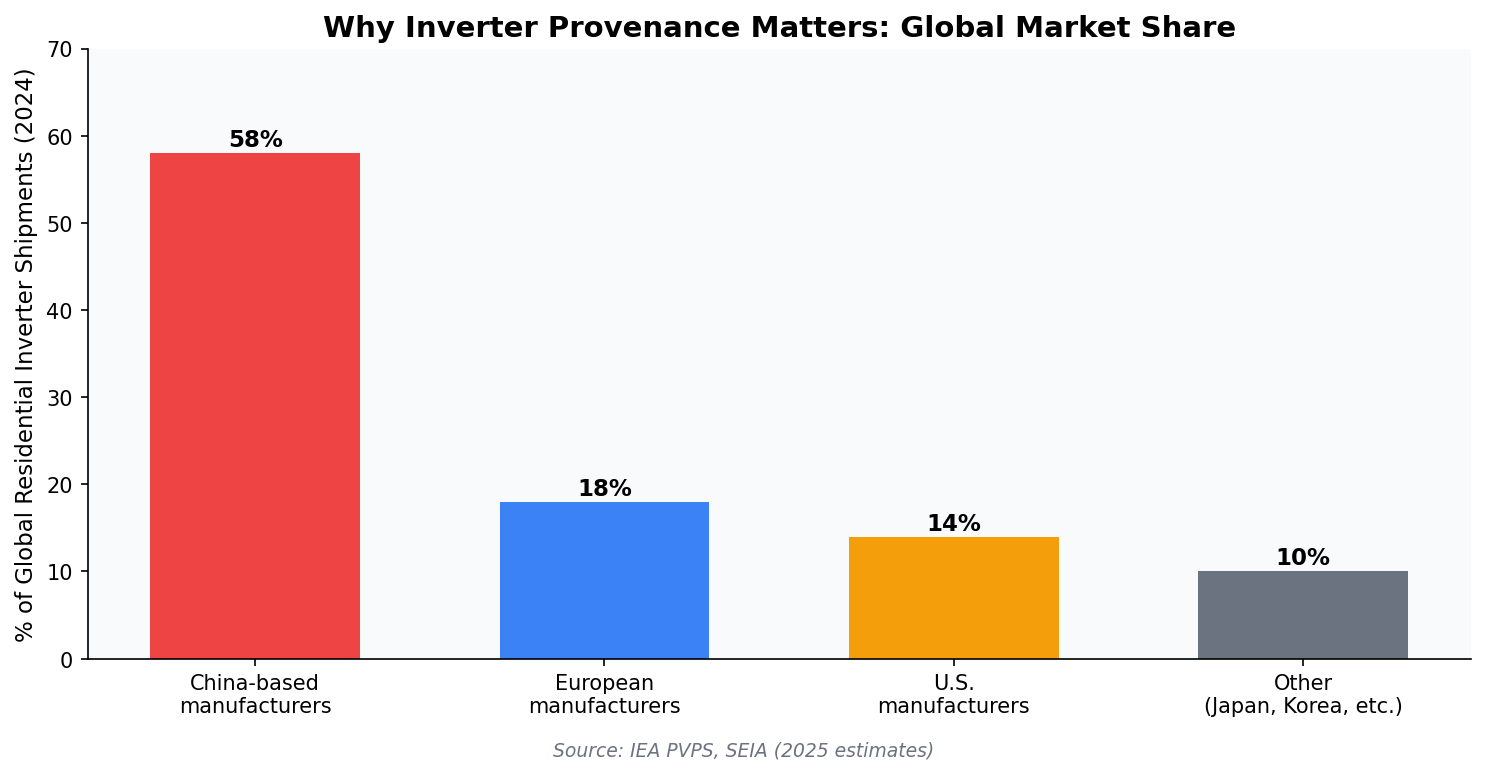
The European Commission's new guidance targets EU-funded projects, making inverters from flagged suppliers ineligible for subsidy programs. Projects already connected to the European grid get a transition period, but new builds must exclude high-risk equipment. The move mirrors similar actions in the telecom space and comes after member states raised concerns about remote access, opaque supply chains, and the concentration of inverter market share in a handful of non-EU manufacturers.
It's worth emphasizing: the EU action is about public procurement and subsidy eligibility, not an outright ban. Homeowners in Europe can still install whatever they choose on their own dime. But the signal to the market is clear — regulators now view inverter provenance as part of national energy security.
Does This Affect U.S. Homeowners?
Directly, no. The EU's guidance has no jurisdiction in the United States. Indirectly, yes — in three important ways:
- Supply chain diversification. Manufacturers are accelerating U.S. and allied-country production to stay eligible for incentive programs abroad. The Solar Energy Industries Association reports that domestic inverter manufacturing capacity has grown meaningfully since 2023 (SEIA, 2025).
- Utility program rules. Several U.S. states — including California — already require UL 1741-SA certified smart inverters for grid interconnection, and the California Public Utilities Commission has signaled further scrutiny of cyber hygiene standards in its Rule 21 updates (CPUC Rule 21).
- Resale value and warranty continuity. If a manufacturer loses major market access, its long-term service commitments can weaken. Choosing a vendor with strong financials and a U.S. service footprint helps protect your 10–25 year warranty.
The Bigger Story: A Fast-Growing, Increasingly Domestic Solar Market
All of this regulatory activity is happening because solar is no longer a niche technology. The U.S. Energy Information Administration reports that solar generated roughly 11% of U.S. electricity in 2024, up from less than 1% a decade earlier, and is projected to be the largest source of new generation added through 2026 (EIA Electric Power Monthly).
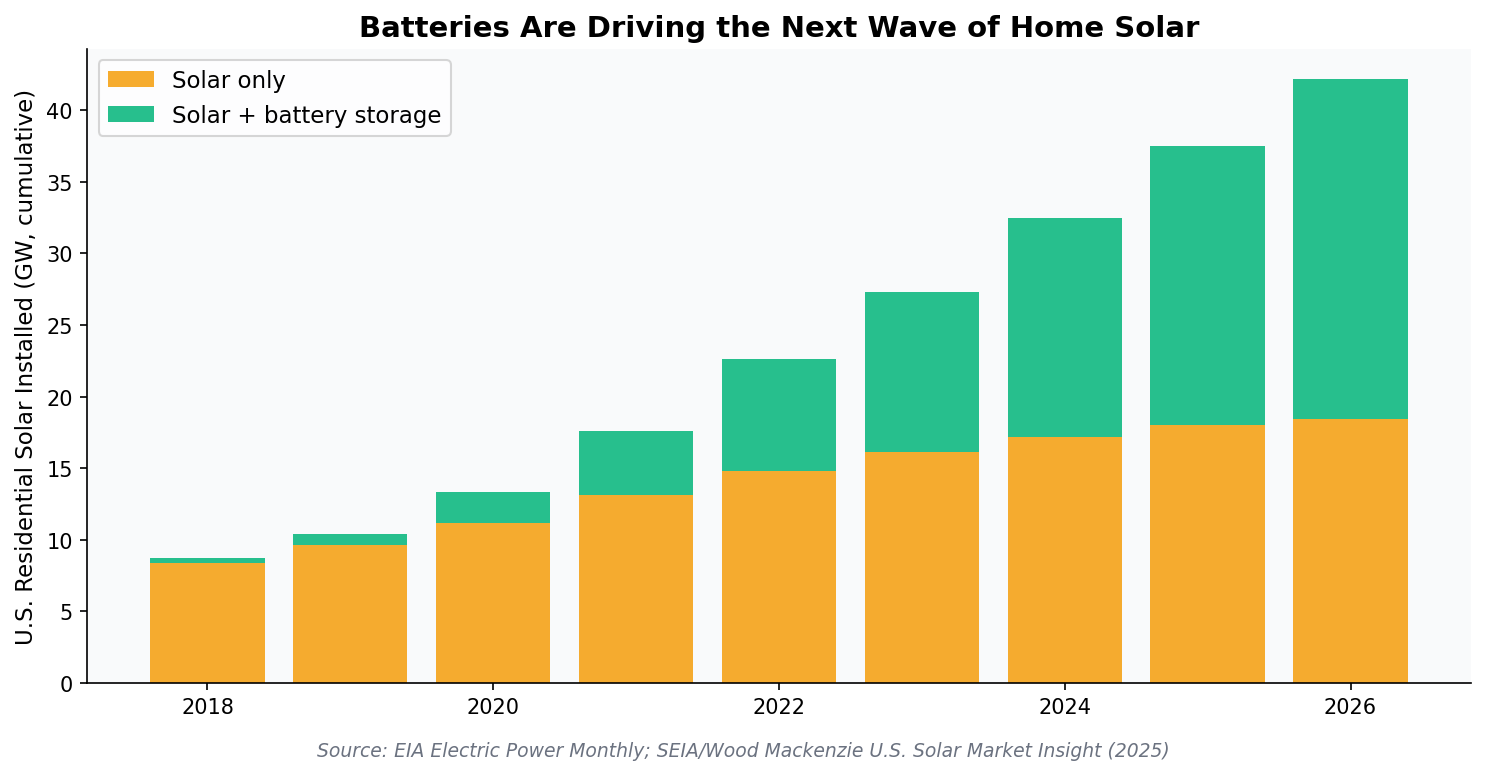
Distributed rooftop and behind-the-meter solar make up a meaningful slice of that growth. The National Renewable Energy Laboratory estimates that technical rooftop potential could supply nearly 40% of U.S. electricity demand if fully developed (NREL Rooftop PV Study). That scale is exactly why governments — American and European — are tightening the screws on the devices that keep all those systems talking to the grid.
What to Look For in a Secure, Reliable Home Solar System
You don't need to be a cybersecurity expert to make a smart decision. Here's a practical homeowner checklist:
1. Choose UL 1741-SA (or 1741-SB) Certified Inverters
This is the American standard for smart inverters that can provide grid support functions. Any reputable installer will recommend certified equipment; if yours doesn't, that's a red flag.
2. Favor Manufacturers With U.S. Operations
Companies like Enphase, SolarEdge, Tesla, and Generac have established U.S. service networks, firmware support, and warranty infrastructure. EnergySage's 2025 installer survey found that microinverter and string-inverter warranties from these vendors are now the most commonly quoted on its marketplace (EnergySage Marketplace Report).
3. Ask About Firmware and Data Policies
A good installer can tell you: Who pushes firmware updates? Where is monitoring data stored? Can you opt out of cloud monitoring without voiding the warranty? The DOE has published plain-language guidance encouraging homeowners to ask these questions (DOE Homeowner's Guide).
4. Verify Installer Credentials
NABCEP certification, state licensing, and bonded workmanship warranties all matter. EnergyScout's vetted provider directory highlights installers with verified credentials and customer reviews.
The Incentive Landscape in 2026
Important update: The federal 30% Residential Clean Energy Credit (ITC) for purchased solar systems expired at the end of 2025. Homeowners who buy their system outright in 2026 can no longer claim the 30% federal tax credit. However, third-party-owned systems — leases and power purchase agreements (PPAs) — can still qualify for the commercial investment tax credit, which installers often pass through as lower monthly payments.
That doesn't mean solar stopped making sense on January 1. Many of the most valuable incentives are state and utility level, and they're unaffected by the federal change:
- State tax credits in New York, South Carolina, Hawaii, and others
- Property tax exemptions in roughly 30 states
- Sales tax exemptions for solar equipment
- Net metering and successor tariffs that pay for exported energy
- Battery storage rebates from utilities and states like California (SGIP), Massachusetts (SMART), and Connecticut
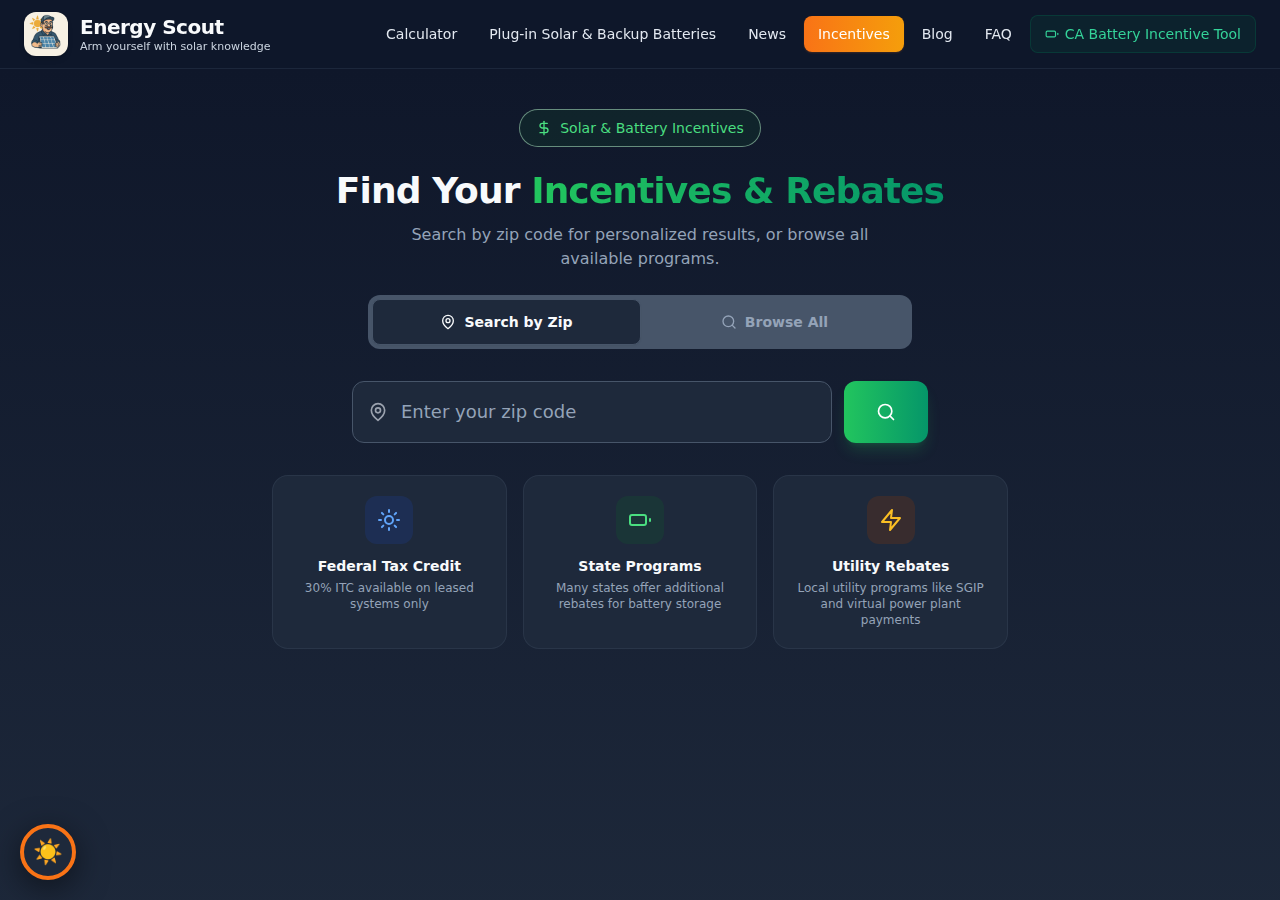
Use EnergyScout's solar and battery incentives search to see every program available in your ZIP code — updated regularly from state, utility, and federal sources.
Why Pairing Storage With Solar Is More Attractive Than Ever
Here's a quiet shift that rarely makes headlines: as net metering reforms reduce export compensation in states like California (NEM 3.0), adding a battery to capture daytime production for evening use has become the higher-value play. A 2025 Lawrence Berkeley Lab analysis found that well-sized battery systems in NEM 3.0 territory now deliver payback periods competitive with pre-reform solar-only systems, especially for households with EV charging or high evening loads (Berkeley Lab Storage Futures).
Batteries also give you something no inverter-policy debate can take away: resilience. When the grid is down, a solar-plus-battery home keeps the lights on, the refrigerator running, and critical medical equipment operating. That's a homeowner benefit that doesn't depend on Brussels or Washington.
The Bottom Line
The EU's inverter decision is a headline today, but it's part of a longer story: as solar scales up, every layer of the system — panels, inverters, batteries, software — is being scrutinized for reliability, security, and supply-chain transparency. That's actually good news for homeowners. More scrutiny means better standards, more domestic manufacturing, and equipment designed to last the full 25-year life of your system.
You don't need to track regulatory filings to benefit. You just need to work with a credentialed installer, insist on certified equipment from a financially sound manufacturer, and choose a system sized to your actual energy use.
Start Your Solar + Storage Plan Today
EnergyScout is a free, independent resource that helps you:
- Estimate your solar savings with a personalized home assessment
- Discover every incentive available in your ZIP code
- Compare vetted local installers with verified reviews
Ready to take the next step? Visit energyscout.org and get a free assessment in under two minutes — no phone number required.
More Articles
Do Solar Panels Work During a Power Outage?
Most homeowners assume solar panels keep the lights on when the grid goes down. The actual answer surprises people — and the fix is simpler than you think.
Read article Battery StorageChile Hit 75% Solar in March. Here's What U.S. Homeowners Should Take From It
Chile's grid produced 29% of its electricity from solar in March, with peaks at 75%. The bottleneck wasn't generation — it was storage and transmission. Here's the homeowner takeaway.
Read article