How Smartphone Cameras Are Making Rooftop Solar Cheaper
Smartphone LiDAR scans are quietly revolutionizing rooftop solar by automating roof design and slashing soft costs. Here's what it means for your wallet — and how to capture the savings in 2026.
Imagine pointing your phone at your roof and getting a precise, installer-grade design for a solar-plus-battery system in minutes — not weeks. That future is arriving fast. A new wave of smartphone-based 3D scanning tools is poised to slash one of the largest hidden costs in residential solar: the soft costs of designing, permitting, and selling each system. According to Canary Media (April 2026), startups and the U.S. Department of Energy are now using LiDAR-equipped phones to capture exact roof geometry, automate shading analysis, and shrink the time between a homeowner's first click and a finished install.
For homeowners, the implications are big. Cheaper soft costs mean lower install prices, faster turnaround, and fewer surprises on installation day. Combined with state and utility incentives — and the lease/PPA pathway that still qualifies for the federal 30% Investment Tax Credit — going solar in 2026 is more accessible than ever, even after the residential ITC expired for purchased systems.
Why soft costs matter so much
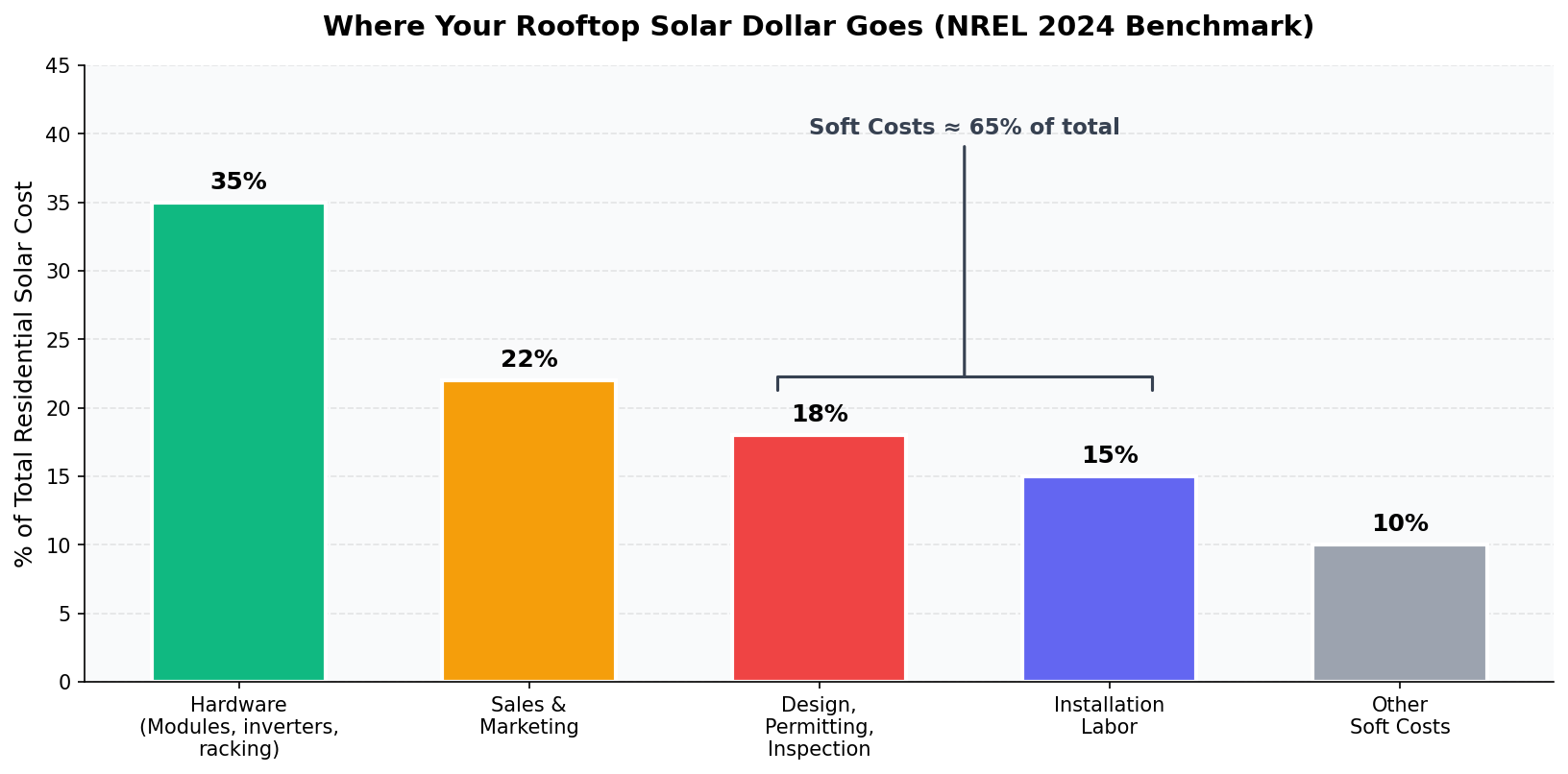
Hardware is no longer the expensive part of rooftop solar. Module prices have fallen more than 90% since 2010, and according to the National Renewable Energy Laboratory (NREL), soft costs — sales, design, permitting, inspection, and customer acquisition — now account for roughly 65% of the total price of a residential solar system. The Lawrence Berkeley Lab "Tracking the Sun" report confirms the trend: U.S. residential systems remain two to three times more expensive than comparable installs in Australia or Germany, almost entirely because of soft costs.
That gap is exactly what smartphone-based design tools are built to close. A site visit, drone flight, or aerial imagery purchase can cost an installer between $200 and $700 per home. Replacing that step with a homeowner-led phone scan — verified by AI — could shave hundreds of dollars off every quote.
How smartphone LiDAR is changing the game
Modern iPhones (Pro models since the iPhone 12) and many Android flagships ship with LiDAR or time-of-flight depth sensors originally designed for augmented reality. Combined with photogrammetry — stitching multiple photos into a 3D model — these sensors can now produce roof scans accurate to within a few centimeters, on par with traditional drone surveys.
The U.S. Department of Energy's Solar Energy Technologies Office (SETO) has been funding this push through programs like the SolarAPP+ initiative, which automates permitting, and through grants to startups developing AI-powered roof modeling apps. The goal: a homeowner takes a 60-second walk around the house, an algorithm builds a fully shaded 3D model, and an installer receives a permit-ready design without ever climbing a ladder.
What this means for your wallet
NREL's benchmark shows the average U.S. residential solar system cost about $3.06 per watt installed in 2024. If automated, phone-based design and permitting cut even half of the typical $0.40–$0.60/W in sales and design overhead, a 7-kilowatt system could drop in price by $1,400 to $2,100 — before any incentives.
Layer in storage and the savings compound. EnergySage's 2025 Marketplace Report showed homeowners attaching a battery to a new solar quote saved an average of 12% on the combined price compared with sequential installs. With faster, automated design pipelines, batch-installing both systems in one visit becomes the norm, not the exception.
The 2026 incentive landscape
It's important to be clear about where federal policy stands. The 30% Residential Clean Energy Credit (the federal ITC) expired at the end of 2025 for purchased systems. Homeowners buying panels outright in 2026 cannot claim it. However, the Solar Energy Industries Association (SEIA) confirms that third-party-owned systems — solar leases and power purchase agreements (PPAs) — still qualify for the commercial ITC, which the installer or financier passes along as lower monthly payments.
State and utility incentives remain robust. California's Self-Generation Incentive Program (SGIP) still provides battery rebates worth thousands of dollars for qualifying customers. Massachusetts' SMART program, New York's NY-Sun, and dozens of utility-level rebates can cut total project cost by another 10–30%. The challenge is finding what's available in your zip code — a problem EnergyScout solves in seconds.
How EnergyScout fits the smartphone-solar future
EnergyScout was built for exactly this moment: cheaper hardware, faster digital design, and a fragmented incentive landscape that rewards informed homeowners. Here is how to use the platform to capture the savings unlocked by these new technologies:
1. Start with a free assessment
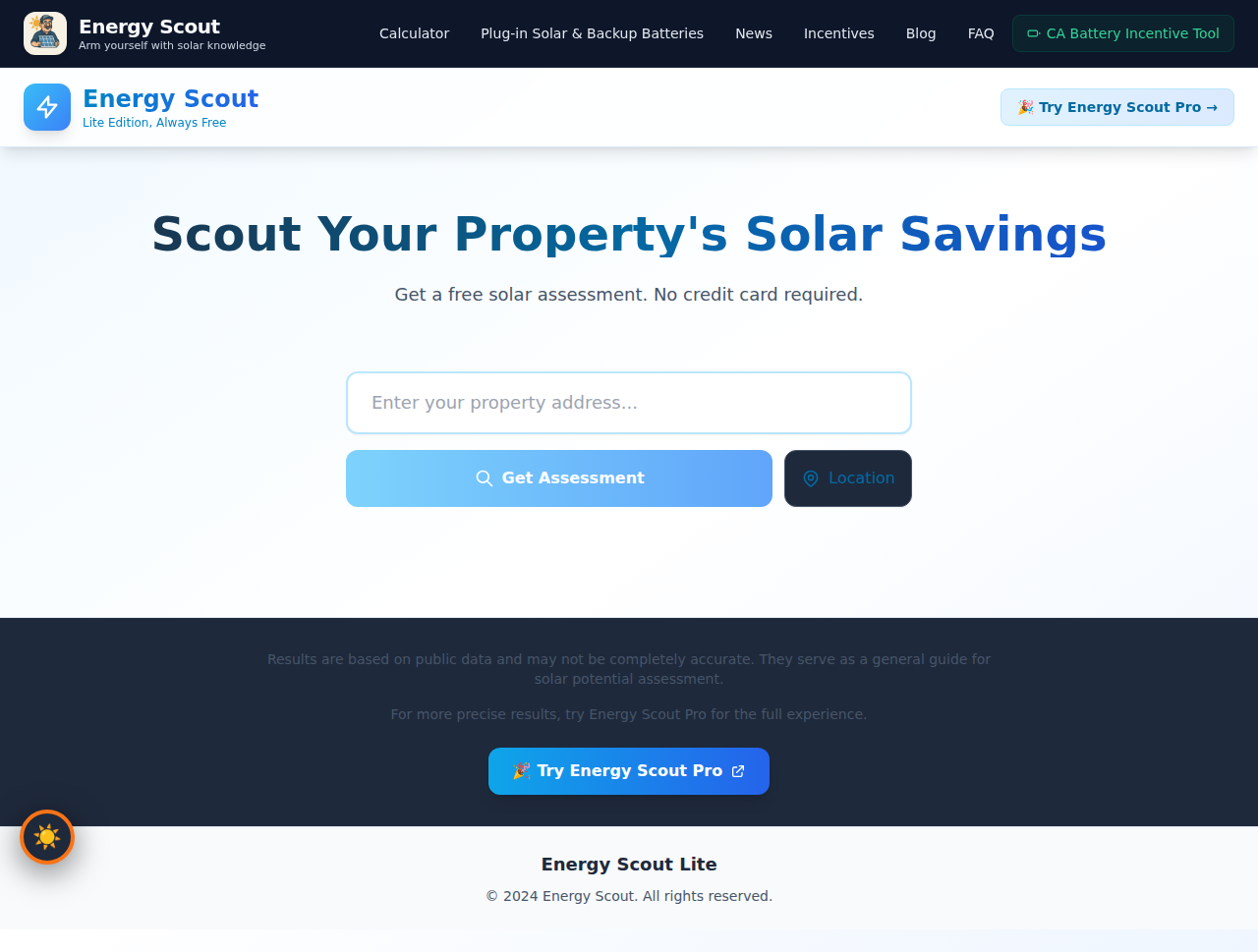
Our free solar assessment tool uses your address, utility bill, and roof orientation to model a system tailored to your home. It mirrors the same NREL PVWatts engine that professional installers use, so the production estimate you see is the production estimate you can hold installers accountable to.
2. Stack every available incentive
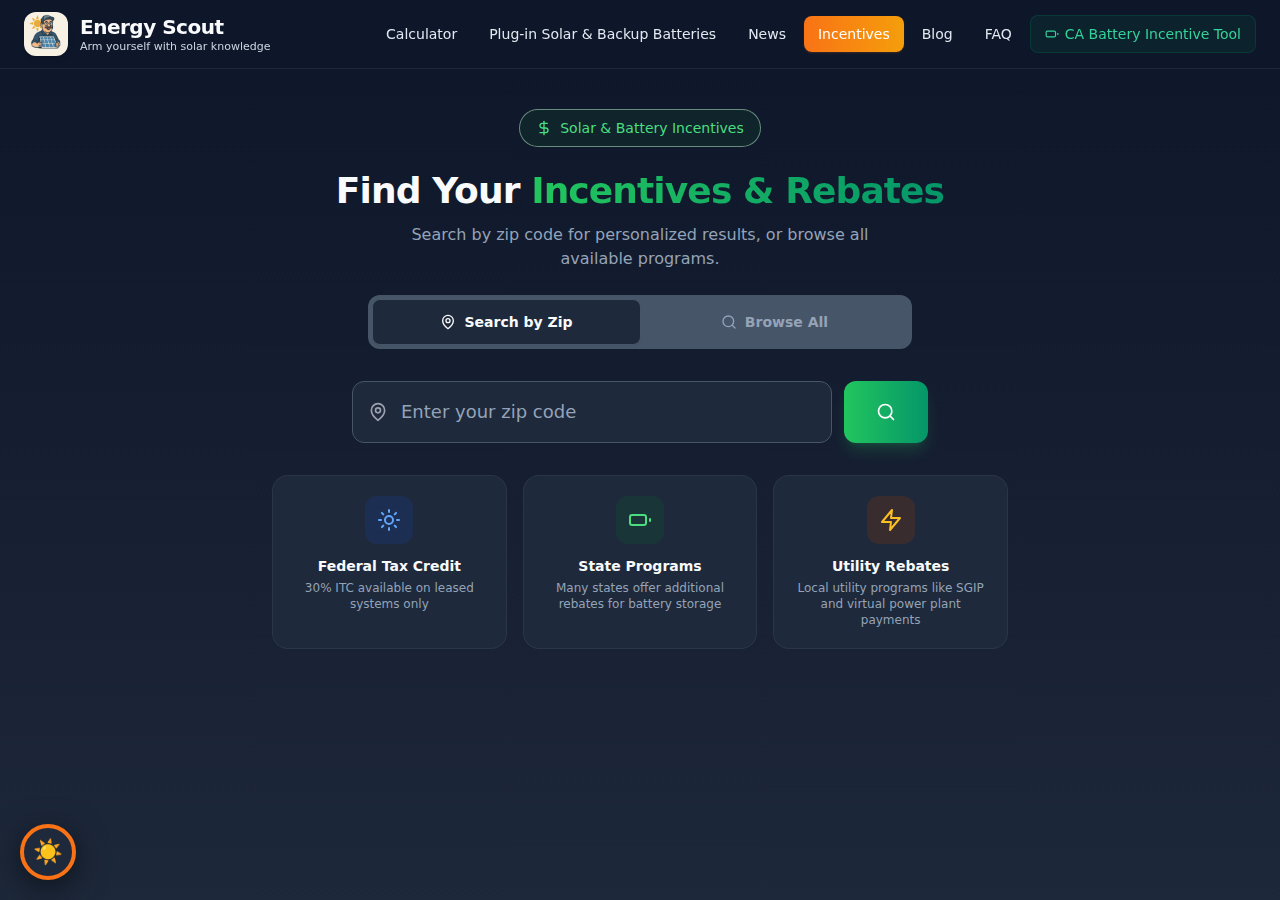
Use the solar and battery incentives search to find federal (lease/PPA), state, utility, and local rebates by zip code. EnergyScout aggregates more than 2,500 active programs nationwide so you don't miss money you're entitled to.
3. Compare vetted installers
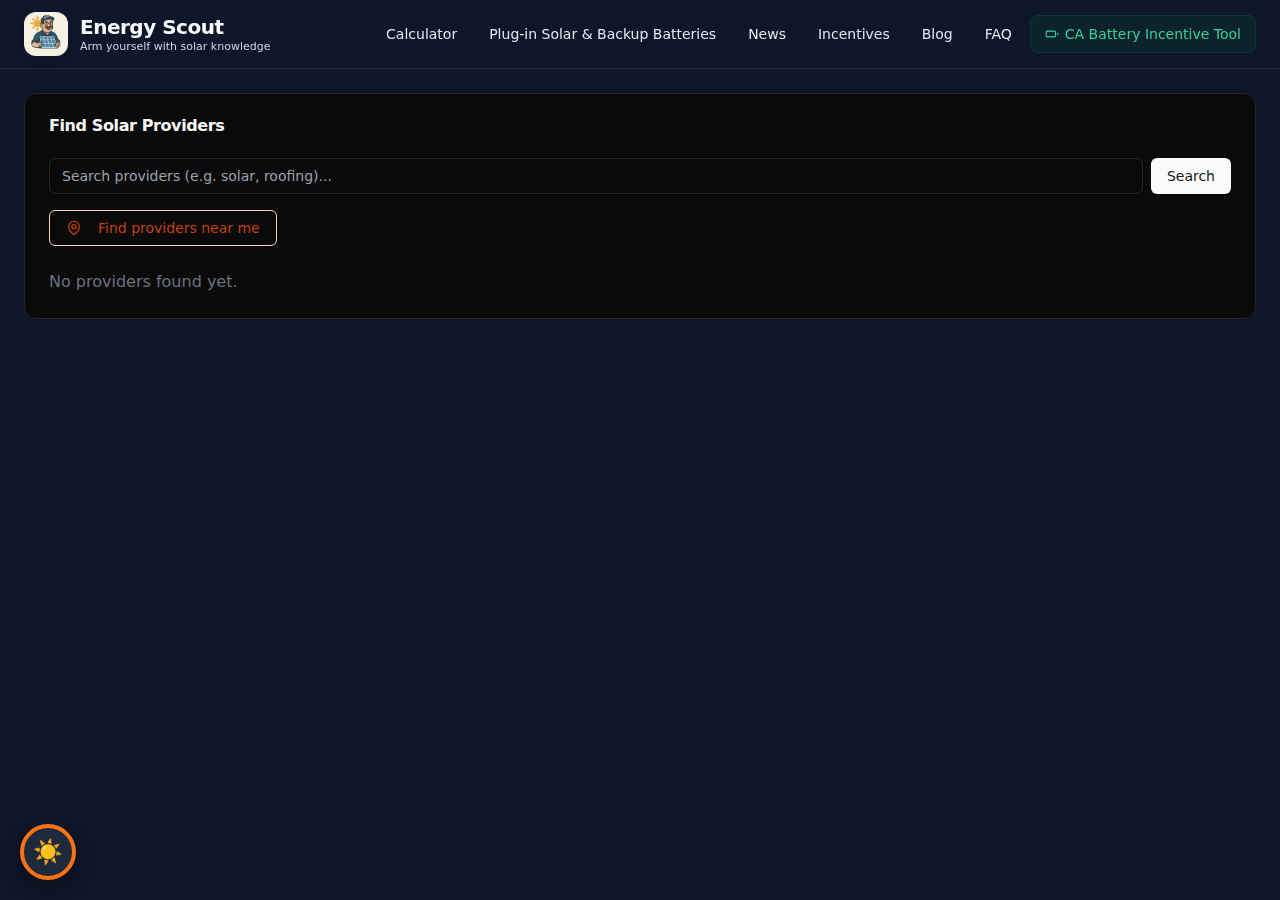
The providers directory connects you with local solar installers — many of whom have already adopted phone-based site survey tools, which means faster quotes and fewer in-person visits.
What to ask an installer in 2026
If smartphone-based design is the future, you can use it as a litmus test for installer modernization. Questions worth asking:
- Do you offer a remote site survey using a homeowner phone scan? If yes, you'll save days of scheduling.
- Do you use SolarAPP+ for permitting? The DOE program cuts permitting from weeks to hours in participating jurisdictions.
- Are you quoting a lease or PPA so I can capture the federal ITC? For 2026, this is the only path to the 30% federal credit on residential rooftop solar.
- What's your soft-cost markup vs hardware cost? Reputable installers will share this; outliers above $1.50/W in soft costs are worth a second opinion.
The bigger picture: democratizing energy data
The smartphone-solar story is part of a broader democratization of energy data. According to the U.S. Energy Information Administration (EIA), distributed solar will supply more than 7% of U.S. electricity by 2027, up from under 4% in 2023. Each one of those rooftops requires accurate design data — and increasingly, the homeowner controls the device that captures it.
That power shift matters. When you can scan your own roof, compare your own incentives, and bid out your own job to vetted installers, you stop being a lead and start being a customer. EnergyScout is built around that premise.
The customer-acquisition revolution
One of the most overlooked benefits of phone-based design is what it does to customer acquisition cost (CAC). NREL benchmarks place residential solar CAC at roughly $0.40 per watt — about $2,800 on an average 7 kW system. Most of that money pays for door-to-door reps, lead-generation marketplaces, and aggressive call centers. When homeowners can self-serve a design and instantly compare apples-to-apples installer quotes, that pipeline shortens dramatically. Independent platforms like EnergyScout already cut CAC by guiding homeowners to pre-vetted local installers without the high-pressure sales loop.
Quality, transparency, and accountability
Phone-captured roof models also create a permanent digital record. If a panel underperforms two years after install, you can compare actual production with the original design's shading and orientation assumptions. The DOE has signaled that this kind of transparent post-install data could soon feed into national grid-modernization datasets, helping utilities plan smarter distributed energy programs — and giving consumers stronger warranty leverage.
Take the next step
You don't have to wait for a salesperson to knock on your door. Take 90 seconds, run your address through EnergyScout, and see whether solar plus storage makes financial sense for your home in 2026. The technology has finally caught up to the promise — and the savings have never been easier to claim.
More Articles
Do Solar Panels Work During a Power Outage?
Most homeowners assume solar panels keep the lights on when the grid goes down. The actual answer surprises people — and the fix is simpler than you think.
Read article Battery StorageChile Hit 75% Solar in March. Here's What U.S. Homeowners Should Take From It
Chile's grid produced 29% of its electricity from solar in March, with peaks at 75%. The bottleneck wasn't generation — it was storage and transmission. Here's the homeowner takeaway.
Read article