Solar Grazing Goes Beyond Sheep: Cattle Join the Field
Solar developer Silicon Ranch is pioneering a cattle-friendly solar grazing model that pairs clean electricity with carbon sequestration and land...
For years, the image of solar grazing has been simple: a flock of sheep wandering between rows of photovoltaic panels, nibbling grass and trimming the vegetation that would otherwise need a mower. But in April 2026, US solar developer Silicon Ranch announced a bold new chapter — agrivoltaics designed not for sheep, but for cattle, alongside carbon sequestration, water conservation, and full-scale land restoration on the same acreage (CleanTechnica, April 2026).
It is a shift that could reshape how rural America thinks about solar — and it carries surprisingly direct implications for homeowners weighing their own clean-energy choices in 2026.
Why Solar Grazing Matters
Agrivoltaics — the practice of co-locating solar generation with farming — has been quietly maturing for a decade. The US Department of Energy's InSPIRE program has documented dozens of pilot sites where crops, pollinators, and livestock thrive beneath solar arrays. According to the National Renewable Energy Laboratory (NREL), agrivoltaics installations now span more than 60,000 acres in the United States, generating over 10 gigawatts of capacity while continuing to produce food and fiber (NREL, 2025).
Sheep grazing has dominated the conversation because sheep are short, gentle on infrastructure, and naturally suited to vegetation management. But cattle are an order of magnitude larger — and the economic stakes are bigger too. The American beef industry generates roughly $80 billion in annual cash receipts according to the USDA, and any system that lets ranchers diversify into clean-power lease income without giving up grazing land is potentially transformative.
What Silicon Ranch Is Actually Doing
Silicon Ranch's project is built around what the company calls Regenerative Energy, a model where each solar site is engineered as a working ecosystem. Panels are mounted higher off the ground than typical utility installations, racking is reinforced, and native perennial grasses are seeded to restore soil health. Cattle rotate through paddocks under and between the arrays, fertilizing the ground and supporting carbon drawdown in the root systems beneath them.
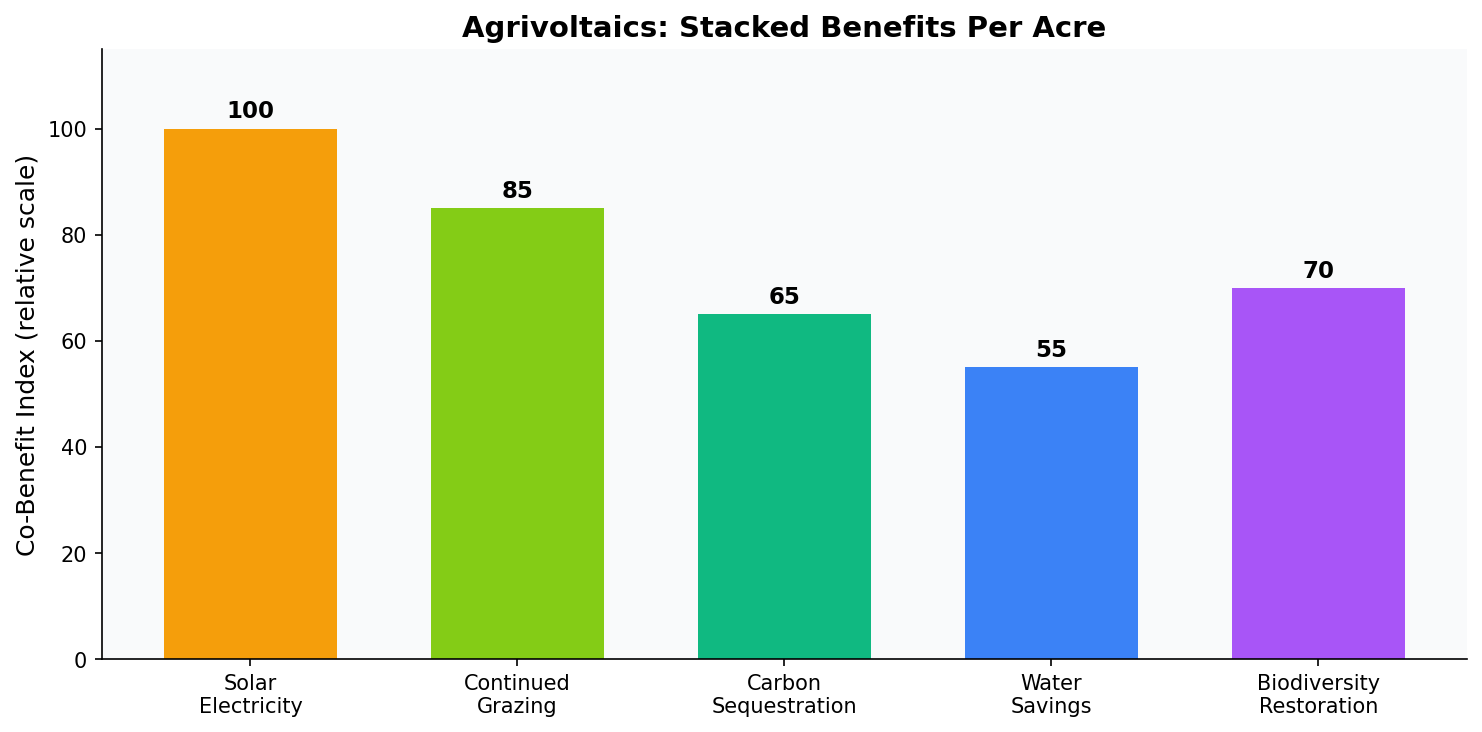
The benefits stack:
- Clean electricity for the grid — typically sold to utilities under long-term power purchase agreements.
- Continued food production, with cattle gaining shade and forage benefits during heat waves.
- Carbon sequestration in the regenerated soils, which Lawrence Berkeley National Laboratory has estimated can lock down 0.4 to 1.2 metric tons of CO₂ per acre per year on well-managed grasslands (LBNL).
- Water conservation, as panel shade reduces evapotranspiration and supports more drought-resilient pasture.
- Higher land productivity, since the same acre is now generating both lease revenue and ranch income.
Why This Is a Big Deal for the Grid
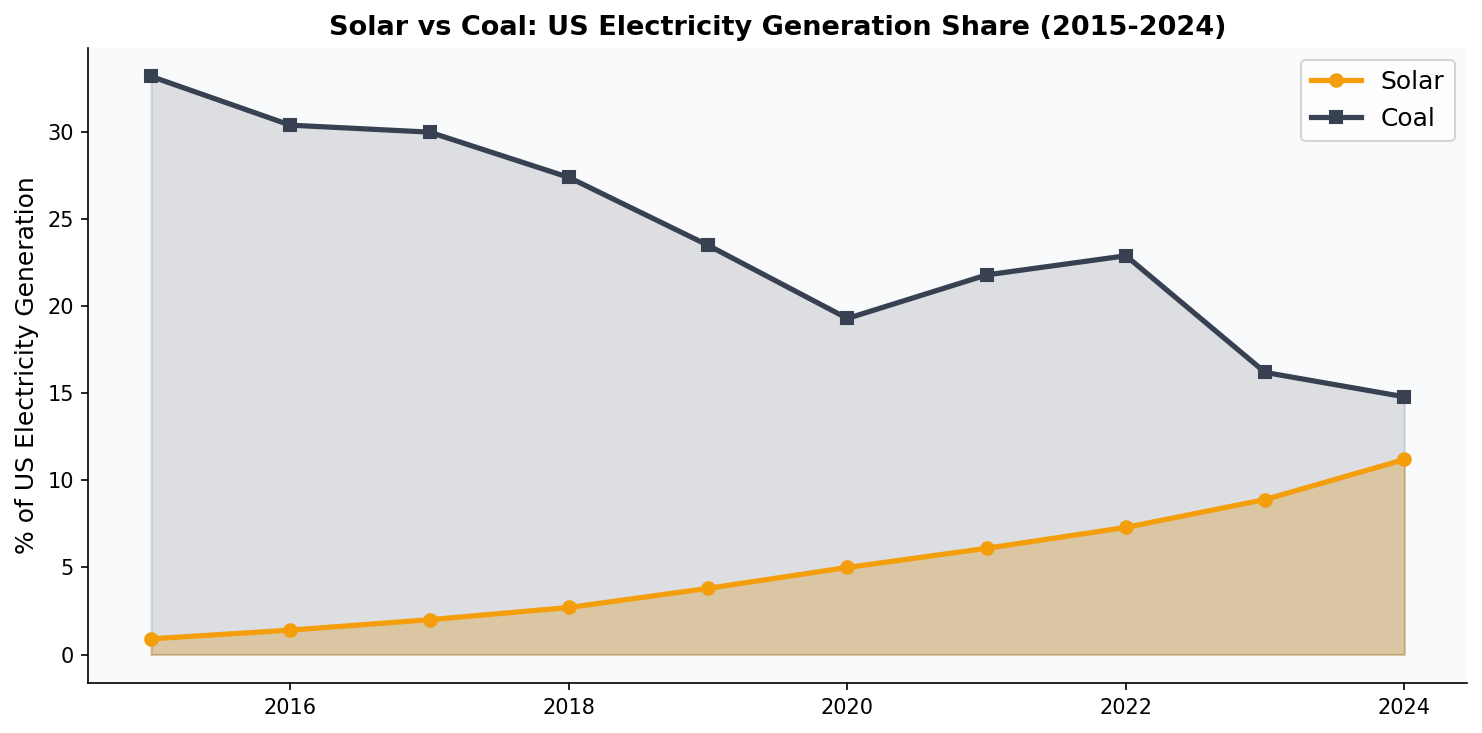
The Energy Information Administration (EIA) reported that solar accounted for roughly 11.2% of US electricity generation in 2024, up from less than 1% a decade earlier (EIA, 2025). SEIA projects that figure will climb past 20% by 2030. But that growth is increasingly bumping up against land-use objections, particularly from agricultural communities worried about losing prime farmland.
Agrivoltaics is one of the most promising answers to that tension. A 2024 Lawrence Berkeley Lab study found that the United States could meet its 2050 clean-energy land needs while using less than 1% of agricultural land — but only if dual-use systems like solar grazing become standard. Silicon Ranch's cattle-friendly approach makes that future more plausible by directly addressing the largest cohort of US farmers: ranchers.
What Does This Mean for Homeowners?
You may be reading this and thinking: "That's great for utility-scale solar, but I don't have a herd of cattle." Fair point. Yet the economics flowing from these utility-scale projects do reach your roof in three concrete ways:
1. Lower Wholesale Power Prices
Every gigawatt of new low-cost solar capacity puts downward pressure on wholesale electricity markets. Lazard's 2024 LCOE analysis pegged unsubsidized utility solar at roughly $33/MWh — cheaper than new gas, and dramatically cheaper than new coal. While retail rates are sticky, more solar in the mix slows future rate hikes.
2. Better Time-of-Use Arbitrage With a Home Battery
As more solar joins the grid, midday wholesale prices fall and evening prices rise — which is exactly the gradient a home battery is designed to exploit. EnergySage's 2025 marketplace data shows that paired solar-plus-battery systems now make up over 35% of residential installations, up from less than 10% in 2020. If you are a homeowner in a time-of-use territory, a battery is increasingly the centerpiece of the value stack.
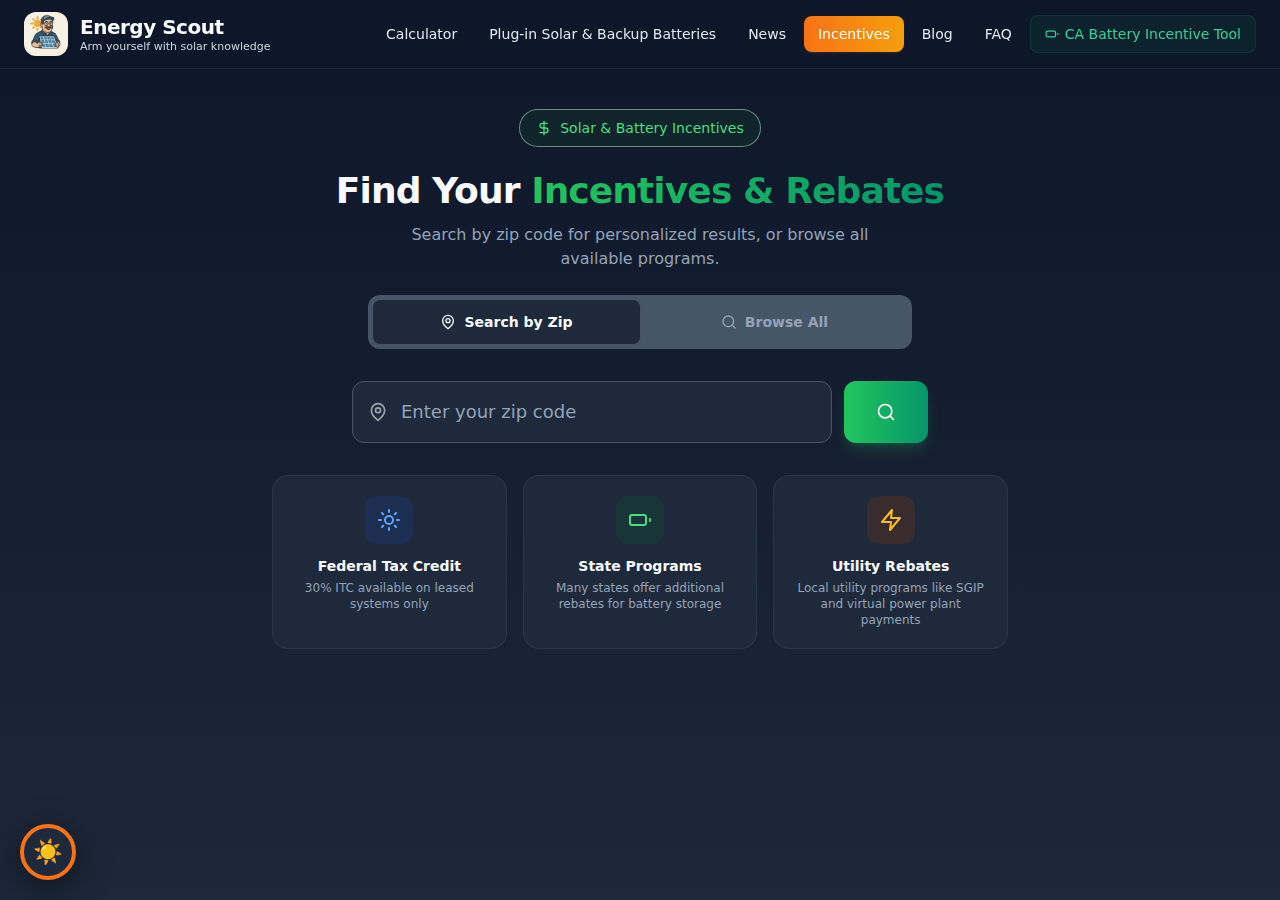
Use EnergyScout's free solar & battery incentives search to see what state, utility, and local rebates apply to your ZIP code right now.
3. A Maturing Installer Ecosystem
The same developers refining utility-scale agrivoltaics are training the next generation of solar engineers, electricians, and project managers — many of whom feed into the residential market. The Solar Energy Industries Association (SEIA) reports that the US solar workforce now exceeds 280,000 jobs, an all-time high. That depth of talent translates into faster install timelines and better workmanship for homeowners.
The 2026 Incentive Reality Check
Here's the part of the picture every homeowner needs to know clearly: the federal 30% Residential Clean Energy Credit (the ITC) expired at the end of 2025 for purchased systems. If you buy your panels or battery outright in 2026, you do not claim the 30% federal tax credit anymore.
What still works:
- Solar leases and Power Purchase Agreements (PPAs) can still capture the commercial-side ITC because the system is owned by the leasing company, not you. That benefit gets baked into your monthly rate.
- State, local, and utility incentives are unaffected by the federal change — and many remain generous. California's SGIP battery rebate, New York's NY-Sun, and Massachusetts' SMART program are still active in 2026.
- Net metering rules continue to vary widely by state, with some restructuring toward time-of-use compensation (CPUC's NEM 3.0 in California is the most prominent example).
How EnergyScout Helps You Plug In
The agrivoltaics revolution is happening at the gigawatt scale. But at the kilowatt scale — your home — the questions are simpler and more personal: Is my roof a good fit? What size system makes sense? Which incentives are still on the table in my ZIP code? Which local installers are reputable?
That is exactly the gap EnergyScout is built to close:
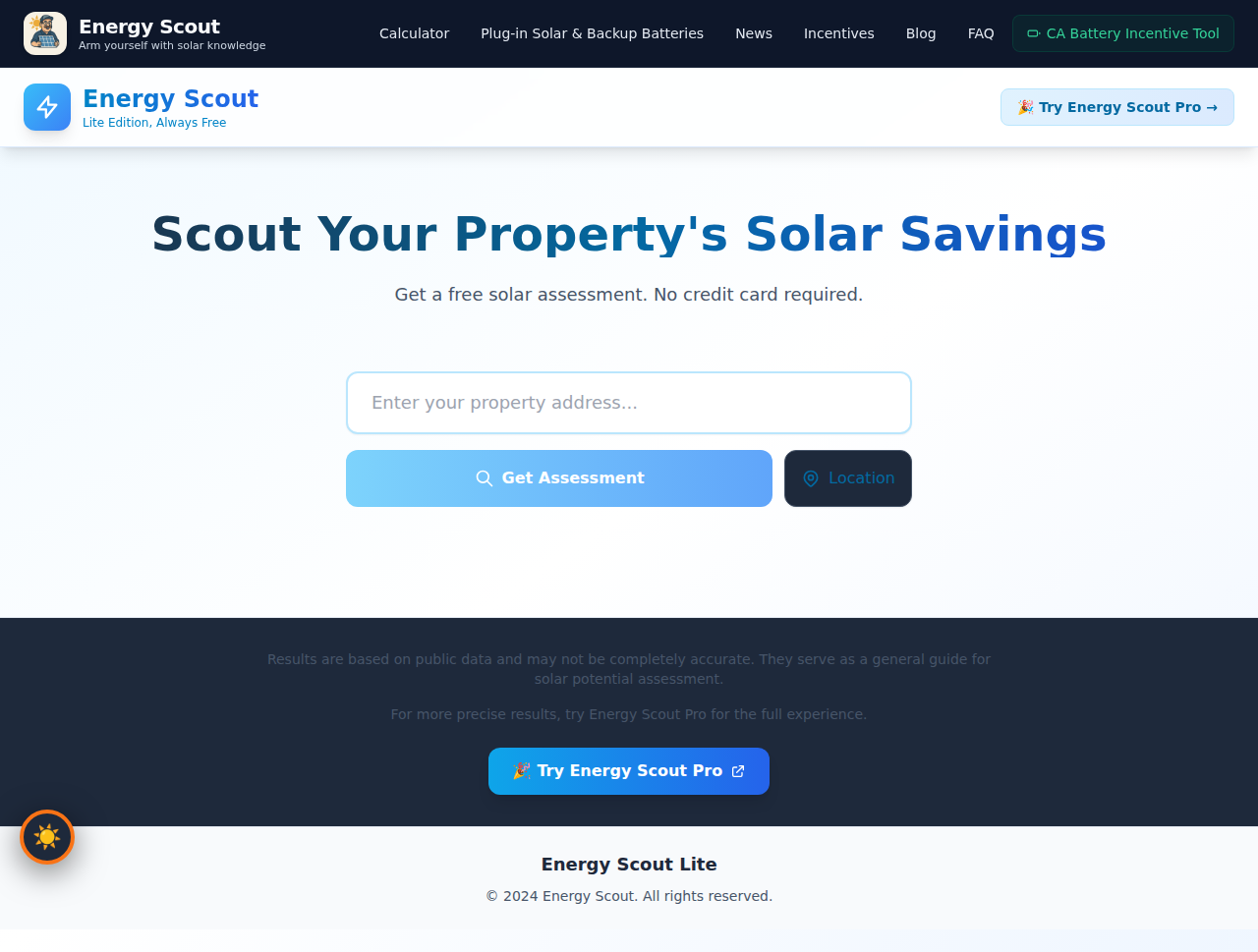
- Free home solar assessment — get a personalized estimate of system size, savings, and payback for your specific address.
- Solar & battery incentives search — see exactly which 2026 rebates and credits apply to you, including any state-level versions of the expired federal ITC.
- Vetted installer directory — connect with local solar professionals serving your area.

The Bigger Picture
Solar grazing for cattle is not just a quirky agricultural footnote. It is one of the clearest signals yet that the clean-energy transition is moving past the either/or debates of the past — farmland or solar, food or fuel, conservation or development — and into a both/and era. Silicon Ranch's cows beneath the panels embody that shift literally.
For homeowners, the takeaway is encouraging. Cheaper utility solar means cheaper grid power over time. Smarter rate structures make on-site batteries more valuable. And a richer installer ecosystem means more options when you are ready to make the leap. The clean-energy economy is no longer a niche — it is the new default, and the door is open whether you have a ranch in Tennessee or a townhouse in Toledo.
Ready to See What Solar Looks Like at Your Address?
Start with a free, no-obligation solar & battery assessment from EnergyScout. We will model your roof, your utility's rates, your local incentives, and your potential savings — then connect you with vetted installers if you choose to move forward. Visit energyscout.org today to get started.
More Articles
Do Solar Panels Work During a Power Outage?
Most homeowners assume solar panels keep the lights on when the grid goes down. The actual answer surprises people — and the fix is simpler than you think.
Read article Battery StorageChile Hit 75% Solar in March. Here's What U.S. Homeowners Should Take From It
Chile's grid produced 29% of its electricity from solar in March, with peaks at 75%. The bottleneck wasn't generation — it was storage and transmission. Here's the homeowner takeaway.
Read article