Solar Power Soared in 2024 — Here's What It Means for Homeowners
Solar power smashed records in 2024, generating more electricity than ever before. Here's what this historic surge means for homeowners weighing rooftop...
Solar power had a banner year in 2024 — and the momentum is only accelerating into 2026. According to the U.S. Energy Information Administration (EIA), utility-scale solar generation grew by more than 25% year-over-year, with rooftop solar adding tens of gigawatts of new capacity across American homes. The Solar Energy Industries Association (SEIA) confirmed that solar accounted for the majority of all new electricity capacity added to the U.S. grid in 2024.
For homeowners, this isn't just a headline — it's a signal. Solar is now the cheapest, fastest-deploying energy source in modern history, and the homes adopting it are locking in decades of stable, predictable energy costs. Here's what the record-breaking year means for you, and how to take advantage of the moment.
The Numbers Behind Solar's Historic Year
The Lawrence Berkeley National Laboratory's annual Tracking the Sun report shows that residential solar installations have continued climbing despite policy shifts, with median system sizes growing alongside household electrification needs. The DOE's Solar Futures Study projects solar could supply 40% of U.S. electricity by 2035 if current trends hold.
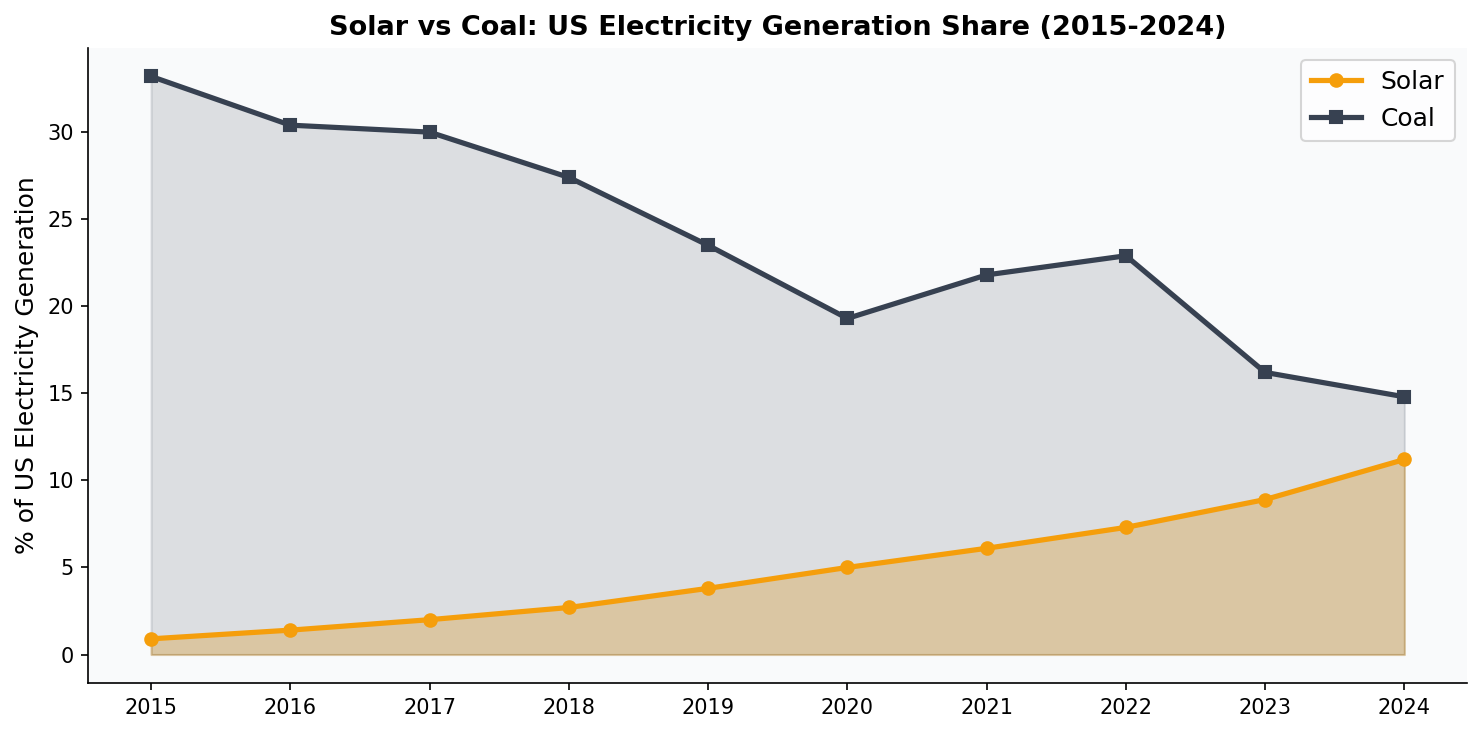
What's driving the surge? Three forces converged in 2024:
- Module prices fell sharply — solar panel costs dropped roughly 30% from 2023 levels, according to NREL's Q4 2024 benchmark report.
- Battery storage matured — pairing batteries with solar became standard in many states, unlocking energy independence and backup power.
- Utility rates kept climbing — EIA data shows U.S. residential electricity prices rose nearly 6% in 2024, making locked-in solar economics increasingly attractive.
What 2024's Solar Boom Means for Homeowners
The biggest takeaway: solar is no longer experimental. It's mainstream infrastructure. With more than 5 million U.S. homes now solar-powered (per SEIA), supply chains, installer networks, and financing options are more robust than ever. That means faster installs, more competitive bids, and better long-term reliability.
If you've been on the fence, here's the practical reality in 2026:
1. Energy bills aren't going down
The EIA's Short-Term Energy Outlook projects continued retail electricity price increases through 2027, especially in regions with grid stress and growing data center demand. Going solar effectively pre-pays decades of electricity at today's prices.
2. Solar pairs better with batteries than ever
Battery costs dropped roughly 40% over the past five years, according to DOE estimates. A solar+battery system today provides outage protection, time-of-use bill optimization, and self-consumption — three benefits that didn't exist for most homeowners just a decade ago.
3. The federal tax credit landscape changed in 2026
This is critical: the federal 30% Investment Tax Credit (ITC) for purchased residential solar systems expired at the end of 2025. However, third-party-owned systems — leases and Power Purchase Agreements (PPAs) — still qualify for the commercial ITC, which means installers can pass those savings through to homeowners. EnergyScout helps you identify whether a purchase, lease, or PPA fits your situation.
State and Local Incentives Are Picking Up the Slack
While the federal purchase credit is gone, states are stepping up. California's Self-Generation Incentive Program (SGIP), New York's NY-Sun, Massachusetts' SMART program, and Illinois' Shines initiative all continue to offer meaningful rebates — and several states added or expanded programs in 2025 in response to the federal change. The CPUC has also adjusted Net Billing Tariff (NBT) rules to better reward battery-paired systems.
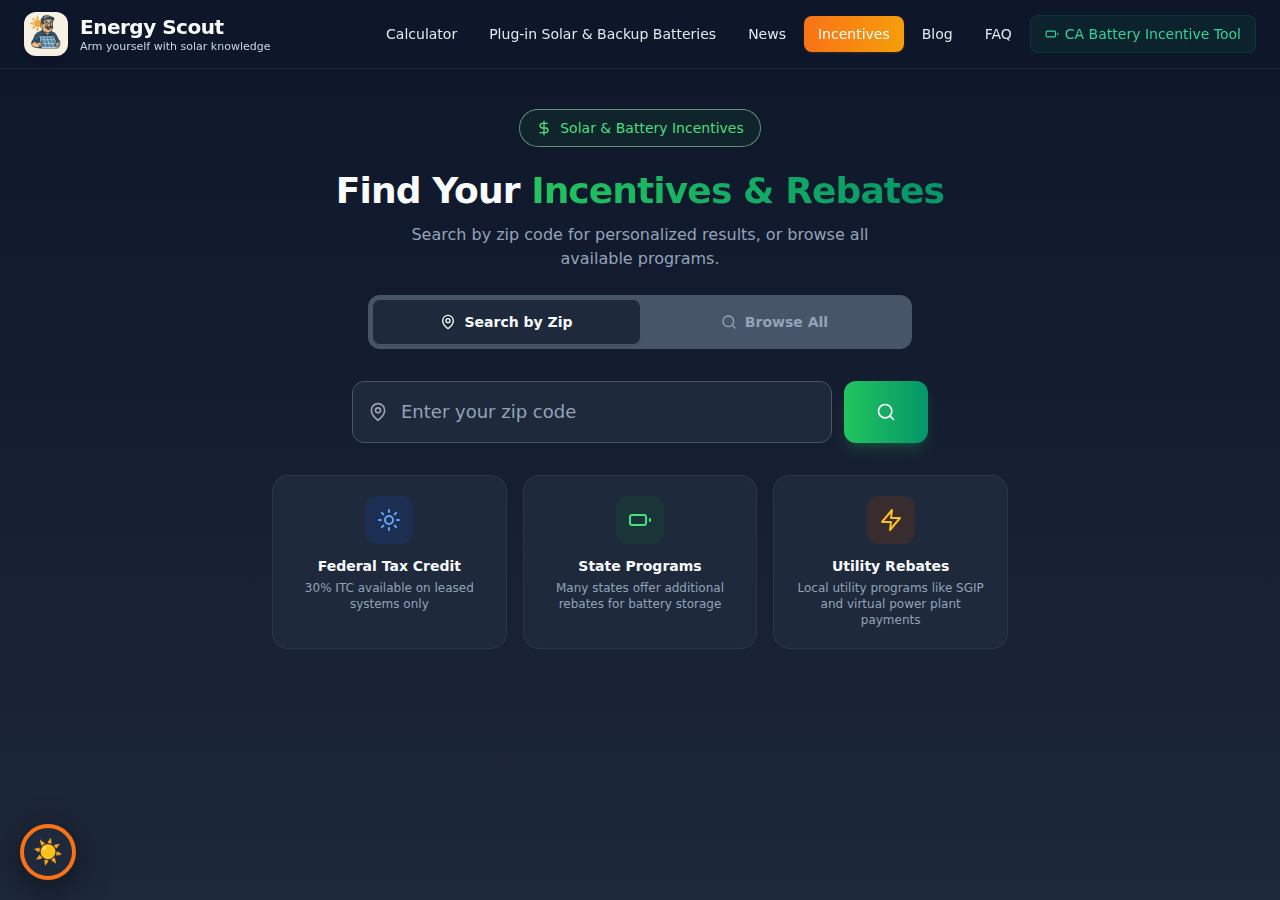
Use EnergyScout's free incentive search tool to enter your ZIP code and see exactly which state, local, and utility rebates apply to your home. The tool surfaces stacking opportunities most homeowners — and even some installers — miss.
How Solar Compares to the Rest of the Grid
One reason solar's growth is durable: it's now the cheapest source of new electricity. Lazard's 2024 Levelized Cost of Energy (LCOE) analysis ranks utility-scale solar as the lowest-cost form of new generation in the U.S., undercutting natural gas and dramatically beating coal.
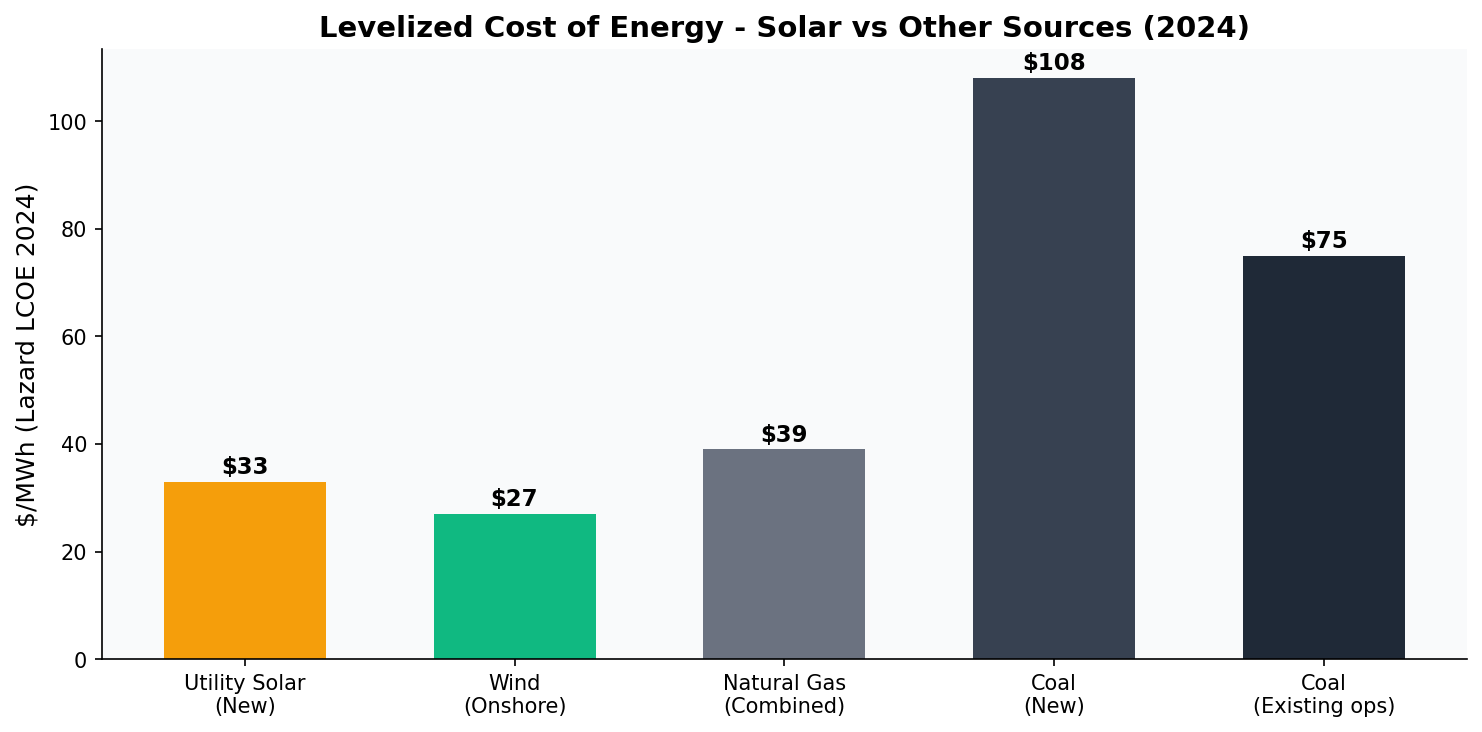
That economics story flows downhill to rooftop solar. As utility-scale solar dominates new build, residential equipment costs and installer expertise compound — meaning quotes are getting more competitive, not less.
The Homeowner Playbook for 2026
Riding the solar wave doesn't require expertise or a huge upfront budget. Here's a clean step-by-step approach:
Step 1: Get a personalized assessment
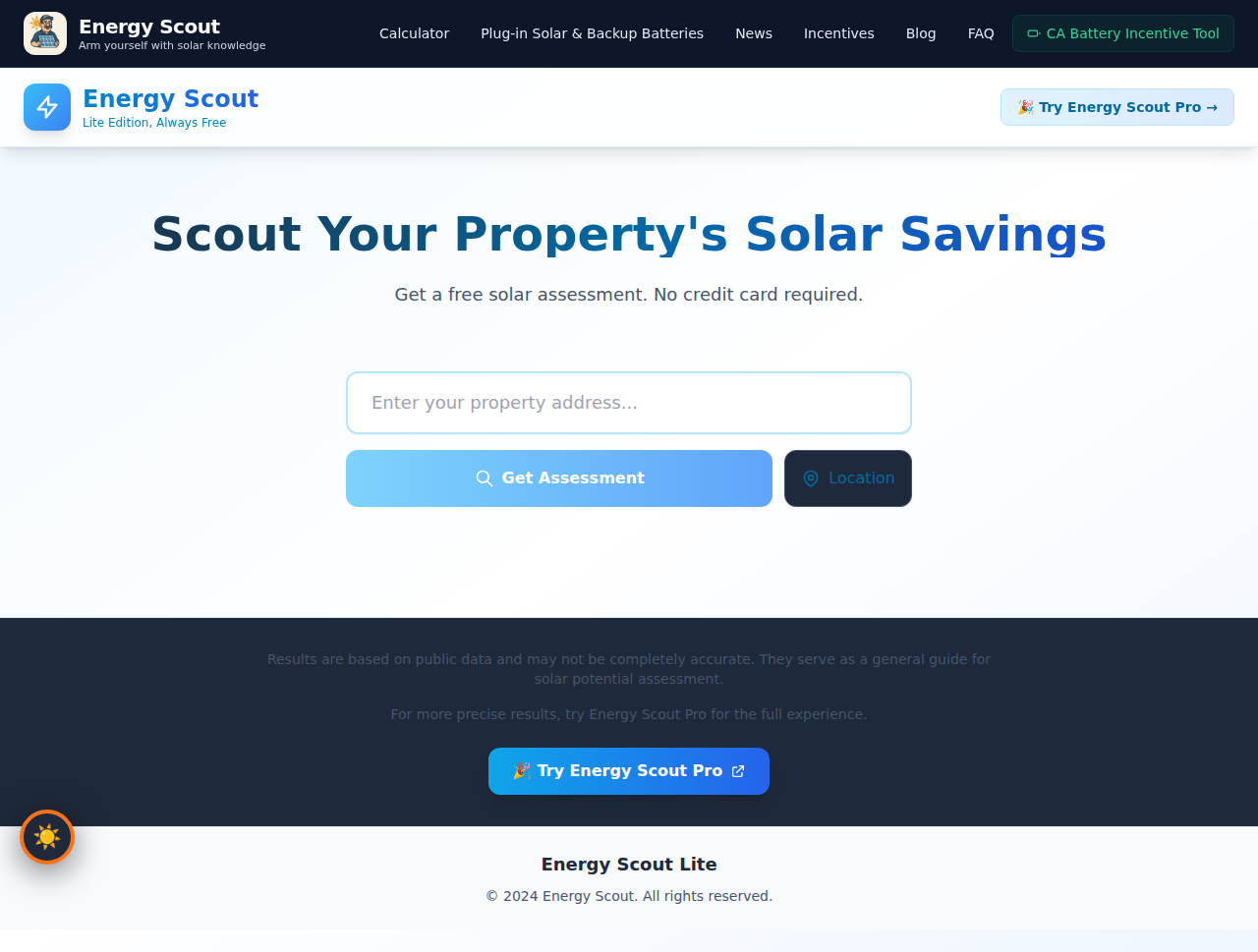
EnergyScout's free solar assessment uses NREL's PVWatts modeling and your actual address to estimate annual production, savings, and ideal system size. No sales pressure, no installer hand-off until you're ready.
Step 2: Stack every available incentive
Check state, local, and utility programs through the incentive search tool. Don't forget battery-specific incentives like SGIP in California or upcoming storage rebates in several Northeast states.
Step 3: Get multiple installer bids
EnergySage research consistently shows that homeowners who get 3+ quotes save thousands compared to single-quote buyers. EnergyScout's vetted provider directory connects you to local installers who compete for your business.

Step 4: Compare ownership structures honestly
With the federal purchase ITC gone, the math has shifted. For some homeowners, a lease or PPA now offers better year-one economics. For others — especially those with strong roof sun and high tax appetite — purchase still wins long-term. Run both scenarios.
Why This Moment Matters
The solar industry just demonstrated, in 2024, that it can scale at a pace once thought impossible. Generation records fell. Installation volumes hit new highs. Manufacturing capacity expanded. According to the International Energy Agency (IEA), global solar additions in 2024 exceeded all other energy sources combined.
For homeowners, the practical effect is simple: better technology, more competition, more financing options, and clearer paths to energy independence. The 30% federal purchase credit may be gone, but state programs, falling hardware costs, and expanded lease/PPA options have kept solar economics compelling — and in many states, more compelling than ever.
Take the Next Step
Solar's record-breaking 2024 is more than industry news — it's a homeowner opportunity window. Lower equipment costs, smarter batteries, expanded state incentives, and a mature installer ecosystem mean the on-ramp to solar is wider than at any point in history.
Ready to see what solar looks like for your specific home? Start with a free, no-obligation assessment at energyscout.org/assessment. In under five minutes, you'll know your potential savings, the right system size, and which incentives stack in your ZIP code.
The sun set records in 2024. Make 2026 the year your home does too.
More Articles
Do Solar Panels Work During a Power Outage?
Most homeowners assume solar panels keep the lights on when the grid goes down. The actual answer surprises people — and the fix is simpler than you think.
Read article Battery StorageChile Hit 75% Solar in March. Here's What U.S. Homeowners Should Take From It
Chile's grid produced 29% of its electricity from solar in March, with peaks at 75%. The bottleneck wasn't generation — it was storage and transmission. Here's the homeowner takeaway.
Read article