Tesla's HW3 FSD Reversal: Why Homeowners Should Control Their Own Energy
Tesla just admitted that roughly 4 million HW3 vehicles won't receive the unsupervised Full Self-Driving they were promised.
On Tesla's Q1 2026 earnings call, CEO Elon Musk quietly delivered news that roughly 4 million Tesla owners didn't want to hear: vehicles equipped with the company's Hardware 3 (HW3) computer will not, after all, receive the unsupervised Full Self-Driving capability that was marketed to them for years. The Verge reported that Musk admitted the hardware simply can't keep up with what the software now demands.
It's a technology story on the surface — but for American homeowners, it's also a powerful metaphor. The promises we rely on from big tech and big utility companies are only as durable as the hardware underneath them. And when it comes to your home's energy, the most reliable hardware is the hardware you own.
The HW3 Lesson: Promises Age, Hardware Doesn't
Tesla's HW3 vehicles were sold with the expectation that a software update would eventually deliver robotaxi-grade autonomy. Instead, those owners will now need a retrofit — or they'll be stuck with a capability gap versus newer HW4 and AI5 vehicles. The lesson isn't that Tesla is uniquely unreliable. It's that when your future depends on someone else's roadmap, your future is negotiable.
Homeowners are in a similar position with their electricity supply. The U.S. Energy Information Administration projects that residential electricity prices will rise another 3.3% in 2026, following double-digit increases in many regions over the past three years (EIA Short-Term Energy Outlook). California's investor-owned utilities have filed rate cases that could push residential rates past $0.50/kWh for upper-tier consumption (CPUC). Grid reliability events — the kind that trigger public safety power shutoffs — have more than doubled since 2015.
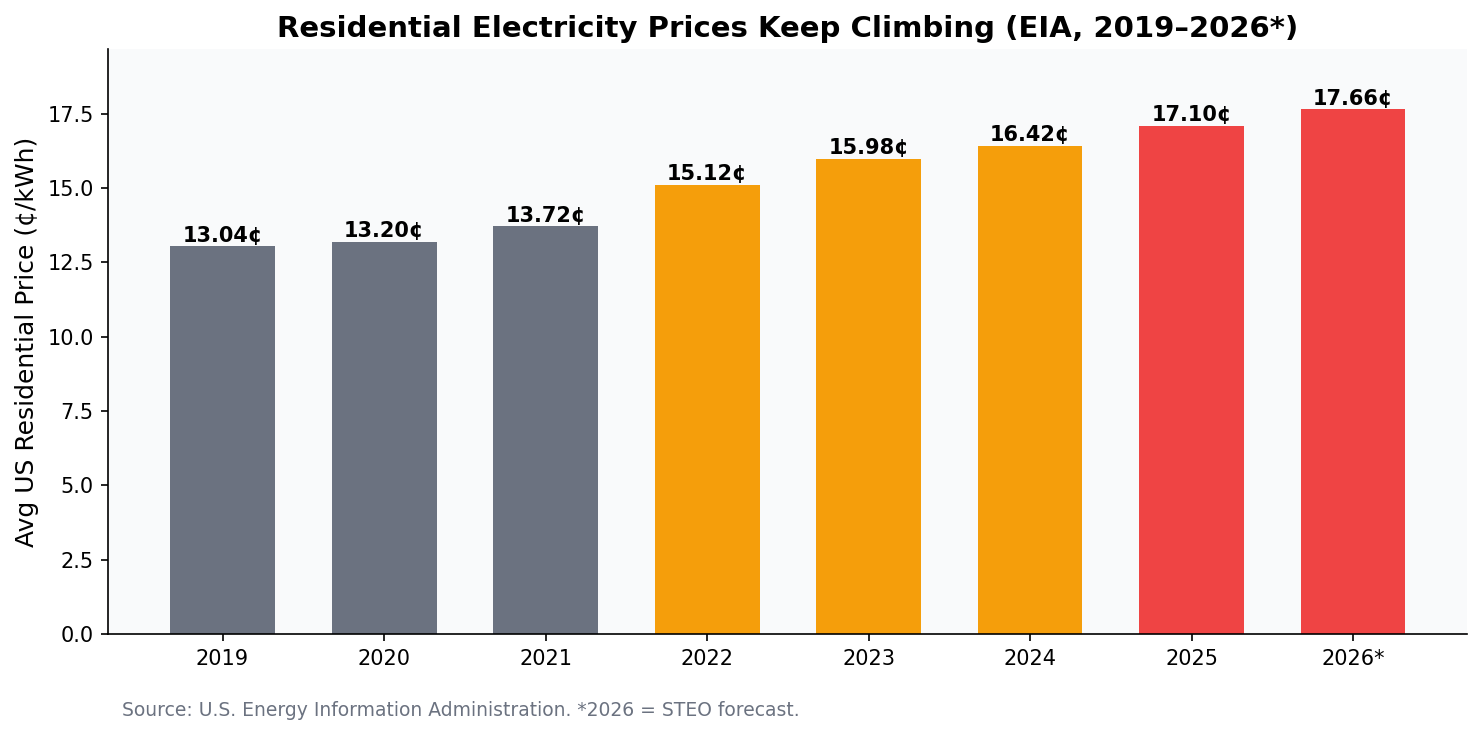
If you drive a Tesla (or any EV), that volatility hits twice: once on your utility bill and again every time you plug in. Owning your energy generation and storage turns that risk into a fixed cost you control.
Why Solar + Battery Is the Homeowner's "AI5"
In Tesla's hardware roadmap, AI5 is the chip that actually delivers on the promises. In your home's energy roadmap, solar paired with battery storage is the equivalent: the asset that does what the grid keeps promising but fails to consistently deliver — clean, affordable, resilient power.
According to the National Renewable Energy Laboratory (NREL), a typical U.S. home can offset 70–100% of its annual electricity use with a well-sized rooftop solar array. Add a battery, and Lawrence Berkeley National Laboratory's Tracking the Sun reports show that homes can cover 8–24 hours of essential loads during outages, depending on system sizing and usage patterns.
For EV owners specifically, the math gets even more compelling. The U.S. Department of Energy estimates the average EV uses 3,000–4,500 kWh per year for charging. At $0.18/kWh (the national residential average in 2026), that's $540–$810 annually. Charged from a properly sized solar+battery system, the marginal cost drops close to zero for most of the year.
What Changed in 2026: The ITC Picture
There is one important update homeowners need to understand clearly. The federal 30% Residential Clean Energy Credit (often called the ITC) expired at the end of 2025 for purchased residential solar and battery systems. As of 2026, the 30% credit only applies to third-party owned systems — meaning solar leases and power purchase agreements (PPAs), where the installer or financier owns the equipment and passes benefits through as lower monthly payments.
That doesn't mean solar is dead — far from it. According to the Solar Energy Industries Association (SEIA), state-level incentives, utility rebates, and accelerated depreciation for small businesses still create strong economics in most markets. And leases and PPAs, which carry the ITC forward to the system owner, can offer $0-down entry with immediate bill savings.
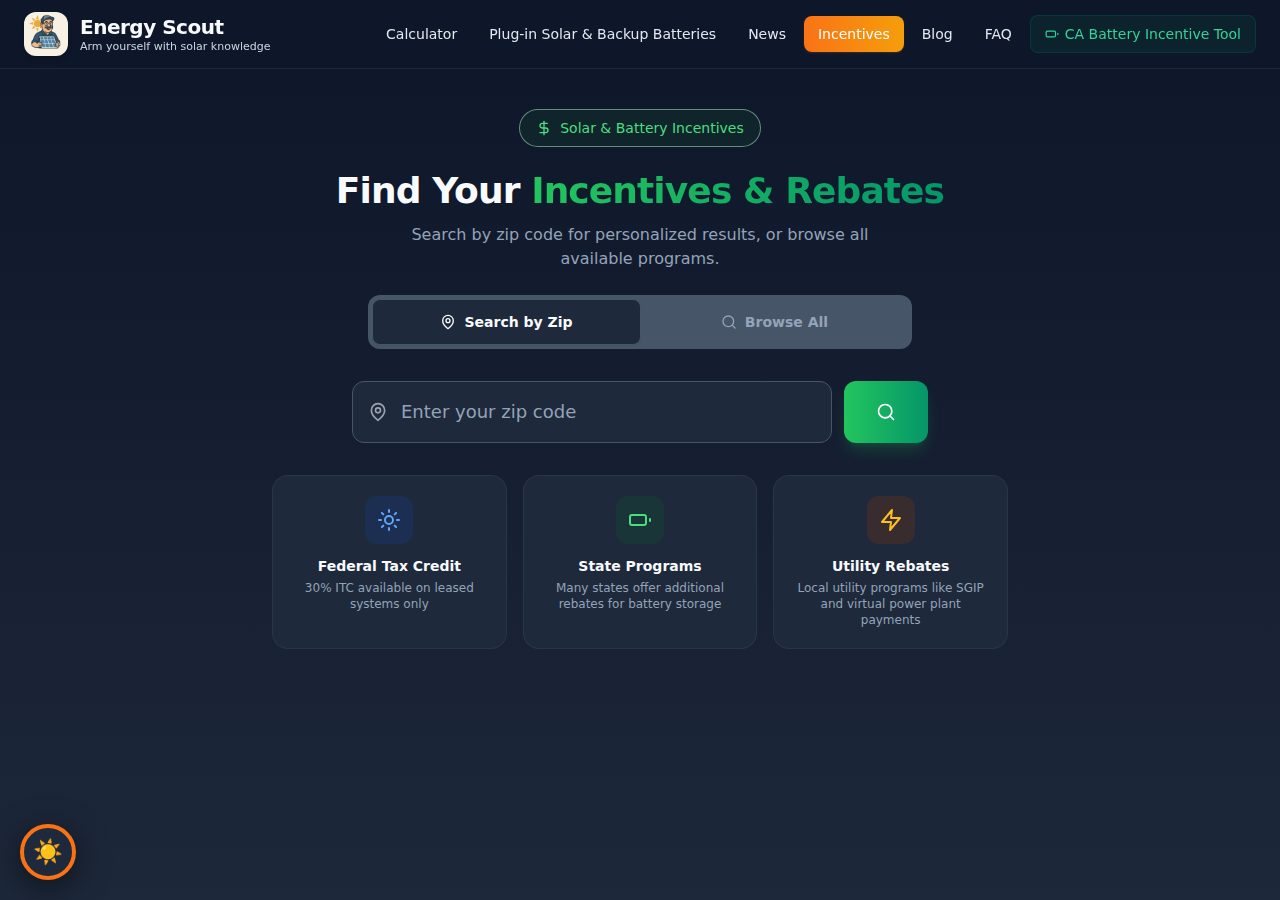
The EnergyScout solar & battery incentives search pulls state, utility, and local program data for your ZIP code so you can see exactly what's available — and whether a purchase or lease path makes more sense for your situation.
Solar Is Not Slowing Down
Despite the ITC change for purchased systems, the broader trajectory of solar is still remarkable. EIA data shows solar rose from under 1% of U.S. electricity generation in 2015 to more than 11% in 2024 — and utility forecasts expect that share to continue climbing past 15% by 2027.
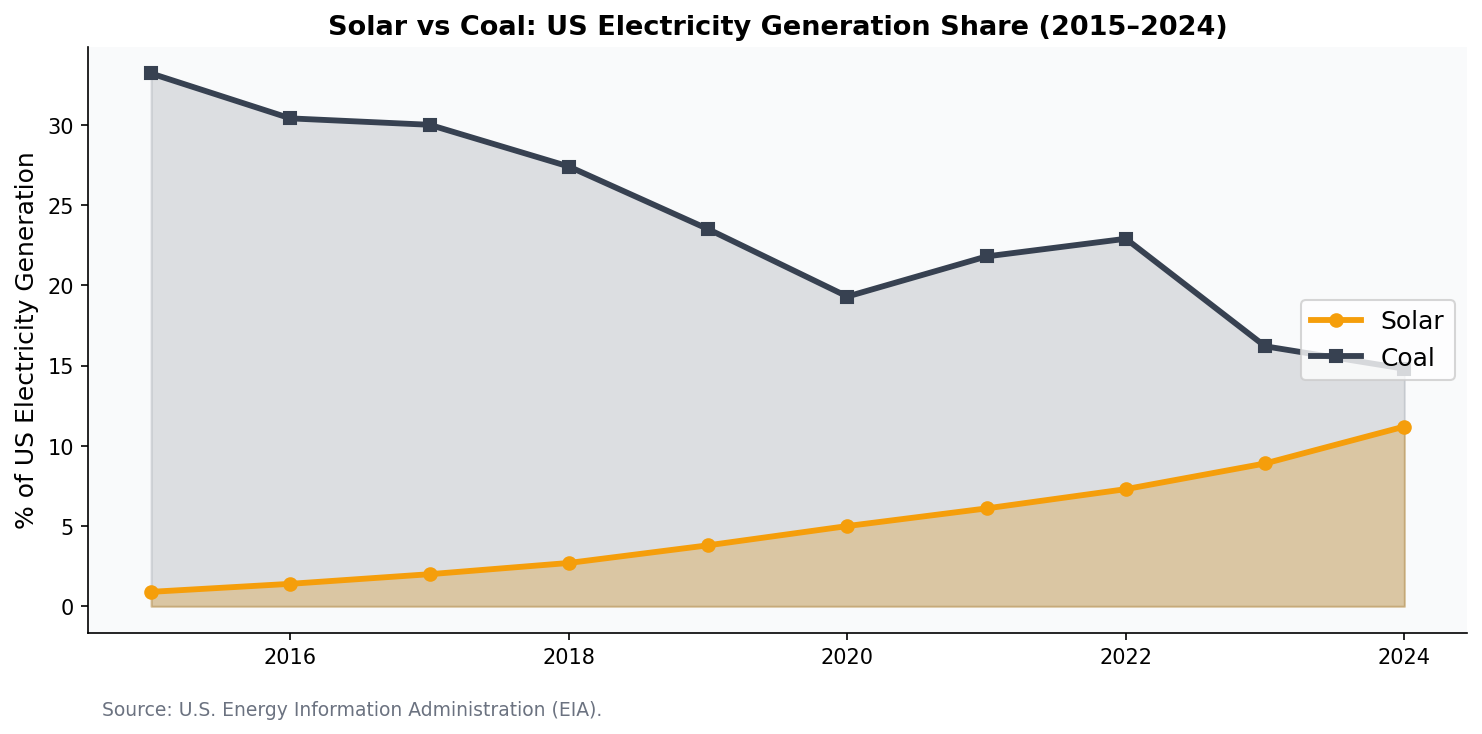
That growth matters for homeowners because it's pulling equipment costs down. Lawrence Berkeley Lab's latest Tracking the Sun report found that median installed residential solar prices have continued to decline, even as battery attach rates have hit record highs. Nationally, more than 40% of new residential solar installations in 2024 included battery storage — the highest share ever recorded.
The Homeowner's Playbook: Don't Wait for a Software Update
HW3 Tesla owners didn't do anything wrong. They bought a good car and trusted the roadmap. The issue is that roadmaps change when they're controlled by someone else. Your home's energy shouldn't depend on a roadmap you don't own.
Here's a practical playbook for 2026:
1. Benchmark your current energy costs
Pull 12 months of electric bills. Calculate your average monthly kWh and your blended $/kWh. If you have an EV or heat pump, note seasonal spikes. EnergyScout's free home solar assessment uses NREL's PVWatts model to translate that usage into a system size and production estimate for your specific roof.
2. Check every incentive — not just federal
Many homeowners assume the ITC expiry means nothing is left. That's wrong. State tax credits (NY, SC, MA, and others), utility storage rebates (SGIP in California, Connected Solutions in the Northeast), and net metering successor tariffs can still deliver $3,000–$10,000+ in benefits. Our ZIP-code incentive search consolidates all of them in one view.
3. Decide: own or lease
If you have tax appetite and want maximum long-term ROI, a purchased system still wins over 20–25 years even without the 30% ITC — thanks to falling equipment costs and rising utility rates. If you want $0-down and immediate savings, a lease or PPA captures the 30% ITC through the third-party owner and passes savings through in your payment.
4. Get multiple quotes from vetted installers
EnergySage data consistently shows homeowners who get 3+ quotes save 10–20% versus single-quote shoppers. Our verified installer directory lets you compare local providers, read reviews, and request quotes without giving up your phone number to a lead farm.

5. Size your battery for resilience, not just savings
A single 10 kWh battery covers essentials (fridge, internet, a few lights, CPAP) for roughly 18–24 hours. Two batteries can cover whole-home usage for 12+ hours. If you're in a wildfire PSPS zone, hurricane zone, or increasingly — almost anywhere — this is becoming essential infrastructure, not a luxury.
Take Control of Your Energy Roadmap
Tesla's HW3 owners are learning that the best technology roadmap is the one you own. The same is true for your home. Solar and battery storage aren't speculative — they're mature, bankable, and still one of the highest-ROI upgrades a homeowner can make, even in a post-ITC-purchase world.
Ready to see what's possible for your home? Start your free assessment at energyscout.org and get a personalized estimate of system size, production, incentives, and payback — in under two minutes, with no sales calls.
More Articles
Do Solar Panels Work During a Power Outage?
Most homeowners assume solar panels keep the lights on when the grid goes down. The actual answer surprises people — and the fix is simpler than you think.
Read article Battery StorageChile Hit 75% Solar in March. Here's What U.S. Homeowners Should Take From It
Chile's grid produced 29% of its electricity from solar in March, with peaks at 75%. The bottleneck wasn't generation — it was storage and transmission. Here's the homeowner takeaway.
Read article