UK Solar Firm's $1.1B Deal Signals Homeowner Opportunity
A UK solar developer just locked in a $1.1 billion financing package to build a 1 GW pipeline.
On April 24, 2026, UK-based solar developer Enviromena announced a landmark £825 million (~$1.1 billion USD) senior portfolio financing package — a credit facility underwritten by a consortium of institutional investors to accelerate a 1 gigawatt (GW) solar pipeline across the United Kingdom. PV Magazine called it one of the largest single solar debt packages of the year.
It's the kind of headline that might seem distant from your rooftop in Phoenix, Sacramento, or Charlotte. But the story behind it — where institutional money is flowing, why pension funds and banks are doubling down on solar, and what that signals for residential solar prices — matters a great deal for US homeowners weighing their own solar-plus-battery decision in 2026.
Why a UK Solar Deal Matters to American Homeowners
Big debt facilities like Enviromena's are a leading indicator of investor confidence. When lenders are willing to commit $1 billion+ against a solar pipeline, they're signaling that:
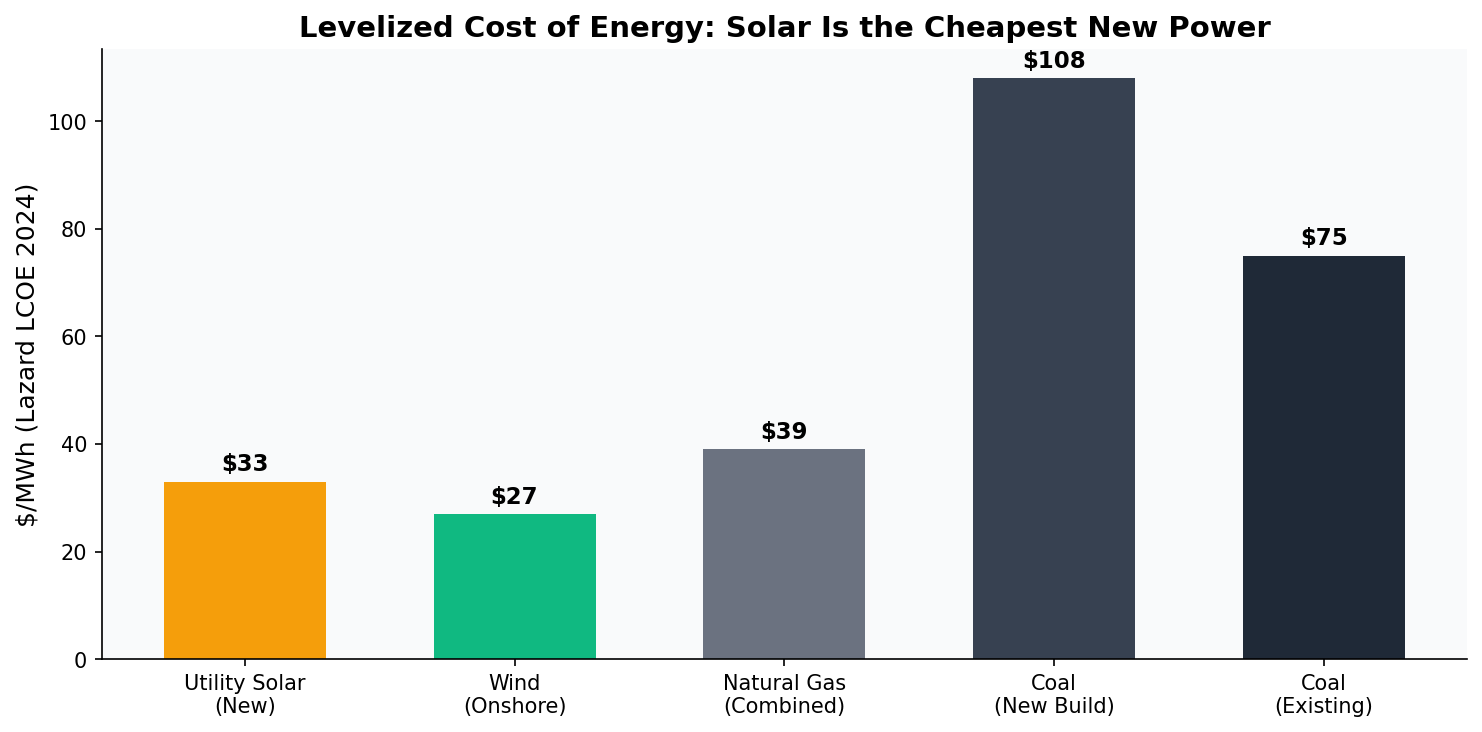
- Solar is now the lowest-cost new generation source in most of the world. Lazard's 2024 Levelized Cost of Energy analysis puts utility solar at roughly $33/MWh, versus $108/MWh for new coal.
- Supply chains are mature. Panel, inverter, and battery prices have stabilized after the volatility of 2022–2023.
- Policy risk is being priced in and absorbed. Institutional capital only moves at this scale when long-term demand looks durable.
In other words: the same global cost curves that make a 1 GW UK pipeline bankable are the reason residential solar in Texas, Florida, and California keeps getting cheaper per watt — even as the federal 30% Investment Tax Credit (ITC) expired for purchased systems at the end of 2025.
The 2026 Policy Reality: What Changed
Let's be direct about the new rules for US homeowners:
- The federal 30% ITC for purchased residential solar systems expired in 2026.
- Solar leases and Power Purchase Agreements (PPAs) — where a third party owns the system — still qualify for the commercial ITC, which is typically passed through as lower monthly payments.
- State-level incentives, utility rebates, and battery-specific programs remain robust. The DSIRE database tracks more than 2,600 active incentive programs nationwide.
This shift doesn't kill residential solar — it reshapes how homeowners should finance it. Check what's still available in your ZIP code using EnergyScout's solar + battery incentives search.

The Global Capital Picture: Solar Is Winning
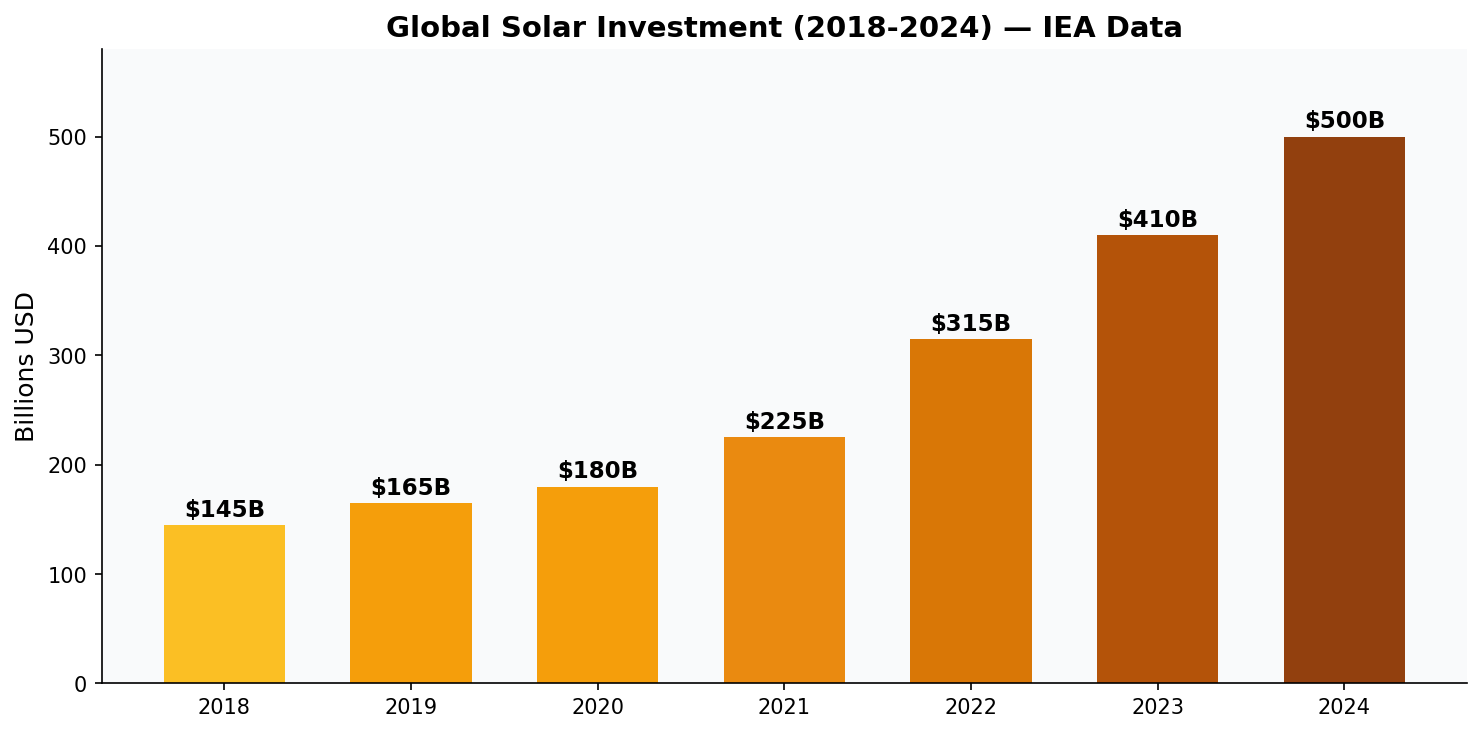
The Enviromena deal is part of a larger trend. The International Energy Agency (IEA) reported that global solar investment surpassed $500 billion in 2024, outpacing all other electricity generation sources combined. SEIA data shows the US added over 50 GW of new solar capacity in 2024 — a record year — and 2025 is tracking similarly.
Lawrence Berkeley National Laboratory's Tracking the Sun report consistently shows residential solar prices declining at roughly 3–5% per year when adjusted for system size. Even without the federal ITC, a typical 8 kW rooftop system in 2026 costs 12–18% less than it did in 2020 before incentives were applied.
Why Institutional Money Reduces Your Costs
When global solar developers like Enviromena raise billion-dollar debt facilities at favorable rates, three things flow downstream to homeowners:
- Lower panel and inverter costs: Bigger utility-scale deployment expands manufacturing capacity, which lowers per-unit prices across the board — residential included.
- Better residential financing: The same institutional lenders who underwrite utility solar are increasingly funding TPO (third-party ownership) products — leases and PPAs with APRs that were unthinkable five years ago.
- Faster battery innovation: Utility-scale battery deployments fund R&D that eventually trickles into home products like the Tesla Powerwall 3, Enphase IQ Battery 5P, and Franklin WH.
What This Means for Your Home in 2026
Given the expired federal ITC for purchased systems, here's a practical framework for homeowners:
1. Run the Numbers Honestly
Use EnergyScout's free solar assessment to model your actual rooftop, utility rate, and usage pattern. The NREL PVWatts calculator shows that a well-sited system in Arizona generates roughly 1,650 kWh per kW per year — vs. about 1,200 kWh in the Pacific Northwest. Geography changes everything.

2. Compare Lease/PPA vs. Cash Purchase
With the ITC gone for owned systems, the math often now favors TPO products for households that don't have large tax liability or upfront capital. EnergySage's 2024 Marketplace Report found that leases and PPAs in ITC-friendly states can produce net lifetime savings of $15,000–$25,000 with zero money down. A cash purchase still wins for homeowners who have the capital and plan to stay 15+ years — but only by a thinner margin than in 2022.
3. Add Battery Storage Where It Pencils Out
California's NEM 3.0 transition dramatically changed the value of on-site batteries — and similar time-of-use (TOU) shifts are rolling out in Arizona, Hawaii, and New England. The CPUC's own analysis of NEM 3.0 shows that a solar-plus-storage system in California can achieve payback periods 40–50% faster than solar alone under the current tariff structure.
The Department of Energy reports that residential battery attachment rates have jumped from 5% in 2020 to over 30% of new solar installs in 2024. That trend is accelerating, not reversing.
4. Vet Your Installer Carefully
A well-capitalized global solar market doesn't help you if your local installer cuts corners. Use EnergyScout's installer directory to find NABCEP-certified, locally-reviewed providers in your area.

The Big Picture: Solar's Moment Is Now
The Enviromena announcement isn't an outlier. The IEA projects global renewable capacity will more than double by 2030, with solar accounting for roughly 80% of that growth. The US Energy Information Administration (EIA) expects solar to be the fastest-growing source of US electricity generation for at least the next decade.
For homeowners, the strategic question is no longer "Is solar viable?" — that's been answered decisively by the $1.1 billion UK deal and thousands of others like it. The question is "What's the right structure for my household in 2026?"
That answer depends on your roof, your utility rate, your tax situation, your state's incentives, and whether you're adding storage. There's no one-size-fits-all answer — which is why running a personalized assessment is the single highest-value step you can take.
Your Next Step
Institutional investors are voting with billions of dollars that solar is the future. You don't need $1.1 billion to take advantage of it — you just need an accurate picture of your home's potential.
Start with a free, no-obligation solar assessment at EnergyScout.org. We'll model your roof, identify every incentive still available in your ZIP code, compare lease vs. purchase vs. PPA scenarios, and connect you with vetted local installers — all in under five minutes.
The capital is flowing. The technology is ready. The only question left is whether your home joins the transition this year or next.
More Articles
Do Solar Panels Work During a Power Outage?
Most homeowners assume solar panels keep the lights on when the grid goes down. The actual answer surprises people — and the fix is simpler than you think.
Read article Battery StorageChile Hit 75% Solar in March. Here's What U.S. Homeowners Should Take From It
Chile's grid produced 29% of its electricity from solar in March, with peaks at 75%. The bottleneck wasn't generation — it was storage and transmission. Here's the homeowner takeaway.
Read article