Climate Tech IPOs Are Back: What It Means for Solar
X-energy went public. Fervo is next. After three years of frozen capital, the climate tech IPO window is cracking open — and homeowners thinking about solar should pay attention.
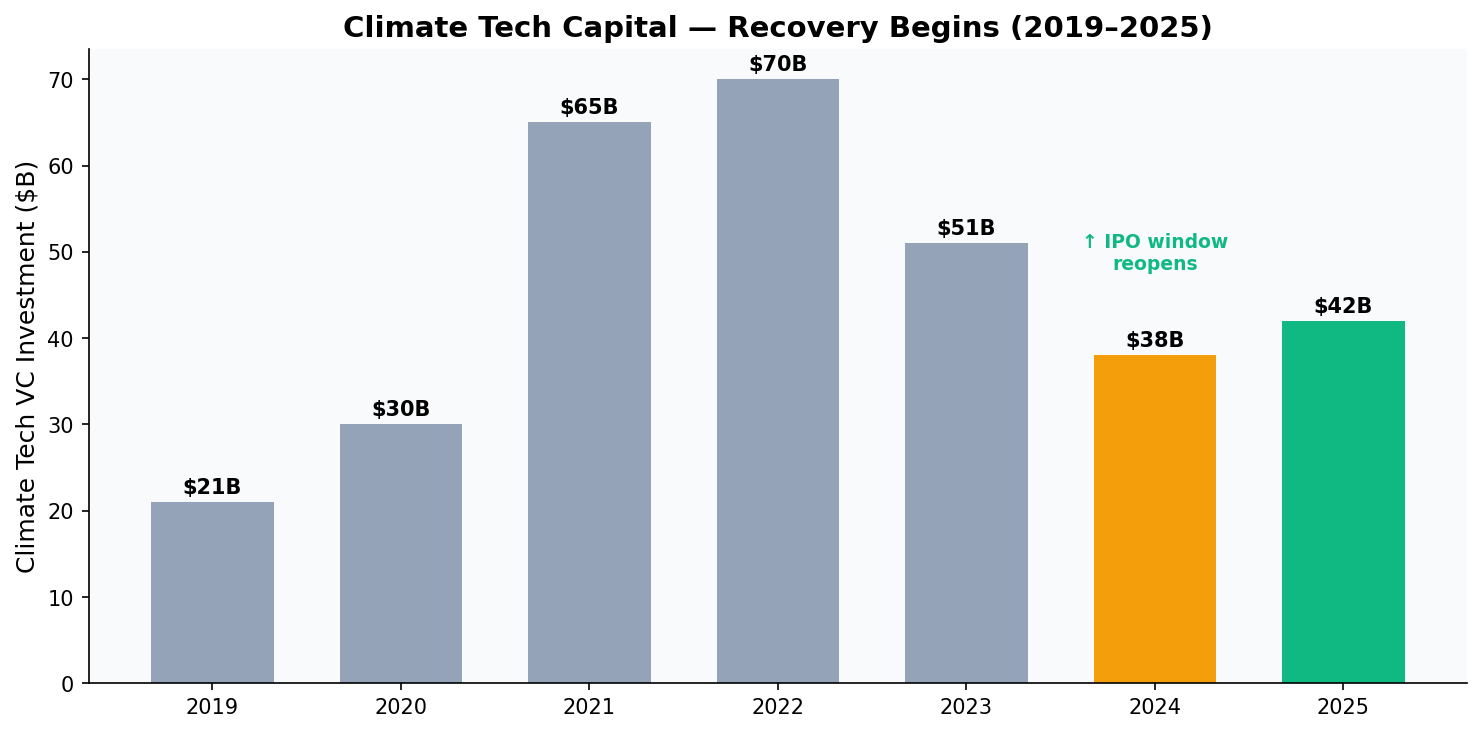
The climate tech IPO drought may finally be ending. On April 25, 2026, TechCrunch reported that nuclear startup X-energy just went public, and geothermal pioneer Fervo Energy is reportedly close behind. After three years of frozen capital markets, it's the clearest signal yet that institutional investors are ready to bet big on the energy transition again — and homeowners who act now can ride that same wave with rooftop solar and battery storage.
Why the IPO Window Matters for Homeowners
When climate tech companies can access public markets, capital flows everywhere — into manufacturing, installation networks, financing platforms, and the contractors who actually put panels on roofs. The last time we saw this kind of momentum was 2020–2021, which preceded a record-breaking expansion in residential solar installations. According to SEIA's U.S. Solar Market Insight, residential solar grew 40% year-over-year in the wake of that capital surge.
The pattern is straightforward: public-market liquidity → cheaper capital → lower financing rates → more affordable systems for homeowners. With X-energy and Fervo cracking open the IPO window, expect financing partners and installers to follow with new products and competitive pricing.
What X-energy and Fervo's IPOs Signal
X-energy builds small modular reactors (SMRs), and Fervo is pioneering enhanced geothermal systems. Neither is rooftop solar, but both prove a critical point: investors are funding firm, clean baseload power again. The EIA's Annual Energy Outlook 2025 projects that solar and storage will provide 60% of new U.S. capacity additions through 2030 — but only if capital keeps flowing.
That's why these IPOs are bigger than the companies themselves. They're a green light for the entire clean energy stack, including the residential side. The IEA's World Energy Investment 2024 report found that distributed solar attracted $130 billion globally last year — a number expected to grow as public markets reopen.
The 30% Federal Tax Credit: What Changed in 2026
Here's the critical update every homeowner needs to know: the federal 30% Investment Tax Credit (ITC) for purchased solar systems expired at the end of 2025. If you buy a system outright in 2026, you no longer get that 30% federal write-off.
However — and this is the workaround most homeowners miss — solar leases and Power Purchase Agreements (PPAs) still qualify for the credit. The third-party owner (the leasing company) claims the ITC and passes the savings through to you in the form of a lower monthly payment. According to DOE guidance, this pass-through structure remains fully legal and economically meaningful in 2026.
Translation: if you can't afford to buy outright but want solar before utility rates climb again, a PPA is the smart way in. EnergySage data shows PPA payments are typically 10–30% below current utility rates from day one.
State and Local Incentives Are Stepping Up
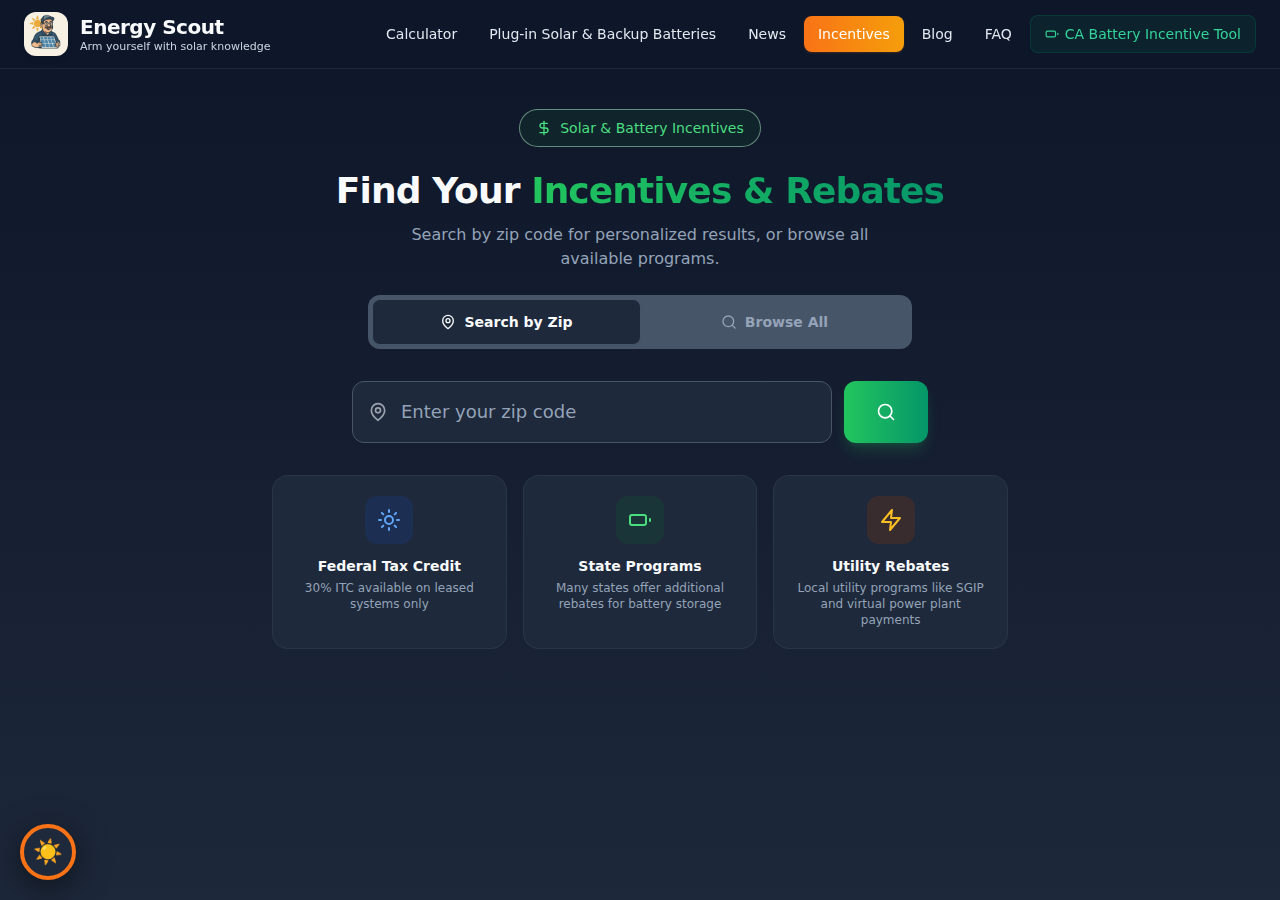
With the federal ITC narrowing for purchased systems, state-level programs have become more important than ever. The California Public Utilities Commission (CPUC) still offers SGIP rebates for battery storage, and many states — New York, Massachusetts, Illinois, and New Jersey among them — provide direct rebates, performance-based incentives, or property-tax exemptions.
Lawrence Berkeley Lab's Tracking the Sun report shows that homeowners who stack federal, state, and utility incentives see effective system costs drop by 35–55%. The catch: these programs are zip-code specific and constantly changing.
EnergyScout's incentive search tool pulls live data on every solar and battery rebate available in your area — federal, state, utility, and local — so you don't leave money on the table.
Battery Storage: The Real Winner of 2026
The NREL 2024 U.S. Solar Photovoltaic Technical Potential report highlights a major shift: solar-plus-storage is now cheaper to install and operate than solar alone in many markets, thanks to time-of-use rate structures and falling battery costs. Lithium-iron-phosphate (LFP) batteries — the same chemistry powering Tesla Powerwall 3 and Enphase IQ Battery — have dropped 50% in price since 2022.
If you're thinking about solar, think about pairing it with storage. The combined system unlocks:
- Backup power during outages (increasingly common as grids age)
- Time-of-use arbitrage (charge cheap, discharge expensive)
- Higher resale value — homes with solar + storage sell 4.1% faster, per Zillow research
What the Climate Tech Capital Surge Means for Installers
Here's a practical effect of the IPO window: when capital markets reopen, installer networks expand and competition heats up. Three years of tight capital culled the residential solar industry — many smaller installers shut down or were acquired. The survivors are leaner, better capitalized, and now have access to fresh financing partnerships.
For homeowners, that means more competitive quotes, faster install timelines, and better warranty terms. The SEIA 2025 Year in Review notes that average residential install times dropped from 12 weeks to 7 weeks among top-tier installers — a direct result of better capitalization.
EnergyScout's vetted installer directory connects you with NABCEP-certified local pros who carry proper licensing, insurance, and warranty backing. We don't accept everyone — only contractors with proven track records and transparent pricing.
Reading the Tea Leaves: What Comes Next
If X-energy's IPO performs well and Fervo follows successfully, expect a cascade of climate tech listings through 2026 and 2027. Names already in the pipeline reportedly include long-duration storage company Form Energy, EV charging network EVgo's spinoffs, and several residential solar financing platforms.
For homeowners, this is the inflection point. Three trends are converging:
- Rising utility rates: EIA projects 4–7% annual electricity-rate increases through 2028
- Falling system costs: Hardware prices down 12% YoY (NREL Q1 2026)
- Reopening capital markets: Lower financing rates returning
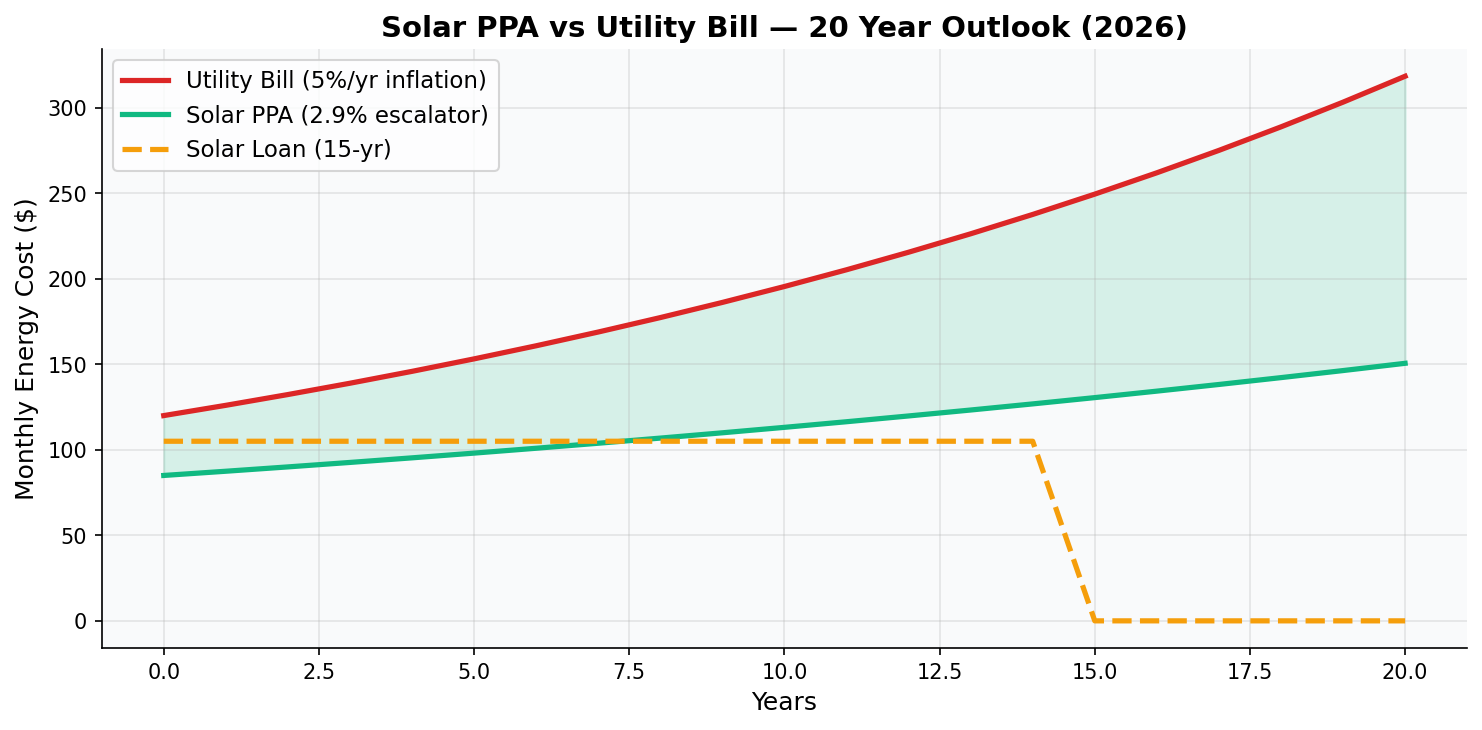
The math has rarely been better. Even without the 30% federal credit on purchased systems, the combination of lease/PPA structures, state incentives, and falling hardware costs means most homeowners can lock in lower energy bills starting month one.
Your Next Step
The climate tech IPO window cracking open isn't just a Wall Street story — it's a homeowner story. Cheaper capital, more installers, better products, and stronger financing options are coming. The homeowners who move first will lock in today's incentive structure and tomorrow's lower rates.
Start with a free, no-pressure assessment at energyscout.org/assessment. We use NREL's PVWatts modeling and your actual utility data to estimate real savings — no salesperson, no inflated numbers, just honest math.
Then check what incentives are still available in your zip code, and connect with a vetted installer if the numbers work for your home. The IPO bell just rang. Make it work for your roof.
Frequently Asked Questions
Is the federal solar tax credit really gone in 2026?
For purchased systems, yes — the 30% Investment Tax Credit expired at the end of 2025. However, third-party-owned systems (leases and PPAs) still qualify because the leasing company claims the credit and passes the savings through to homeowners as lower monthly payments. The DOE Homeowner's Guide details exactly how this pass-through works.
How do climate tech IPOs affect my solar quote?
Indirectly but meaningfully. When public markets fund clean energy companies, the entire ecosystem benefits — including residential financing partners and installer networks. Expect to see more aggressive PPA pricing, longer warranty terms, and faster install timelines through 2026 as capital flows back into the sector.
Should I wait or install now?
The honest answer: run the numbers. EnergyScout's free assessment compares cash, loan, lease, and PPA scenarios using your actual utility bill. For most homeowners, waiting costs more than acting — utility rate inflation typically outpaces hardware price declines.
What about battery storage incentives?
Battery storage is where 2026 incentives are richest. The CPUC SGIP program still offers 00–,000 per kWh in California. Many other states (CT, MA, NY, OR) offer comparable storage rebates. Search by zip code on EnergyScout to see what stacks where you live.
The Bottom Line
X-energy's IPO is a signal flare. The climate tech capital winter that froze residential solar investment is thawing, and the homeowners who pay attention will be ahead of the curve. You don't need to be an investor to benefit — you just need a roof, a utility bill, and a willingness to run the numbers.
The free tools at energyscout.org are built for exactly this moment. No spammy callbacks, no inflated quotes, no pressure — just transparent math and vetted installers. Run your assessment today and see whether your roof is ready for the new climate-tech era.
More Articles
Do Solar Panels Work During a Power Outage?
Most homeowners assume solar panels keep the lights on when the grid goes down. The actual answer surprises people — and the fix is simpler than you think.
Read article Battery StorageChile Hit 75% Solar in March. Here's What U.S. Homeowners Should Take From It
Chile's grid produced 29% of its electricity from solar in March, with peaks at 75%. The bottleneck wasn't generation — it was storage and transmission. Here's the homeowner takeaway.
Read article