France Speeds Up Renewable Permits — Lessons for US Homeowners
France just slashed appeal timelines for renewable energy projects. While the policy is European, the lesson — that permitting friction is the #1 barrier to clean energy — applies directly to US homeowners weighing solar and battery storage.
On April 22, 2026, the French Official Journal published a new decree that materially shortens the path renewable energy developers must walk to get a project approved. Appeals against strategic environmental projects — including utility-scale solar and onshore wind — now go directly to administrative courts of appeal, bypassing a layer of lower-court litigation. Deadlines have been tightened, procedural shortcuts have been added, and the message from Paris is unambiguous: permitting bottlenecks are no longer politically acceptable when climate targets are on the line.
So why does a decree in France matter to a homeowner in Phoenix, Charlotte, or Denver?
Because the friction France just attacked at the utility scale is the same friction American homeowners hit every time they try to install rooftop solar, add a battery, or interconnect to the grid. And while Washington isn't issuing similar decrees, an increasing number of US states and municipalities are quietly doing the same thing — provided you know where to look.
What France Actually Changed
The decree, summarized by PV Magazine on April 24, 2026, does three things. First, it routes appeals against environmentally strategic projects directly to administrative courts of appeal, eliminating the lower administrative court layer that historically added 12–24 months to project timelines. Second, it tightens the deadlines for filing and ruling on appeals. Third, it limits procedural delays that opponents have used to stall projects — sometimes for years — even after substantive permitting was complete.
According to the International Energy Agency's Renewables 2024 report, permitting and grid interconnection delays — not technology or financing — are now the leading cause of project cancellations in mature solar markets. France's response is to clear the legal underbrush.
The Same Bottleneck, Different Scale, in the United States
US homeowners don't fight in administrative courts of appeal. But they do fight a fragmented permitting maze. The US Department of Energy's SolarAPP+ program estimates that the average residential solar project in the US still requires interactions with three to five separate authorities: the local Authority Having Jurisdiction (AHJ) for building permits, the utility for interconnection, the HOA in many neighborhoods, sometimes a state energy office for incentive verification, and, for battery systems, a separate fire-code review.
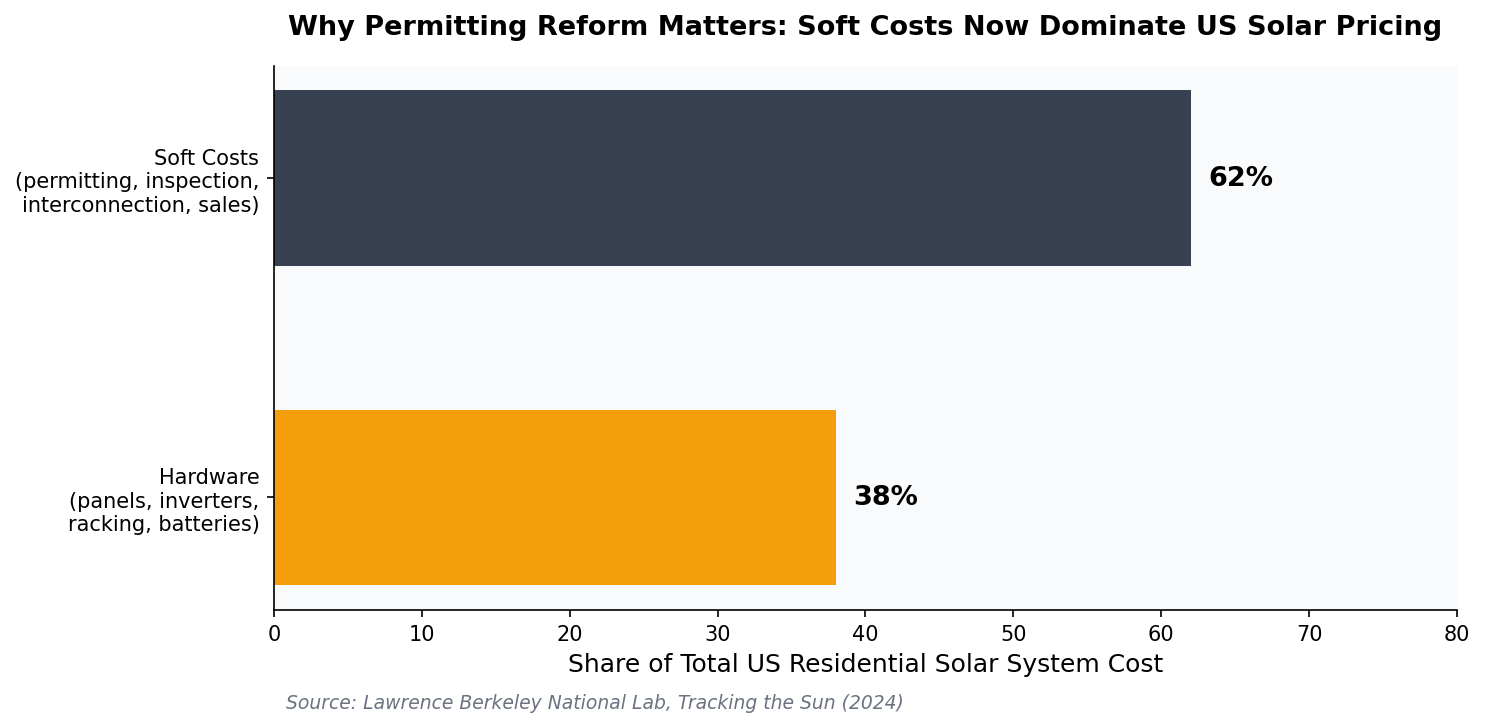
Lawrence Berkeley National Laboratory's Tracking the Sun data series has documented for years that "soft costs" — permitting, inspection, interconnection, customer acquisition, and overhead — now make up more than 60% of the price of a typical residential solar system in the United States. The hardware is cheap. The paperwork is expensive.
The good news: SolarAPP+ adoption is accelerating. As of late 2025, the DOE reports more than 200 jurisdictions across 14 states using automated instant-permitting for residential solar — typically cutting permit turnaround from weeks to under one business day.
Why This Matters Now: The 2026 ITC Cliff for Purchased Systems
One of the most important policy shifts US homeowners need to understand: the federal 30% Investment Tax Credit (ITC) for purchased residential solar systems expired at the end of 2025. As of 2026, only leases and Power Purchase Agreements (PPAs) — where a third party owns the system — continue to qualify for the federal credit, which the third-party owner monetizes and (ideally) passes through to the homeowner via a lower rate.
That changes the math. According to EnergySage's 2025 marketplace data, the median cash-purchase residential solar system in the US ran about $20,650 before the ITC, or roughly $14,455 after the credit. In 2026, a homeowner buying outright pays the full sticker price. A homeowner signing a PPA may still see the ITC's value reflected in their kWh rate — if the installer plays fair.
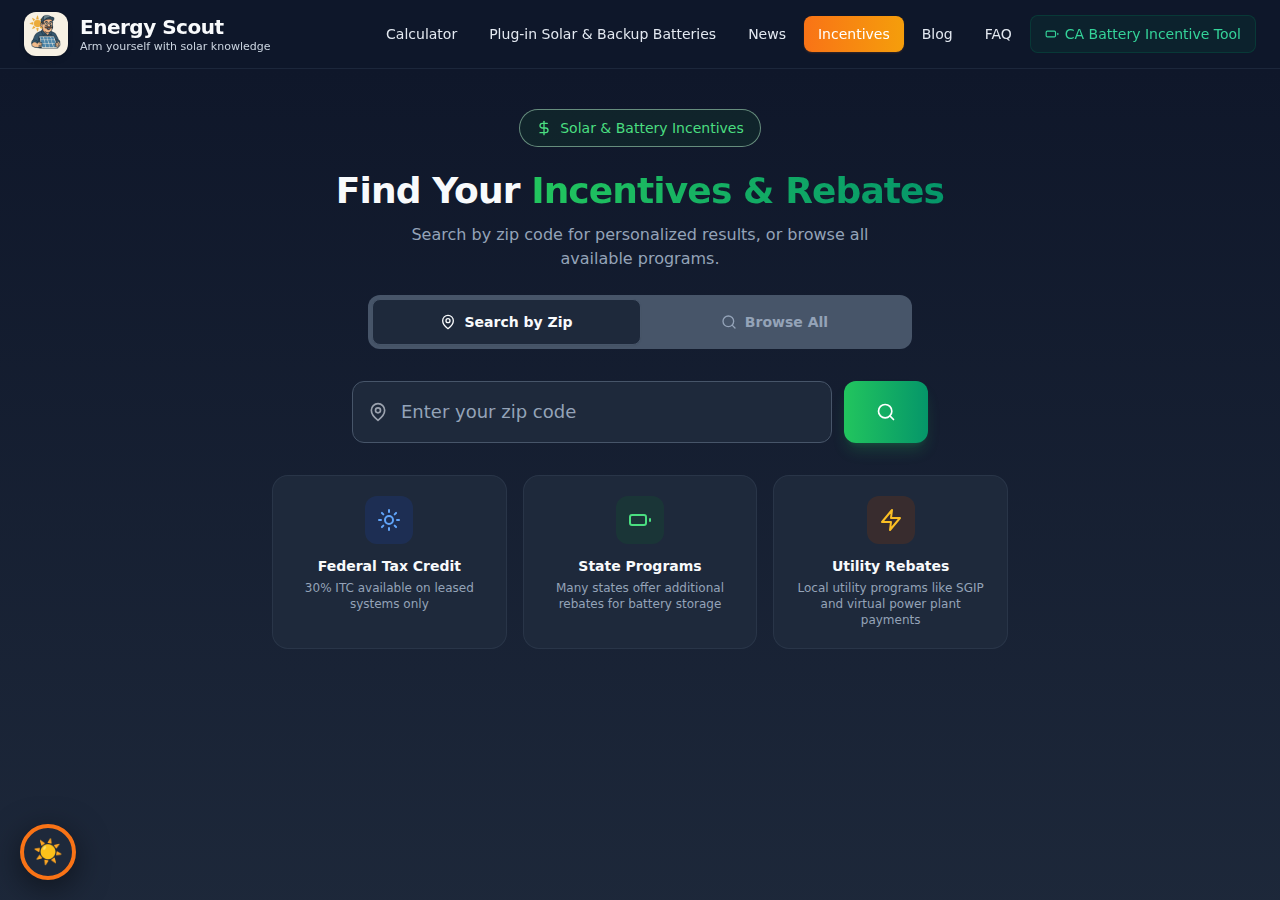
This is exactly the moment when state, local, and utility incentives become the difference between a great deal and a mediocre one. DSIRE, the federally-funded incentive database, currently lists more than 2,800 active state and utility solar/storage incentives across the country — but the average homeowner finds, on average, fewer than three of them on their own. Our free incentive search tool consolidates the federal, state, utility, and battery-specific programs available at your ZIP code in a single view.
Battery Storage: Where Permitting Friction Hurts the Most
If permitting is the friction point, batteries are where it bites hardest. The Solar Energy Industries Association (SEIA) reported that residential storage attachment rates climbed past 25% nationally in 2025, and exceeded 90% in California after NEM 3.0 reshaped the export economics. But every battery installed is a fire-code review, a utility interconnection rewrite, and — in many AHJs — a separate inspection.
The flip side: batteries are also where the financial case is strongest right now. Time-of-use rate spreads continue to widen. The US Energy Information Administration (EIA) reports residential retail electricity prices rose 6.2% nationally in 2024 and another estimated 4.8% in 2025. A battery that shifts solar production from the cheap midday into the expensive 4–9 PM window is, increasingly, the single most valuable component of a residential energy system.
The California Public Utilities Commission's Self-Generation Incentive Program (SGIP) alone has paid out hundreds of millions in residential battery rebates, with equity-tier payments often covering more than 100% of installed cost for qualifying low-income households. Similar programs exist in Massachusetts, Connecticut, Maryland, Oregon, and several utility territories nationwide.
How to Cut Through Permitting Friction at Home
Homeowners cannot rewrite the French Code de l'Environnement, but they can do four practical things to compress their own permitting timeline:
1. Start with a clean, accurate site assessment
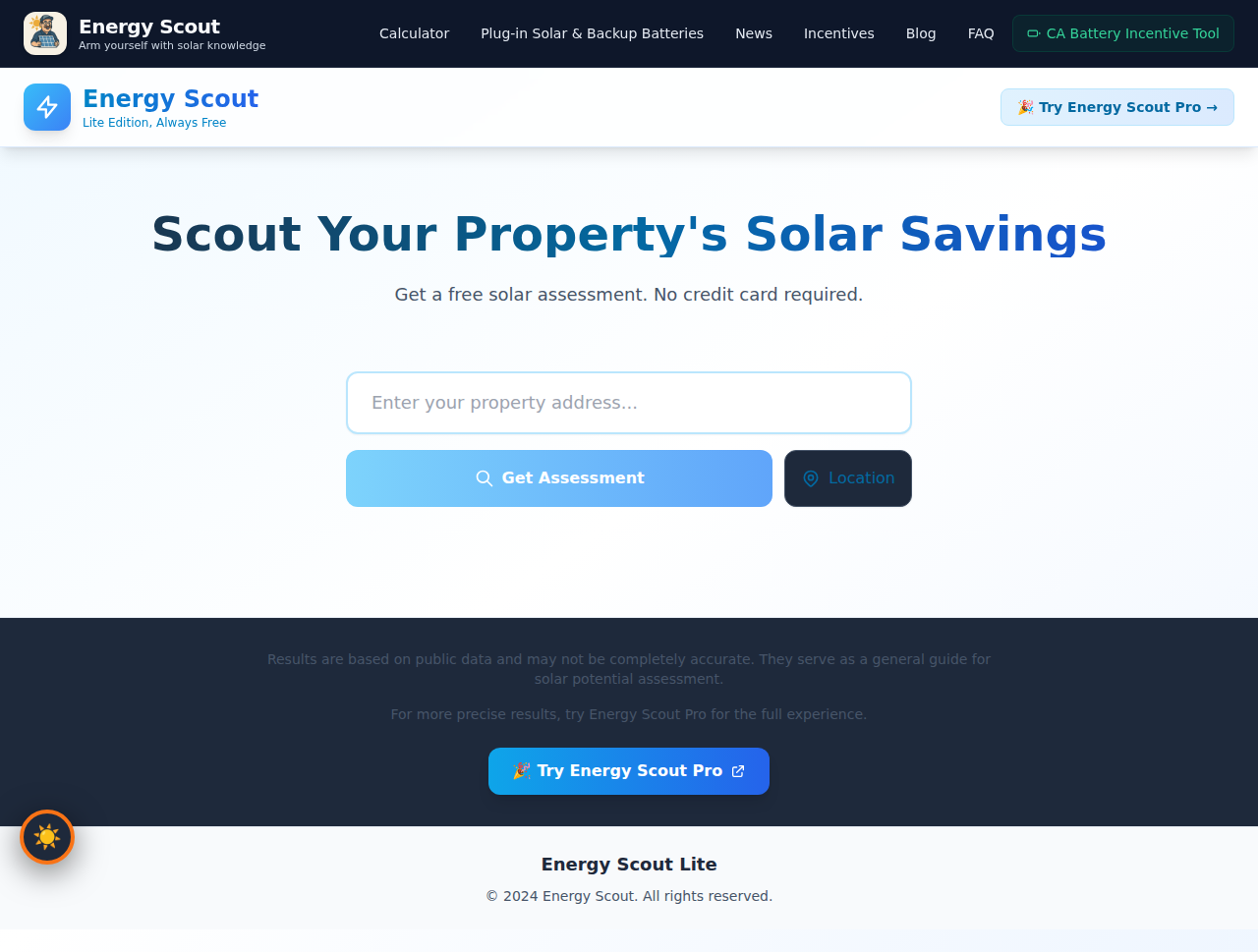
Most permit rejections come from incomplete or inaccurate plan sets — not from policy opposition. A solid assessment establishes roof orientation, shading, structural feasibility, and realistic system size up front. The NREL PVWatts Calculator is the gold-standard production model used by professional designers, and it powers the back end of our free home assessment tool.
2. Pick installers who know your specific AHJ
An installer who has filed 50 permits in your city this year will move 3–5 weeks faster than one filing their first. Local relationships matter more than national brand recognition. Our vetted installer directory filters by ZIP code and surfaces the companies most active in your specific jurisdiction.
3. Ask about SolarAPP+ before you sign
If your jurisdiction supports SolarAPP+, your permit can be issued in under a day. If your installer isn't using it where it's available, ask why.
4. Stack your incentives before signing the contract
State rebates, utility rebates, and battery-specific incentives often have eligibility deadlines tied to the contract date or the equipment serial number — not the install date. Run the search before you sign.
The Bigger Picture
France's decree is part of a global pattern. The IEA, the European Commission, and a growing number of US state energy offices have all reached the same conclusion in the last 18 months: the cost-down curve for solar and storage is real, financing is workable, and the binding constraint is paperwork. Wherever paperwork gets cleared, deployment accelerates.
For US homeowners, the takeaway is empowering, not discouraging. The technology works. The economics — especially with batteries and time-of-use arbitrage — are the strongest they have ever been. The job is to navigate the local rules cleanly and capture every incentive you qualify for.
Get Started With EnergyScout
EnergyScout is a free platform that helps homeowners model solar + battery savings, surface every federal, state, and utility incentive in their ZIP code, and connect with vetted local installers who know how to move a permit through your specific AHJ.
Start your free assessment at energyscout.org — no email gate, no sales calls, no pressure. Just the data you need to make a confident decision.
More Articles
Do Solar Panels Work During a Power Outage?
Most homeowners assume solar panels keep the lights on when the grid goes down. The actual answer surprises people — and the fix is simpler than you think.
Read article Battery StorageChile Hit 75% Solar in March. Here's What U.S. Homeowners Should Take From It
Chile's grid produced 29% of its electricity from solar in March, with peaks at 75%. The bottleneck wasn't generation — it was storage and transmission. Here's the homeowner takeaway.
Read article