NERC's May 15 Deadline: What It Means for Home Solar
A federal grid reliability deadline is squeezing utility-scale solar operators into compliance by May 15, 2026. For homeowners, this signals a maturing grid — and a clearer case for behind-the-meter solar plus storage.
On May 15, 2026, owners of inverter-based resources (IBRs) — the technical name for grid-tied solar farms, wind farms, and battery storage facilities — face a hard deadline to register with the North American Electric Reliability Corporation (NERC). Miss it, and penalties can reach $1.5 million per day, per violation, according to NERC's sanctions guidelines.
That sounds like an industry headache, not a homeowner story. But the rule (FERC Order 901, finalized in 2023) is reshaping how the U.S. grid treats solar — and it has direct implications for the value of the panels on your roof.
What NERC's IBR rule actually does
For decades, NERC's reliability standards focused on synchronous generators — coal, gas, nuclear, and hydro plants with spinning turbines. Inverter-based resources behave differently. They use power electronics to convert DC output (from PV panels or battery cells) into grid-compatible AC, and during disturbances they can disconnect rapidly in ways that destabilize the broader system.
The 2016 Blue Cut Fire in California and the 2017 Canyon 2 Fire each saw roughly 1,200 MW of solar generation drop offline in seconds because of inverter ride-through settings, according to NERC's post-event analyses. By 2022, similar events were happening monthly in Texas as ERCOT's solar fleet grew past 15 GW.
FERC Order 901 directed NERC to close the gap. By May 15, 2026, every IBR above 20 MW connected to the bulk power system must be registered, and NERC is rolling out new reliability standards through 2030 covering ride-through behavior, modeling accuracy, performance validation, and disturbance monitoring (NERC Project 2023-02).
Why this is a maturity milestone, not a crisis
Renewable Energy World's reporting on the deadline frames non-compliance as an existential cost risk for clean energy operators. That's true at the utility scale. But the bigger story is that solar is now too important to the grid to be unregulated.
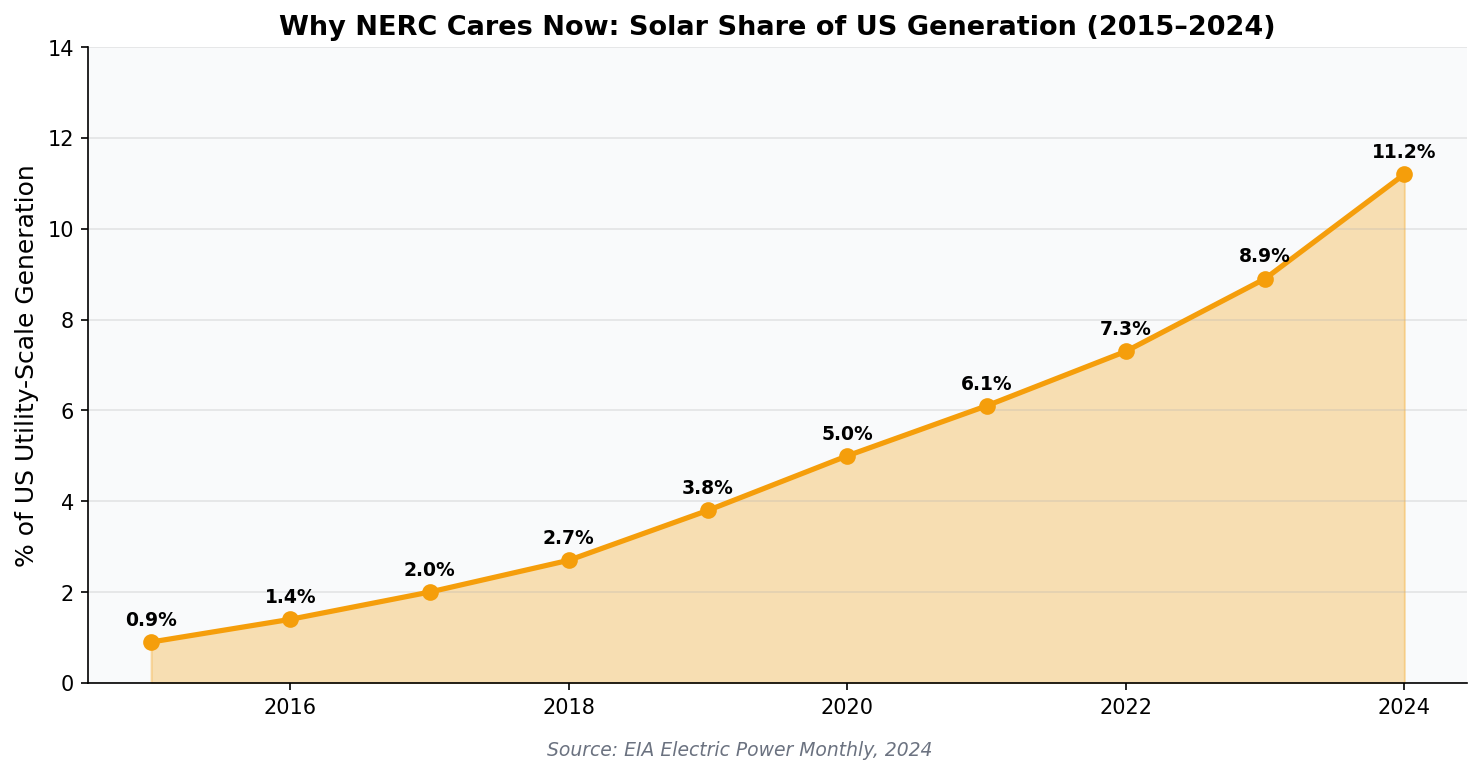
Per the U.S. Energy Information Administration, solar accounted for 11.2% of U.S. utility-scale electricity generation in 2024, up from 0.9% a decade earlier (EIA Electric Power Monthly, 2024). When a resource class moves from a rounding error to double digits, regulators have to treat it as core infrastructure. NERC registration is what that looks like in practice.
For homeowners, three downstream effects matter:
- More predictable interconnection rules. Standardized inverter behavior at the bulk level pushes manufacturers toward better default settings at the residential level, which the IEEE 1547-2018 standard already requires.
- Increased value of behind-the-meter storage. As grid operators tighten ride-through and frequency-response rules on utility solar, the case for owning your own kWh — rather than depending on bulk transmission — strengthens.
- Compliance costs roll into wholesale rates. Utility-scale operators will pass new monitoring, modeling, and registration costs through to ratepayers. Lawrence Berkeley National Laboratory's 2024 utility-scale tracker pegs incremental compliance costs at $0.50–$1.50/MWh for affected fleets (LBL Utility-Scale Solar 2024).
The homeowner math
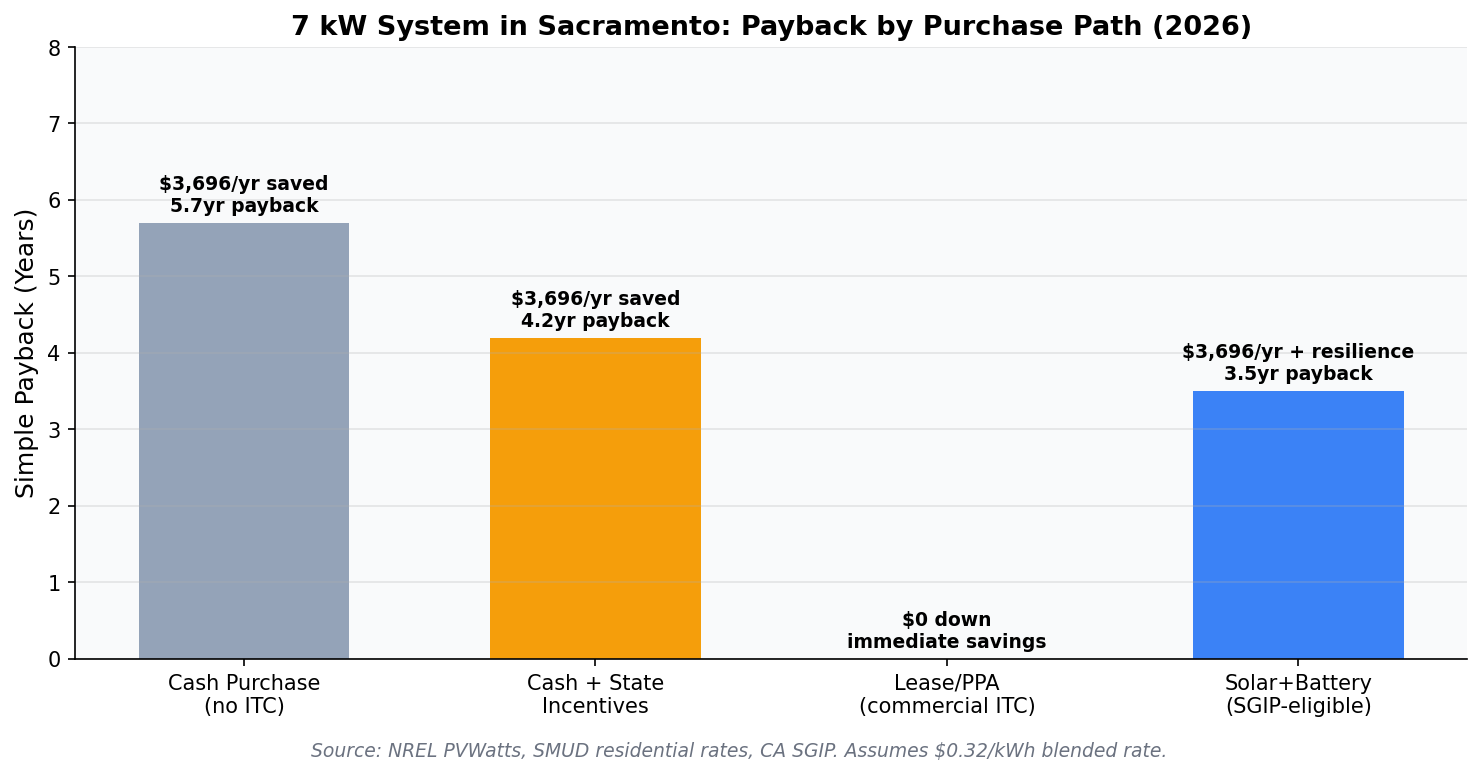
Here's how the policy environment translates to a typical roof. Take a 7 kW system in Sacramento, California — a region with both abundant sun and a heavy IBR concentration on the wholesale side.
- Annual production: 7 kW × 1,650 kWh/kW/yr ≈ 11,550 kWh/year (NREL PVWatts, ZIP 95814)
- Avoided utility cost: 11,550 kWh × $0.32/kWh blended SMUD residential rate = $3,696/year
- System cost (purchased, after expired ITC): ~$21,000 cash
- Simple payback: ~5.7 years
Now layer the policy reality. The federal 30% Investment Tax Credit expired for purchased residential systems at the end of 2025. Lease and PPA structures still qualify under the commercial Section 48 ITC, which is why third-party-owned (TPO) installations have surged — EnergySage's Q4 2024 marketplace report shows TPO share rising from 12% to 27% of national bids in twelve months (EnergySage Marketplace Report).
For homeowners weighing cash purchase versus lease, the calculus now hinges on three numbers: your local kWh rate, your roof's solar resource (the NREL value above), and what state-level incentives stack on top. California's SGIP rebate, for example, still pays $150–$1,000/kWh for residential battery storage depending on income and resilience tier.
State incentives are doing the heavy lifting
With the federal credit gone for cash buyers, state programs are the new differentiator. SEIA's 2025 State Solar Policy Tracker counts 26 states with active rebate or tax-credit programs for residential solar, and 14 with dedicated battery storage incentives (SEIA State Policy).
A few that move the needle:
- New York NY-Sun: $200–$400/kW residential incentive, stackable with property-tax exemption and 25% state tax credit (capped $5,000)
- Massachusetts SMART: performance-based payment of ~$0.06–$0.10/kWh for 10 years on qualifying systems
- California SGIP: battery rebates up to $1,000/kWh for equity-resilience customers in high-fire-threat districts
- Illinois Shines: renewable energy credits paid upfront, typically $4,000–$7,000 for a 7 kW system
Because these programs change quarterly — block allocations fill, rates step down, eligibility windows close — the only way to know what your address actually qualifies for is to check current funding levels, not last year's blog posts.
What the NERC deadline doesn't change
Two things stay constant regardless of how May 15 unfolds:
Net metering still depends on your utility, not on NERC. NERC regulates the bulk power system. Retail rates, net metering structures (NEM 3.0 in California, full retail credit in many other states), and interconnection limits are set by state public utility commissions. Check your state's PUC docket, not federal filings, to understand what you'll be credited per exported kWh.
Rooftop solar is exempt from IBR registration. The 20 MW threshold means residential and most small commercial systems sit entirely outside Order 901's scope. Your installer doesn't need to register, and your inverter doesn't need to file disturbance reports. The compliance burden is on developers of utility-scale projects.
Finding an installer who understands the new landscape
Installer quality matters more in 2026 than it did in 2022, for two reasons. First, with the federal credit gone for purchased systems, the upfront price gap between a quality installer and a national low-bidder narrows the case for the latter — there's no 30% federal cushion to absorb a sloppy job. Second, lease and PPA paperwork has gotten more complex as TPO models have multiplied.
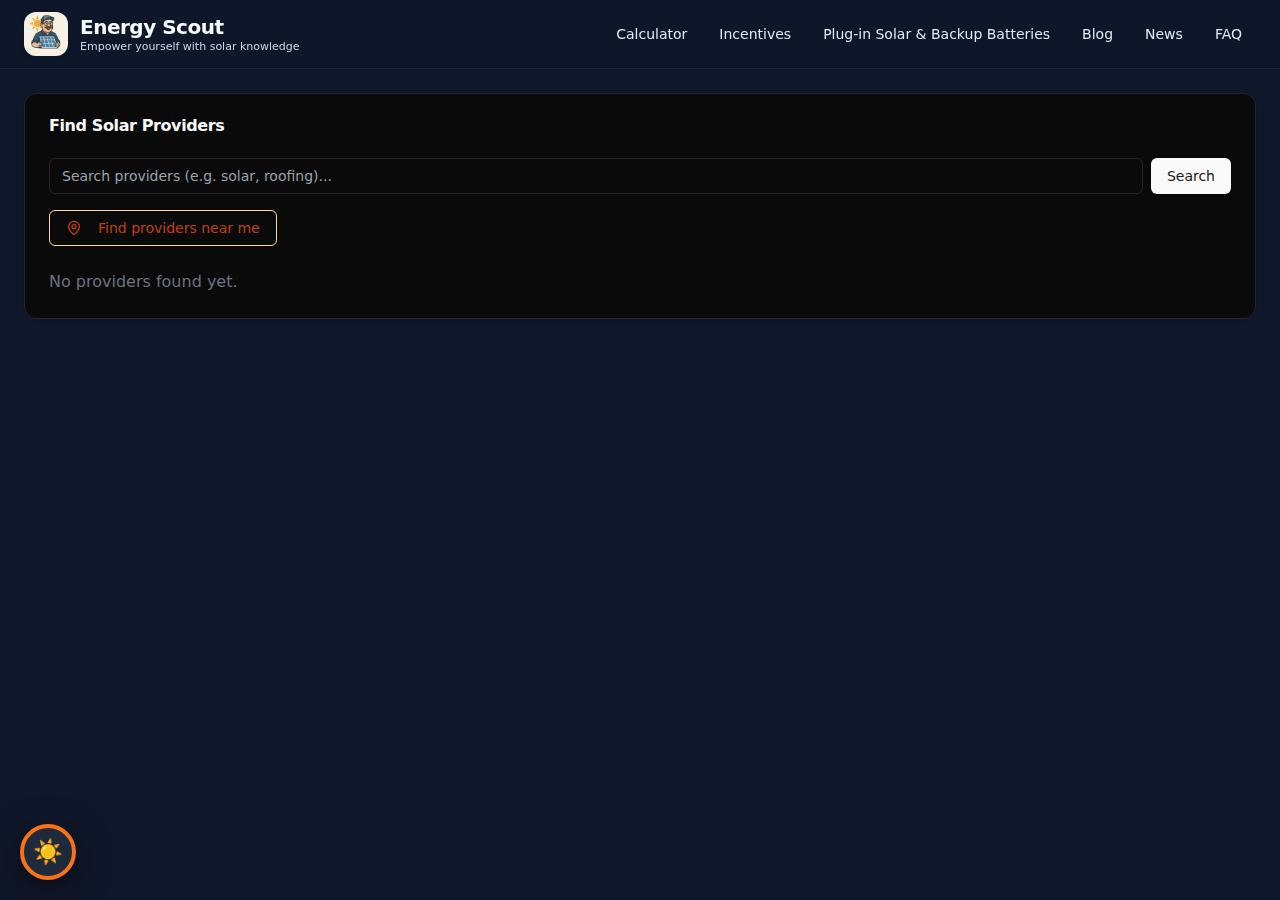
EnergySage's 2024 installer survey found that local and regional installers quoted 11% lower per-watt prices on average than national brands, with comparable equipment tiers (Tier 1 panels, hybrid inverters, lithium iron phosphate batteries). Local doesn't automatically mean better, but it's a reasonable starting point.
The bottom line
The NERC deadline is genuinely consequential for utility-scale developers, and the headline penalties are real. For a homeowner, though, the right read is structural rather than urgent: solar is now grid-critical infrastructure, regulated as such, and that maturity is reflected in everything from utility rate cases to interconnection queues to the way storage incentives are designed.
The numbers that decide whether solar makes sense for your home haven't changed because of May 15. Your kWh rate, roof orientation, local incentive stack, and choice of cash vs. lease still drive the payback math. What's changed is the broader environment in which those numbers operate — and that environment is more favorable to behind-the-meter generation than it was a year ago.
Run your own numbers using your actual utility rate and ZIP code at energyscout.org/assessment, then pull current incentive data for your address at the incentive search tool. If the math works, the installer directory will narrow down local options. No sign-up wall, no lead-form pressure — just the calculation.
More Articles
Do Solar Panels Work During a Power Outage?
Most homeowners assume solar panels keep the lights on when the grid goes down. The actual answer surprises people — and the fix is simpler than you think.
Read article Battery StorageChile Hit 75% Solar in March. Here's What U.S. Homeowners Should Take From It
Chile's grid produced 29% of its electricity from solar in March, with peaks at 75%. The bottleneck wasn't generation — it was storage and transmission. Here's the homeowner takeaway.
Read article