Solar Farms Cool the Ground and Slow Wind: New Study
A new meta-analysis of 147 studies covering 609 solar installations measured how PV reshapes the land beneath it: slower wind, wetter soil, and cooler ground. Here's what the data actually shows — and what it means for the rooftop on your house.
A China-based research team just published the largest review yet of how solar PV plants change the land surface around them. They pulled together 147 peer-reviewed studies covering 609 solar installations worldwide, then ran a meta-analysis on 11 climate and soil variables. The headline finding: panels don't just generate electricity — they measurably alter wind speed, soil moisture, and ground temperature underneath them (PV Magazine, May 2026).
Most of those installations were utility-scale. But the same physics applies to the array on your roof — at a smaller scale and with different tradeoffs. Let's walk through what the study actually measured, and what it means if you're weighing whether to put panels on your house.
What the study measured
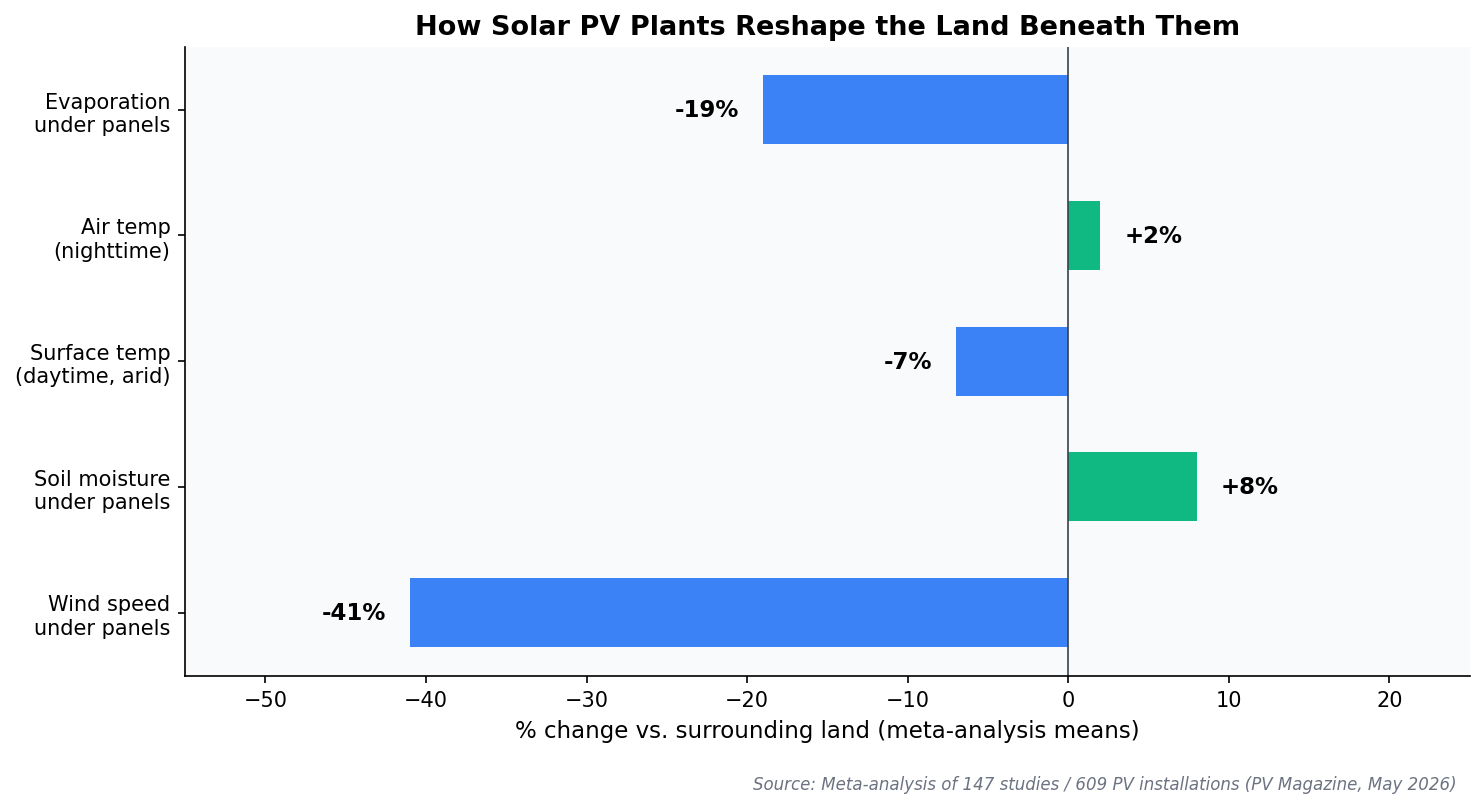
The team analyzed how solar arrays affected 11 variables across desert, grassland, agricultural, and rooftop sites. The biggest signals:
- Wind speed under panels: down ~41%. Panels physically block airflow at ground level, creating a calmer microclimate beneath the array.
- Soil moisture: up ~8%. Less wind means less evaporation. Shaded soil holds water longer.
- Surface temperature under panels: typically 1–2°C cooler during the day in arid sites. The panel absorbs the radiation that would otherwise hit the ground.
- Air temperature near the array: slightly warmer at night. Panels re-radiate stored heat — a small but measurable effect.
For utility-scale operators, those numbers matter for revegetation, dust suppression, and panel cleaning cycles. For a homeowner, the relevant translation is simpler: the same shading that cools the dirt under a desert array is part of why rooftop solar can lower attic temperatures and reduce summer cooling loads — a benefit Lawrence Berkeley National Laboratory documented years ago, finding rooftop PV reduces ceiling heat flux by up to 38% during peak sun hours (LBNL, 2011).
The math for a rooftop system
Forget the big-picture climate science for a minute. Here's what the average U.S. homeowner actually faces in 2026:
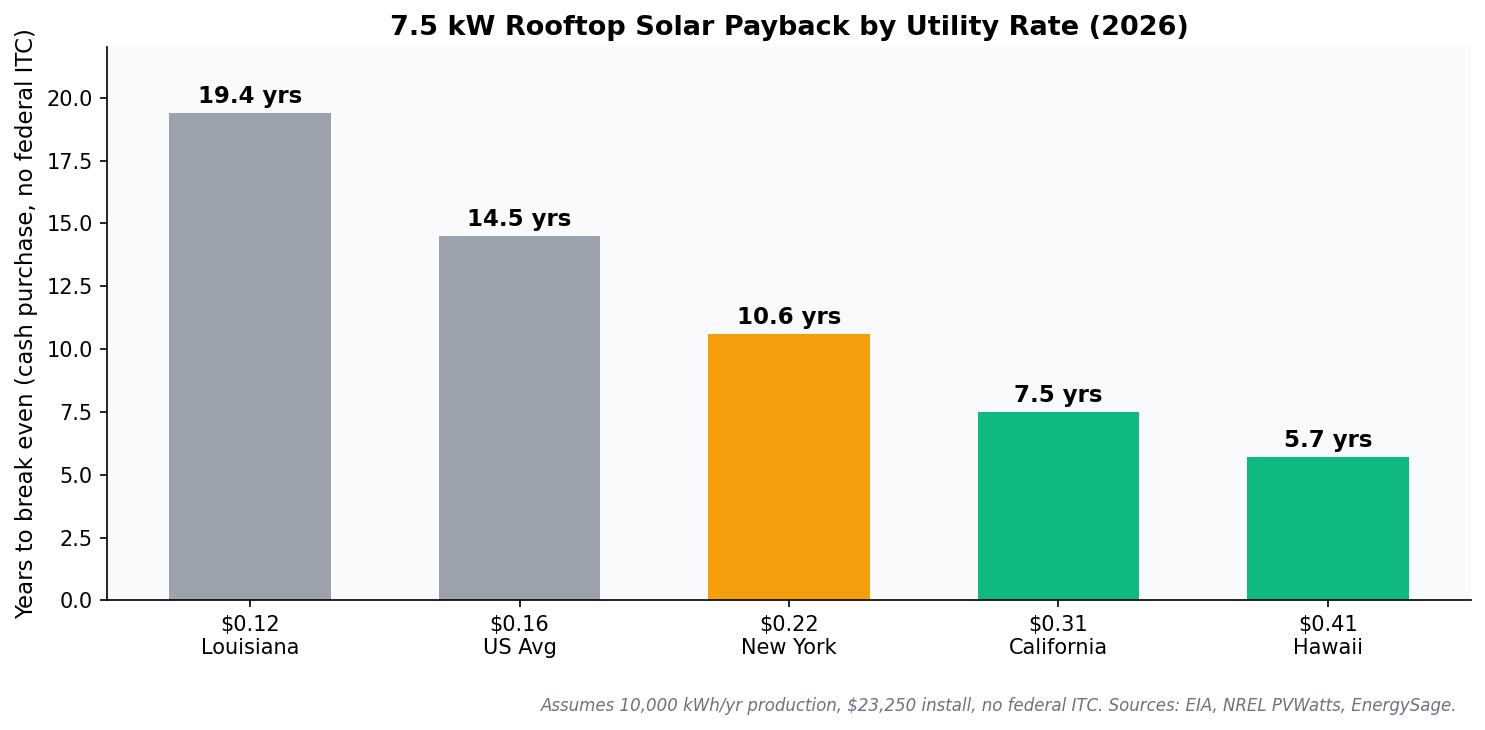
- Average residential electricity rate: $0.165/kWh nationally, with California, Massachusetts, and Hawaii running $0.30–$0.45/kWh (EIA Electric Power Monthly, 2026).
- Typical residential system size: 7.5 kW DC (SEIA, 2025).
- Average annual production for that system: ~10,500 kWh in a sunny state, ~8,500 kWh in a cloudier one, per the NREL PVWatts calculator.
- Installed cost after 2026 ITC expiration: roughly $3.10/W gross, or about $23,250 for a 7.5 kW system (EnergySage Solar Marketplace data).
So if you're in a state paying $0.22/kWh and your 7.5 kW system produces 10,000 kWh/year, you're avoiding about $2,200/year in utility bills. Simple payback at full cash purchase: ~10.6 years. Over a 25-year panel warranty, gross savings clear $55,000 before factoring in inflation on utility rates (which historically run 2.6%/year — also EIA).

Why the federal tax credit math changed in 2026
This is the single biggest update homeowners need to internalize. The federal 30% Residential Clean Energy Credit (Section 25D) expired at the end of 2025 for purchased systems. If you buy panels in cash or finance them with a loan, you no longer get the 30% federal credit on your tax return.
What still qualifies for the 30% Investment Tax Credit (Section 48E)? Third-party-owned systems — meaning solar leases and Power Purchase Agreements (PPAs). The installer or financing company keeps the credit and (in theory) passes the savings through to you in the form of a lower monthly payment (IRS guidance).
That doesn't mean cash purchases are dead. Many states still offer rebates, performance-based incentives, or state tax credits that can soften the blow. DSIRE tracks every program. EnergyScout's incentive search by ZIP pulls them into one view so you can see exactly what your address qualifies for.

The land-use angle that matters for your roof
The new study spends a lot of ink on dual-use solar — grazing under panels, growing crops between rows, restoring native vegetation. None of that applies to a residential roof. But the underlying point — that solar arrays don't just sit on land, they change it — has a residential corollary worth knowing:
- Roof temperature drops. LBNL measured a 5°F reduction in roof surface temperature under PV. That translates to lower attic temps and less AC runtime, especially in hot-roof climates like Phoenix, Las Vegas, and Sacramento.
- Shingle life can extend. UV-shielded shingles under a PV array degrade more slowly. Several roofing manufacturers now warranty replacement under panels at extended terms.
- Panels add a small wind load but reduce uplift forces on the protected portion of the roof. Code-compliant racking is engineered for this — but it's worth asking your installer about racking certifications (UL 2703) and wind zone ratings.
Compare that to a ground-mount on agricultural land, where the same shade creates measurable agricultural co-benefits. The DOE's Solar Energy Technologies Office estimates agrivoltaic systems can reduce irrigation water use by 14–29% while still hitting near-full energy yield.
Should this study change your decision?
Honestly, no — not in any direct way. The study is about how PV reshapes land, not whether PV makes economic sense for your house. But it does reinforce three things homeowners already had reason to believe:
- Solar arrays produce real measurable benefits beyond electricity (shade, microclimate, soil retention).
- The technology is mature enough that we now have meta-analyses of meta-analyses.
- The bottleneck for residential adoption isn't the science — it's the economics, and the economics shifted meaningfully when the 30% credit lapsed for purchased systems.
The right move isn't to react to a headline. It's to run the actual numbers for your specific roof, ZIP code, utility rate, and shade conditions.
How to check your own numbers
Three things drive whether solar pencils out for a given home:
- Your utility rate (the higher, the better — every $0.01/kWh increase shaves about a year off payback).
- Your roof's solar resource (orientation, tilt, and shade — NREL's PVWatts gives a free, address-specific estimate).
- The incentives stacked at your address (state credits, utility rebates, net metering rules).
EnergyScout's free assessment tool pulls all three into a single estimate using NREL's solar resource data and the current incentive database. No installer call required, no email harvest required — you put in the address and you see the numbers. If the math works, the vetted local installer directory is a separate step you can take when you're ready.

The bottom line
A 147-study meta-analysis is the kind of evidence base that turns "we think solar is fine for the land" into "we have measured it 609 times and here are the numbers." That's a useful thing for the industry to have. For a homeowner, the practical takeaway is narrower: rooftop solar still delivers real shade and cooling benefits, the federal tax credit picture changed in 2026, and the only number that ultimately matters is what your specific home produces against what your specific utility charges.
Run those numbers before you talk to anyone trying to sell you a system. Start with a free assessment at energyscout.org — it takes about a minute and uses the same NREL data the researchers do.
More Articles
Do Solar Panels Work During a Power Outage?
Most homeowners assume solar panels keep the lights on when the grid goes down. The actual answer surprises people — and the fix is simpler than you think.
Read article Battery StorageChile Hit 75% Solar in March. Here's What U.S. Homeowners Should Take From It
Chile's grid produced 29% of its electricity from solar in March, with peaks at 75%. The bottleneck wasn't generation — it was storage and transmission. Here's the homeowner takeaway.
Read article