$3.2M Tribal Solar Grants: What Homeowners Can Learn
Tribal Energy Alternatives just awarded $3.2 million across 14 Tribal Nations to expand solar access, workforce training, and energy resilience. The funding model offers practical lessons for any homeowner weighing solar in 2026.
Tribal Energy Alternatives recently awarded $3.2 million in grant funding to 14 Tribal Nations, plus Tribal-serving organizations and community-serving entities, to expand solar access, train a clean-energy workforce, and harden long-term energy resilience. It's a relatively small program by federal standards — but the way the money is being deployed mirrors the math every U.S. homeowner runs when deciding whether solar pencils out.
This post breaks down the grant, the underlying economics, and the specific lessons homeowners can take from it. No hype — just numbers, sources, and a few tools you can use to check your own roof.
What the $3.2M tribal solar award actually funds
The funding splits across three buckets: residential and community-scale solar deployment, workforce development (electrician and PV installer training), and energy resilience (typically solar paired with battery backup for critical loads). According to the U.S. Department of Energy's Office of Indian Energy, more than 17,000 homes on Tribal lands still lack reliable electricity — a rate roughly 10x the national average (DOE Office of Indian Energy).
Programs like this one don't just install panels. They build local technical capacity so the next system gets cheaper and faster. That's the same compounding logic that has driven utility-scale solar costs down 83% since 2010, per Lawrence Berkeley National Laboratory's Utility-Scale Solar report (LBNL, 2024).
Why the resilience angle matters everywhere
Resilience funding for Tribal communities is often framed as remote-grid hardening. But the same math applies to a suburban home in California after a Public Safety Power Shutoff, or a Texas home during winter storm Uri. The Energy Information Administration reports the average U.S. customer experienced 5.5 hours of power interruptions in 2022, more than double the 2013 baseline (EIA, 2023). Solar plus battery is no longer just a green-premium add-on — it's increasingly a basic reliability tool.
The homeowner takeaway: show the math first
The Tribal grants succeed because they fund projects with documented payback. Homeowners should apply the same standard. Here's the framework:
Step 1: Know your kWh price
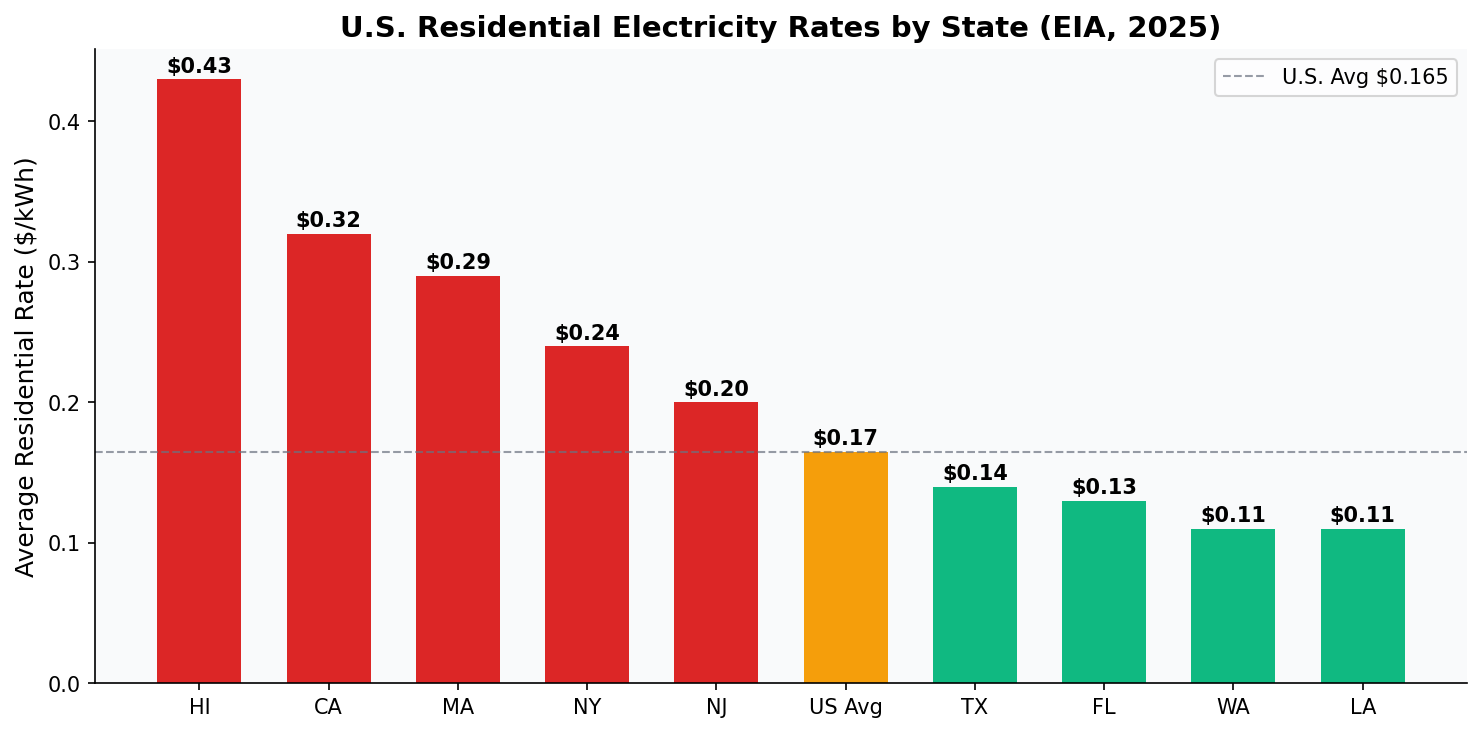
The U.S. residential electricity average is $0.165/kWh as of early 2025 (EIA Electric Power Monthly). But your number matters more than the average. California residential rates from PG&E and SCE routinely exceed $0.40/kWh on tiered plans (CPUC filings, 2024). Hawaiian Electric customers pay over $0.40/kWh too. In contrast, parts of Washington and Louisiana sit near $0.11/kWh.
Your rate is the single biggest input. A 7 kW system in San Diego saves roughly 3x what the same system saves in Seattle — not because of sun hours, but because of rate differences.
Step 2: Estimate production with NREL data
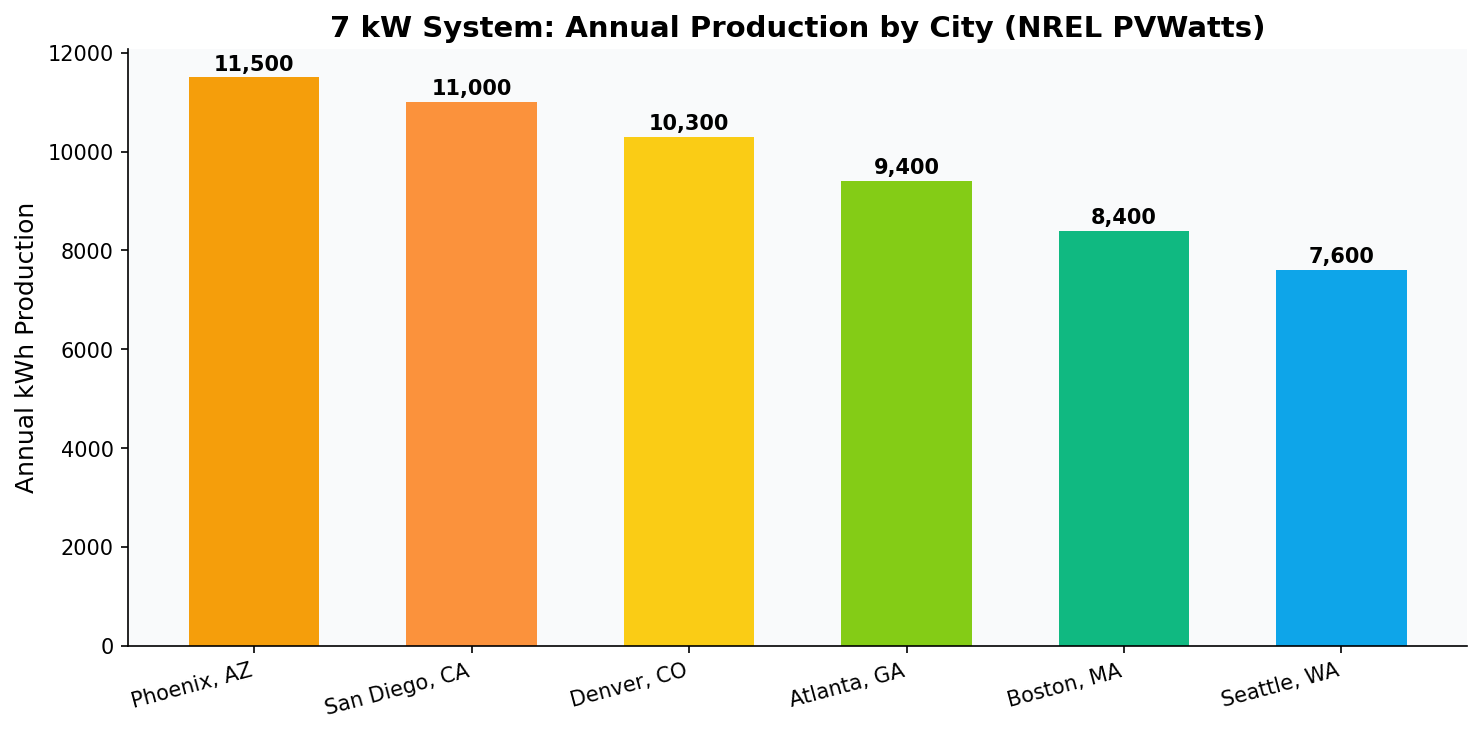
The National Renewable Energy Laboratory's PVWatts model is the industry standard. A 7 kW south-facing system in Phoenix produces about 11,500 kWh/year. The same system in Boston produces about 8,400 kWh/year (NREL PVWatts). EnergyScout pulls these numbers automatically when you run an assessment.
Step 3: Account for incentives accurately
This is where 2026 changes things. The federal 30% Investment Tax Credit (ITC) for purchased residential systems expired at the end of 2025. Leases and Power Purchase Agreements (PPAs) still qualify because the system owner (the leasing company) takes the credit and — in theory — passes the savings through your monthly payment. Verify that pass-through in writing before signing.
State and utility incentives often matter more than the federal credit ever did. Examples worth knowing:
- California SGIP: Battery rebates up to $1,000/kWh for equity-resilience customers (CPUC SGIP)
- New York NY-Sun: Per-watt incentives that vary by region
- Massachusetts SMART: 10-year per-kWh production payments
- Illinois Adjustable Block: Renewable Energy Credit payments
Workforce as a hidden cost lever
The Tribal grants spend a meaningful slice on installer training. Why does that matter to a homeowner in Ohio? Because soft costs — permitting, labor, customer acquisition — now make up 65% of a residential solar install in the U.S. (NREL, U.S. Solar Photovoltaic System and Energy Storage Cost Benchmark, 2023). Hardware costs have collapsed. Labor has not.
States with denser installer networks see lower bids. SEIA's 2024 market data shows installed residential prices ranging from about $2.80/watt in mature markets (Arizona, Texas) to $3.80+/watt in thin markets (rural Northeast) (SEIA Solar Market Insight, 2024). When you compare quotes, get at least three. EnergyScout's /providers directory lists vetted installers by ZIP.
The battery question: backup vs. bill savings
The Tribal resilience funding is heavy on storage because reliability is the use case. For homeowners, batteries do two different jobs:
- Backup — keeping the fridge, lights, and well pump running through outages. A 10 kWh battery covers about 24–36 hours of essential loads (EnergySage).
- Arbitrage — charging on cheap solar, discharging at peak rates under Time-of-Use (TOU) plans. This is the value driver in California's NEM 3.0 environment, where export credits are roughly 75% lower than under NEM 2.0 (CPUC Decision 22-12-056).
Don't buy a battery for a use case that doesn't apply. If your utility still offers full-retail net metering and you rarely lose power, the payback math gets ugly fast.
What the Tribal program proves about solar economics
Three durable lessons:
1. Solar works when the rate environment justifies it
Tribal communities often face the highest delivered electricity costs in the country — sometimes via diesel generators in remote areas. That's why even modest solar installs deliver fast payback. The same logic applies anywhere with high retail rates.
2. Local capacity reduces costs
Workforce funding lowers future installation prices. Homeowners benefit when their region has experienced installers competing for jobs. Check installer density before assuming a national price quote applies to you.
3. Resilience has real, quantifiable value
FEMA estimates the average U.S. household loses $150–$250 per multi-day outage in spoiled food, hotel stays, and lost work (FEMA, 2023). Multiply that by the rising frequency of outages and battery backup starts to pencil out for many households — even before bill savings.
How to run your own numbers
The Tribal grant recipients had analysts model every project. You don't need a consultant — you need three inputs:
- Your average monthly electric bill (last 12 months)
- Your roof's orientation and shading
- Your ZIP code (drives both production and incentive eligibility)
EnergyScout's free /assessment tool combines these with NREL production data and a live state incentive database. The solar + battery incentive search shows what's stackable in your ZIP.
Bottom line
$3.2 million spread across 14 Tribal Nations isn't going to single-handedly transform U.S. energy. But the projects it funds are textbook examples of where solar makes financial and practical sense: high local rates, real reliability needs, and a workforce being built to keep costs down. Every homeowner in 2026 should be asking the same questions about their own roof.
If you want to see what the math looks like for your address, run a free assessment at energyscout.org. No phone call, no sales pitch — just the numbers.
More Articles
Do Solar Panels Work During a Power Outage?
Most homeowners assume solar panels keep the lights on when the grid goes down. The actual answer surprises people — and the fix is simpler than you think.
Read article Battery StorageChile Hit 75% Solar in March. Here's What U.S. Homeowners Should Take From It
Chile's grid produced 29% of its electricity from solar in March, with peaks at 75%. The bottleneck wasn't generation — it was storage and transmission. Here's the homeowner takeaway.
Read article